Trump's Stark Warning to Iran Amid Ongoing Negotiations
Synopsis
In a tense showdown, President Trump accuses Iran of violating ceasefire terms in the Strait of Hormuz while announcing new negotiations in Pakistan. With military threats looming, the stakes are higher than ever in this geopolitical standoff.
Key Takeaways
Trump warns Iran of severe retaliation for ceasefire violations.
New negotiations are set in Pakistan as tensions rise.
The Strait of Hormuz is a critical point for global oil supply.
Military action remains a possibility if diplomatic efforts fail.
Iran’s actions are causing significant economic losses.
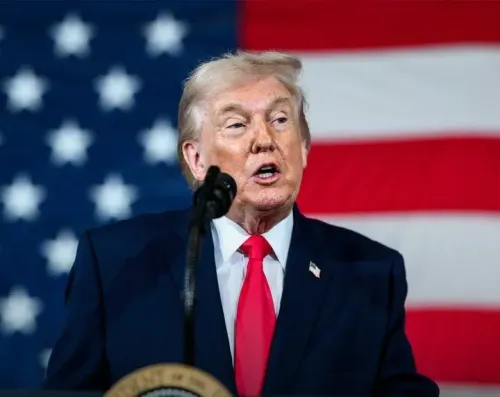
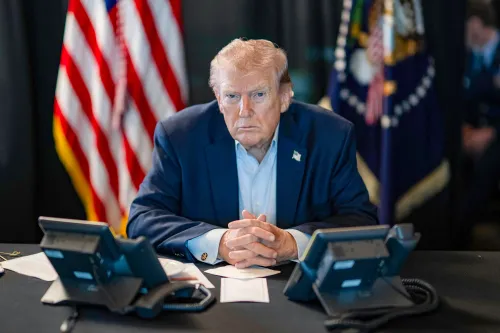
Washington, April 19, (NationPress) On Sunday, US President Donald Trump accused Iran of violating a ceasefire in the Strait of Hormuz and issued a warning of significant retaliation, while also announcing new discussions in Pakistan aimed at resolving the ongoing conflict.
“Iran chose to fire shots yesterday in the Strait of Hormuz — a complete breach of our ceasefire agreement!” Trump shared on social media. He further noted that “many of these shots were directed at a French vessel and a freighter from the United Kingdom.”
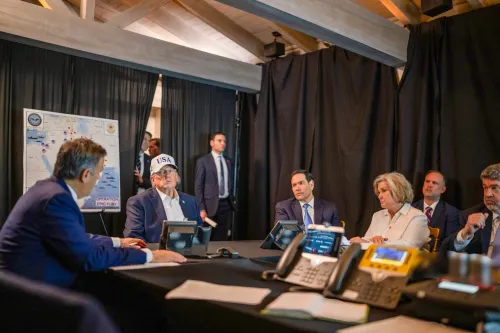
The President indicated that US representatives would be heading to Islamabad for negotiations. “My representatives are traveling to Islamabad, Pakistan — they will arrive tomorrow evening for discussions,” he stated.
The US and Iran are competing for dominance over the strategically vital Strait of Hormuz. Reports indicated that two tankers attempting to navigate out of the Strait turned back, leading to traffic in the area being “practically at a standstill,” as per The Wall Street Journal, referencing data from vessel-tracking provider Kpler.
Trump emphasized that Iran’s actions have jeopardized stabilization efforts in the region, claiming that US measures have already effectively halted maritime traffic. “Iran recently declared they were closing the Strait, which is odd, as our blockade has effectively done that already,” he remarked.
He asserted that the closure is detrimental to Tehran more than to Washington. “They’re inadvertently assisting us, and they are the ones losing out with the closure, approximately $500 million dollars a day! The United States loses nothing,” Trump declared.
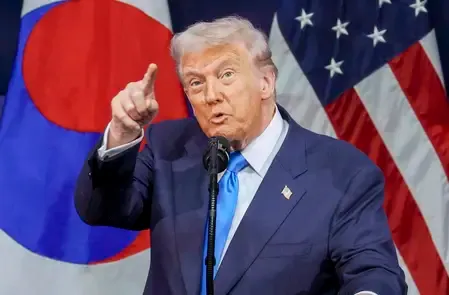
Simultaneously, he issued a stark warning of military action should diplomacy fail. “We’re proposing a very fair and reasonable deal, and I hope they accept it because if they don’t, the United States will eliminate every single power plant and every single bridge in Iran. NO MORE MR. NICE GUY!” he stated.
He added: “They’ll come down quickly, they’ll come down easily, and if they reject the deal, it will be my honor to do what must be done.”
However, Iranian officials indicated that negotiations are still far from a resolution. Mohammad Bagher Ghalibaf, the parliamentary speaker and chief negotiator of Iran, noted that while discussions had progressed somewhat, “we are far from a final agreement,” as reported by The Wall Street Journal.
In a separate report, The New York Times highlighted that the Strait of Hormuz remains “largely closed” as vessels are hesitant to transit due to uncertainty and threats from Tehran.
Meanwhile, US officials are gearing up for stricter enforcement measures at sea, including plans to board Iranian-linked oil tankers in international waters, according to The Wall Street Journal.
The Strait of Hormuz, a narrow corridor between Iran and Oman, is one of the globe’s most critical energy chokepoints, facilitating a considerable portion of global oil and gas supplies, as noted by The New York Times.
Point of View
With heightened military threats from the US and ongoing diplomatic efforts in Pakistan. It is crucial to assess the balance between negotiation and military strategy as both nations navigate this complex geopolitical landscape.
NationPress
30 Sept 2026
Frequently Asked Questions
What did Trump accuse Iran of?
Trump accused Iran of violating a ceasefire in the Strait of Hormuz.
What measures is the US preparing in response to Iran?
The US is preparing tougher enforcement measures at sea, including plans to board Iranian-linked oil tankers.
What is the significance of the Strait of Hormuz?
The Strait of Hormuz is a critical energy chokepoint that carries a significant portion of the world's oil and gas supplies.
What did Trump say about military action against Iran?
Trump warned that if diplomacy fails, the US would take military action against Iran, targeting power plants and bridges.
Are negotiations with Iran making progress?
Iranian officials indicated that while there has been some progress, a final agreement is still far from being reached.