Trump Dismisses Iran Deal, Calls for Global Naval Support in Hormuz
Synopsis
In a recent statement, President Trump rejected a deal with Iran, citing inadequate terms. He urged global partners to assist in securing the vital Strait of Hormuz, crucial for global oil trade. As tensions escalate, international naval support becomes increasingly crucial.
Key Takeaways
Trump rejected the Iran deal citing unsatisfactory terms.
Call for global naval support to secure the Strait of Hormuz.
Conflict has resulted in significant casualties among US forces.
Strait of Hormuz is vital for global oil transport.
Escalating tensions raise concerns of a major energy crisis.
Washington, March 15 (NationPress) President Donald Trump has turned down a prospective agreement with Iran to resolve the ongoing conflict, stating that the proposed conditions are “not satisfactory yet”. He urged nations globally to send naval forces to secure the Strait of Hormuz and ensure the continuity of global oil shipments.
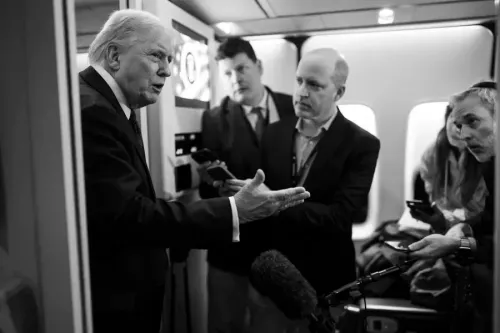
In a comprehensive phone interview with NBC News on Saturday, Trump indicated that Iran has shown interest in negotiations but emphasized that the United States would not be hasty in reaching a ceasefire while hostilities persist.
“Iran desires to strike a deal, yet I am hesitant because the terms aren’t adequate at this time,” Trump remarked during the discussion.
When inquired about the potential agreement’s specifics, the president refrained from providing details, stating, “I prefer not to disclose that to you”. However, he hinted that ending nuclear ambitions would likely be a key component.
These comments come as the conflict involving the US, Israel, and Iran enters its third week, with hostilities escalating across the Middle East and global energy markets experiencing turbulence due to tensions surrounding the Strait of Hormuz.
The President mentioned that the US is encouraging countries affected by oil shipment disruptions to assist in securing this vital waterway.
“They’ve not only agreed but see it as an excellent initiative,” Trump stated when asked about potential international collaboration.
Earlier, Trump also made a public plea for a collaborative effort to safeguard this crucial passage.
In a post on Truth Social, he expressed that “Numerous Countries, particularly those impacted by Iran’s attempts to close the Hormuz Strait, will be dispatching War Ships, alongside the United States, to maintain the Strait's safety and accessibility.”
He expressed hope that nations such as China, France, Japan, South Korea, and the UK would send naval forces to the area.
The Strait of Hormuz is widely acknowledged as the world’s most critical oil transport corridor, responsible for a substantial share of global crude exports.
Trump also confirmed during the NBC interview that US forces have conducted strikes on Kharg Island, a crucial Iranian oil export site.
“We completely obliterated Kharg Island, but we might target it a few more times just for good measure,” Trump stated. He added that US forces intentionally avoided damaging essential energy infrastructure on the island.
“Except, as you know, I didn’t do anything regarding the energy lines, as restoring that would take years,” he noted.
The conflict has already impacted US forces significantly. According to reports from The New York Times, six American service members lost their lives this week when a US Air Force refueling aircraft crashed in Iraq while supporting operations tied to the war.
This incident raised the total number of American service members killed in this conflict to at least 13.
The conflict's repercussions have also spread throughout the region.
As reported by The Washington Post, the US Embassy compound in Baghdad was struck during an early Saturday attack. Air raid sirens rang out, and smoke was reported rising from within the diplomatic compound following an explosion that damaged a building's roof.
The embassy has advised Americans to avoid approaching the facility due to security concerns.
Iran-aligned militias have executed multiple assaults across Iraq in recent days, targeting diplomatic sites, infrastructure, and locations associated with the US and its allies, as reported by The New York Times.
Iran has continued its missile and drone attacks throughout the Gulf region. The governments in the UAE, Saudi Arabia, and Bahrain reported intercepting numerous drones and missiles during this latest wave of aggression.
Despite escalating tensions and rising oil prices, Trump dismissed worries that increasing gasoline prices could negatively impact his political standing.
“I believe they will dip lower than before, and I previously had them at record lows,” Trump predicted, expressing confidence that prices would decrease once the conflict concludes.
“I’m not worried at all,” he added. “The only objective I have is to ensure that Iran can never dominate the Middle East again.”
This war commenced following a joint military initiative by the US and Israel against Iran on February 28, targeting military infrastructure and facilities associated with Tehran’s missile and drone programs.
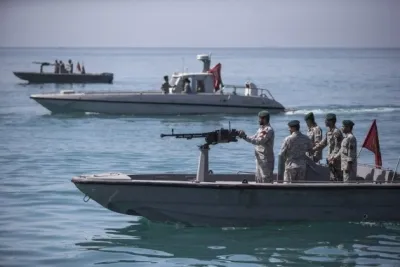
Since then, the Strait of Hormuz has emerged as the central geopolitical flashpoint in the conflict. Iran has threatened to obstruct tanker traffic through this narrow passage, raising concerns about a significant global energy crisis and prompting the US and its allies to contemplate naval operations to keep the route accessible.
Point of View
The rejection of a potential deal with Iran by President Trump signifies a crucial moment in international relations. The call for global naval support highlights the strategic importance of the Strait of Hormuz in maintaining stability in oil markets and safeguarding energy supplies. Stakeholders worldwide must closely monitor these developments.
NationPress
23 Sept 2026
Frequently Asked Questions
Why did Trump reject the Iran deal?
Trump rejected the Iran deal because he believed the proposed terms were not sufficient at this time.
What is the significance of the Strait of Hormuz?
The Strait of Hormuz is a critical oil shipping route, responsible for a significant portion of the world's crude oil exports.
What has been the impact of the conflict on US forces?
The conflict has resulted in the deaths of at least 13 American service members, with ongoing military operations contributing to the toll.
What international response is being called for?
Trump has called for international partners to send naval forces to secure the Strait of Hormuz and ensure the safety of oil shipments.
How has Iran responded to the conflict?
Iran has conducted missile and drone attacks across the Gulf region and has threatened to block tanker traffic through the Strait of Hormuz.