Trump Declares Hormuz Open, Yet Iran's Blockade Persists
Synopsis
The Strait of Hormuz is now deemed fully accessible for commercial vessels amid a ceasefire, yet the U.S. maintains a naval blockade on Iran, highlighting ongoing tensions and intricate diplomatic dynamics.
Key Takeaways
Strait of Hormuz is now declared fully open for commercial shipping.
U.S. maintains a naval blockade on Iran , reflecting ongoing tensions.
The recent ceasefire in Lebanon is linked to the reopening.
Global oil prices dropped sharply following the announcement.
Complex diplomatic and military dynamics continue to shape the region.
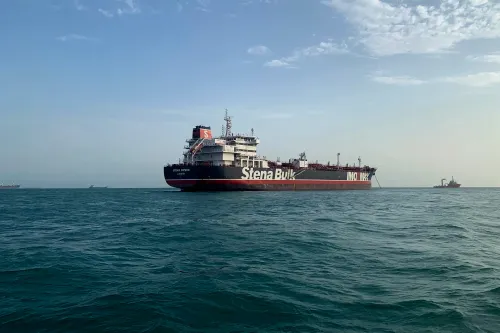
Washington, April 17 (NationPress) Amid an ongoing tenuous ceasefire in the Middle East, the Strait of Hormuz has been proclaimed as “fully open” for commercial shipping. However, the United States has indicated it will uphold a targeted naval blockade on Iran, emphasizing the precarious and conditional nature of this diplomatic development.
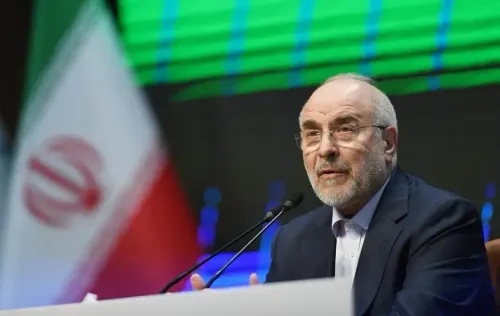
Iran’s Foreign Minister, Seyed Abbas Araghchi, confirmed that the critical waterway is “totally open” to all commercial vessels, linking this declaration directly to the recent ceasefire agreement in Lebanon.
“Aligned with the ceasefire in Lebanon, the passage for all commercial vessels through the Strait of Hormuz is officially announced as completely open for the duration of the ceasefire, following the previously coordinated route,” Araghchi noted in a social media update.
The reopening of this strategic chokepoint — which facilitates a substantial portion of global oil transport — caused an immediate market reaction, resulting in a sharp decline in oil prices and a surge in stock market activity.
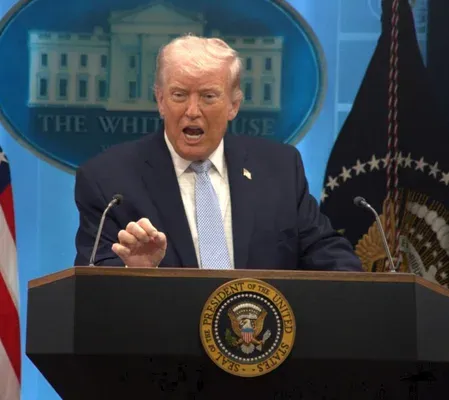
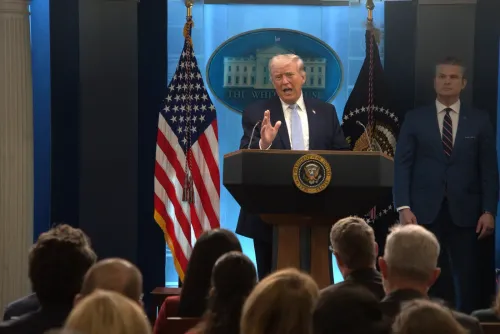
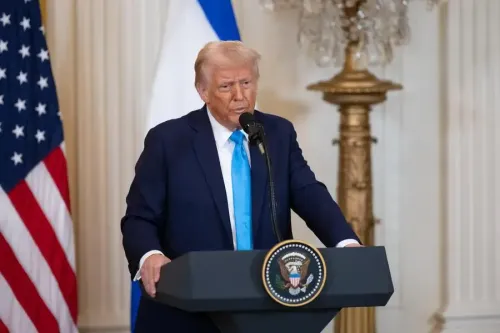
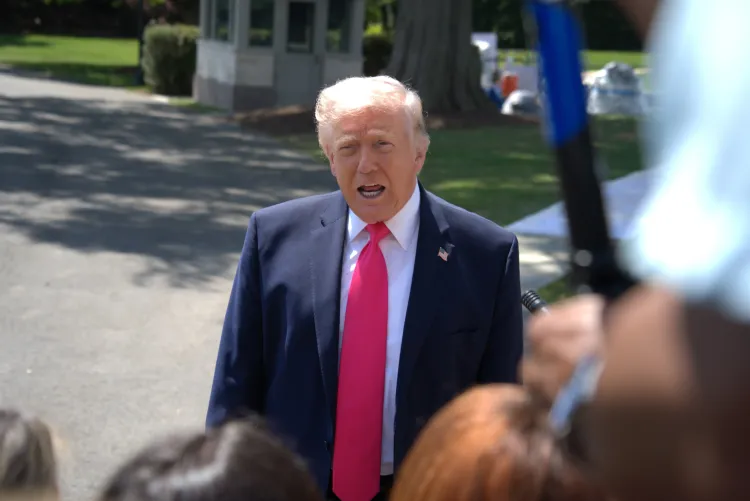
Nevertheless, U.S. President Donald Trump adopted a more cautious stance, indicating that military pressure on Iran would persist despite the relaxation of shipping restrictions.
“The Strait of Hormuz is entirely open and ready for business and full passage. However, the naval blockade will remain fully in effect, specifically regarding Iran, until our negotiations with Iran are completely finalized,” Trump stated.
“This process should proceed rapidly, as most points have already been negotiated,” he added.
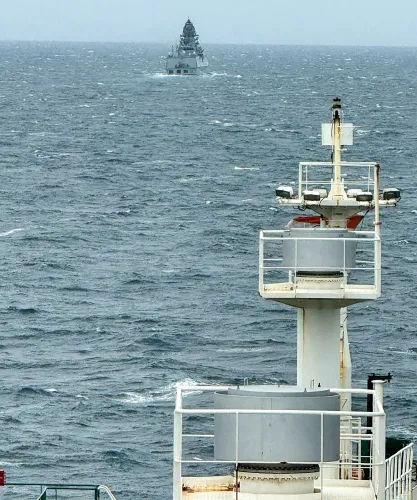
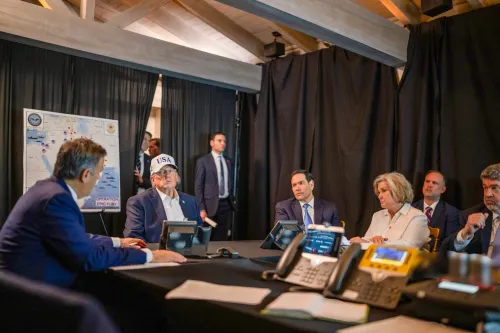
The U.S. military blockade continues to be a core aspect of Washington’s strategy during the ceasefire period.
Military officials revealed that this operation includes “over 10,000 sailors, marines, and airmen, more than a dozen ships, and numerous aircraft,” showcasing the scale of enforcement despite the relaxation of tensions.
Even with Iran’s assurances, analysts and officials warned that the reopening might have limited scope. Shipping routes are still “coordinated” and remain close to Iran’s coastline, indicating continued oversight of maritime movements.
The ceasefire, a 10-day truce between Israel and Lebanon, appears to be holding, although concerns linger about potential violations and the sustainability of the agreement.
Simultaneously, diplomatic initiatives are gaining momentum alongside military posturing.
Trump has hinted that talks with Iran might occur soon, even suggesting a possible trip to Pakistan if a final agreement is achieved there.
These developments represent a delicate balancing act — a partial reopening of a vital global shipping route, ongoing military pressure on Iran, and rapid diplomatic efforts aimed at achieving a more comprehensive settlement.
The Strait of Hormuz, which links the Persian Gulf to the Gulf of Oman, is one of the most significant energy corridors globally. Prior to the conflict, approximately one-fifth of global oil and gas supplies traversed this route, making any interruption a key factor influencing global energy prices.
The ongoing crisis originated from a larger conflict involving Iran, the United States, and Israel, leading to attacks on shipping and a notable decrease in tanker traffic. The ceasefire and partial reopening provide a temporary respite, but uncertainties regarding security and navigation conditions continue to impact global markets.
Point of View
The situation in the Strait of Hormuz illustrates a complex interplay of diplomatic efforts and military strategy. While the reopening of this crucial shipping lane could signal a move toward stability, continued U.S. military pressure on Iran suggests that challenges remain. The balance between cooperation and confrontation is delicate, and the global repercussions of these developments warrant careful monitoring.
NationPress
18 Sept 2026
Frequently Asked Questions
What is the significance of the Strait of Hormuz?
The Strait of Hormuz is a vital global shipping route, through which approximately one-fifth of the world's oil and gas supplies flow. Its stability is crucial for international energy markets.
Why is the U.S. maintaining a naval blockade on Iran?
The U.S. aims to exert military pressure on Iran to influence its actions and negotiations, despite the easing of shipping restrictions in the region.
How has the market reacted to the reopening of the Strait of Hormuz?
The reopening triggered a significant drop in oil prices and a rally in stock markets, reflecting the importance of the waterway in global trade.
What was the nature of the ceasefire agreement mentioned?
The ceasefire is a 10-day truce between Israel and Lebanon, aimed at reducing hostilities and creating a conducive environment for diplomatic discussions.
What are the potential risks associated with the reopening of the Strait of Hormuz?
Despite the reopening, analysts caution that shipping routes may remain closely monitored by Iran, indicating potential limitations on free maritime movement.