US Asserts Control Over Gulf Shipping Lanes Amid Tensions
Synopsis
In a bold declaration, the US has claimed dominance over maritime traffic in the Strait of Hormuz, challenging Iran's assertions of control. This announcement comes as tensions simmer despite a fragile ceasefire, with US military operations actively monitoring the situation.
Key Takeaways
The US has claimed control over the Strait of Hormuz, dismissing Iranian assertions.
Defense Secretary Pete Hegseth criticized Iran's naval capabilities.
The US Navy is conducting operations with less than 10% of its fleet.
Warnings have been issued to vessels attempting to breach the blockade.
The situation remains tense despite a ceasefire in place.
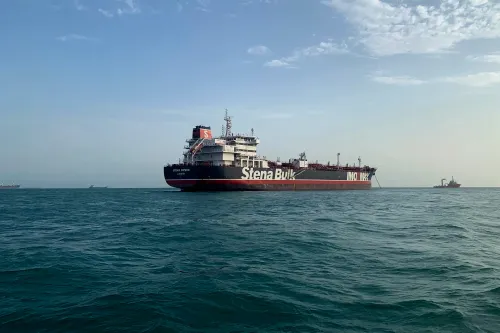
On April 16, Washington (NationPress) declared its authority over maritime navigation through the Strait of Hormuz, rejecting Iranian assertions of control over this vital waterway amid ongoing tensions that persist despite a tenuous ceasefire.
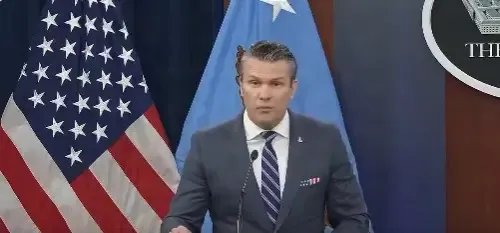
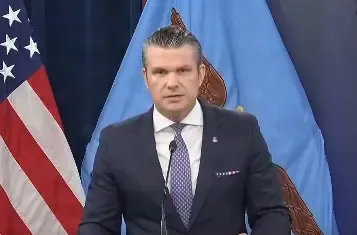
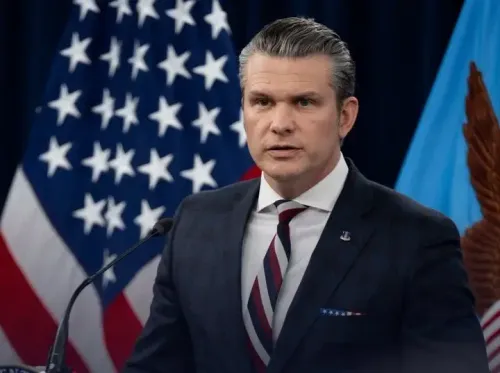
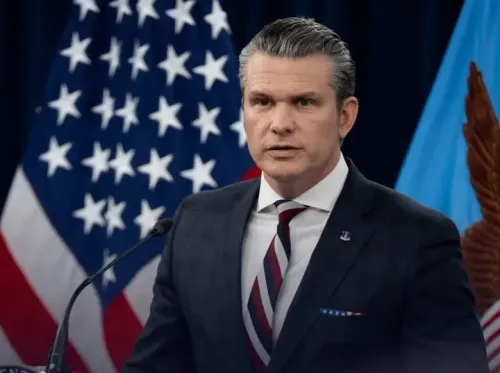
Defense Secretary Pete Hegseth emphasized that Iran lacks both the naval strength and situational awareness required to dominate shipping routes, accusing the nation of threatening commercial vessels instead.
"While Iran claims it has control over the Strait of Hormuz, the reality is that it lacks a competent Navy and genuine awareness of the situation," he stated.
He warned that any efforts to target civilian shipping would be classified as criminal acts.
"Threatening to launch missiles and drones at lawful commercial vessels navigating international waters is not indicative of control; it is piracy and terrorism," he asserted.
During a Pentagon briefing, Hegseth was accompanied by Air Force General Dan Caine, Chairman of the Joint Chiefs of Staff, and Admiral Bradley Cooper, the Commander of US Central Command overseeing military operations in the Middle East.
This statement comes in the context of the US enforcing a naval blockade aimed at Iran's ports and coastline, as part of a broader initiative to limit Tehran's military and economic influence following recent military activities.
Hegseth noted that the US Navy is effectively managing traffic through the strait with only a small fraction of its global fleet.
"We are conducting this blockade with less than 10% of America's naval assets," he remarked, adding that Iran holds "essentially zero control" over its naval operations.
Military representatives indicated that this blockade applies to all vessels traveling to or from Iranian ports, irrespective of their nationality, with enforcement extending into both international and territorial waters.
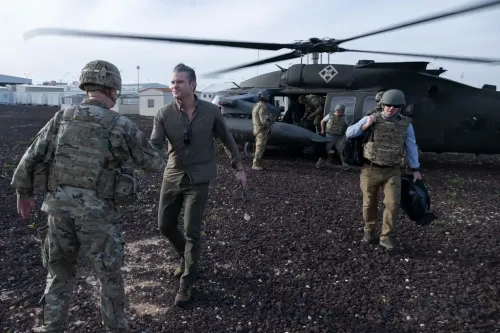
Caine detailed the scale of this operation, stating that over 10,000 military personnel—including sailors, Marines, and aircrew, alongside numerous ships and aircraft—are involved in sustaining the blockade.
Warnings have been issued to vessels attempting to enter prohibited areas, resulting in several ships altering their routes.
"Do not attempt to breach the blockade... non-compliance will lead to the use of force," a standard communication stated.
As per the Pentagon, 13 vessels have already turned back, and none have engaged in confrontations necessitating boarding or seizure.
Despite the ceasefire halting significant combat operations, US officials assert that forces are fully prepared for any escalation.
Caine noted that this joint force could "reinitiate major combat operations at literally a moment's notice."
Hegseth also expressed disappointment with allies for not actively contributing to maritime security efforts.
He pointed out that while some regional partners have supported US initiatives, others have "made promises without action" as tensions escalated.
He emphasized that the responsibility for securing global waterways should not rest solely on Washington.
"We should aspire to a world where other nations can protect their own waterways, not just rely on the United States Navy," stated the US Defense Secretary.
Point of View
The focus on international shipping safety showcases a broader commitment to safeguarding global trade, despite calls for increased cooperation from allies.
NationPress
19 Sept 2026
Frequently Asked Questions
What is the significance of the Strait of Hormuz?
The Strait of Hormuz is a vital waterway for global oil shipments, making it strategically important for international trade and energy security.
How is the US enforcing the blockade?
The US is enforcing a naval blockade by monitoring all vessels transiting to or from Iranian ports, using a fraction of its naval fleet to maintain control.
What will happen if vessels attempt to breach the blockade?
Vessels that attempt to breach the blockade will receive warnings, and non-compliance could lead to the use of force by US military personnel.
What has been the response from Iran regarding US claims?
Iran has contested US claims of control, asserting its dominance over the Strait of Hormuz despite the US's military presence.
How many US personnel are involved in the blockade operation?
Over 10,000 military personnel, including sailors, Marines, and aircrew, are involved in maintaining the blockade in the region.