BJP to expand in minority areas, no ideology compromise: Assam CM Sarma
Synopsis
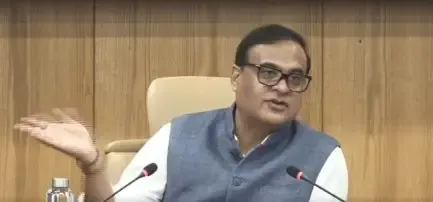
Assam CM Himanta Biswa Sarma drew a sharp line at the BJP's core committee meeting in Guwahati: the party will expand organisationally into minority-dominated seats, but ideology is non-negotiable. The twin message — broader reach, no doctrinal retreat — sets the tone for the BJP's Assam strategy ahead of the 2026 assembly elections.
Key Takeaways
Assam CM Himanta Biswa Sarma addressed a BJP core committee meeting in Guwahati on 3 November 2026 .
Sarma stated the BJP will continue organisational expansion in minority-dominated areas without compromising its ideology.
He cited a rise in BJP vote share in minority-dominated constituencies as evidence of growing political presence.
Sarma reiterated the government's firm stance: 'Child marriage and polygamy must be stopped.' The remarks come ahead of Assam's next assembly election due in 2026 , a critical period for party consolidation.
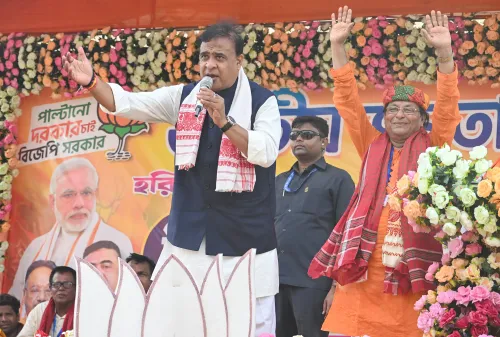
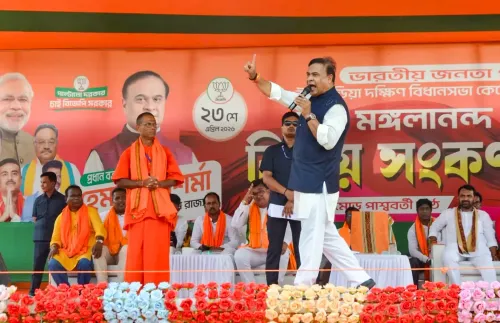
Assam Chief Minister Himanta Biswa Sarma declared on Tuesday, 3 November 2026, that the Bharatiya Janata Party (BJP) will press ahead with organisational expansion in minority-dominated constituencies across Assam, but without diluting the party's core ideological positions. Speaking at a party core committee meeting in Guwahati, Sarma reportedly signalled that electoral ambition would not come at the cost of the BJP's stated principles.
Key Message from the Core Committee Meeting
Sarma conveyed a pointed message to party functionaries: "Organisational expansion will continue, but there will be no compromise on ideology." According to reports from the meeting, he cited a rise in the BJP's vote share in minority-dominated areas as evidence of the party's growing political footprint in regions where it has historically faced an uphill task. He nonetheless drew a firm line against ideological moderation as a tool for electoral outreach.
Sarma's Stand on Child Marriage and Polygamy
The Chief Minister also reiterated the state government's firm stance on two socially contentious practices. "Child marriage and polygamy must be stopped," Sarma said, underlining that the BJP administration would not step back from its position on these issues even as it works to deepen its organisational presence in minority-heavy constituencies. Assam has witnessed sustained political and legislative debate over both practices, with the BJP government having previously pursued administrative and legal action targeting child marriages in particular.
Why the Remarks Matter
The comments carry significance as the BJP attempts a delicate balancing act in Assam: broadening its electoral coalition in seats where minority voters form a sizeable bloc, while holding its ground on social-reform positions that critics argue disproportionately affect those very communities. This is not the first time Sarma has publicly drawn this distinction — the Assam CM has consistently framed the party's minority outreach as organisational rather than ideological.
Notably, the remarks come as the BJP continues to consolidate its structure in the state ahead of future electoral cycles. Assam last went to the polls in 2021, with the next state assembly election due in 2026, making this period a critical window for political ground-work.
Broader Political Context
Assam's complex demographic landscape — where minorities, including Bengali-speaking Muslims concentrated in the char and riverine belt, account for a substantial share of the electorate — has long made it a theatre for identity-driven politics. The BJP's strategy of simultaneous outreach and ideological firmness is being watched closely by opposition parties, including the Indian National Congress (Congress) and the All India United Democratic Front (AIUDF), who have historically drawn strength from minority-dominated districts. Whether Sarma's twin-track approach translates into measurable seat gains remains the central political question heading into the next election cycle.
Point of View
Don't change the doctrine — is politically shrewd but structurally tense. Minority-dominated constituencies in Assam have historically been receptive to parties that address economic and administrative grievances; the BJP's push into these areas on an unreformed ideological platform tests whether organisational muscle alone can override political messaging. The child marriage and polygamy lines, while framed as social reform, are also flashpoints that opponents will use to argue the BJP's outreach is performative. The real test will be seat-level swing data in 2026 — if vote-share gains in minority areas convert into actual seats won, Sarma's strategy will become a template; if not, the contradictions will be harder to paper over.
NationPress
3 Nov 2026
Frequently Asked Questions
What did Assam CM Himanta Biswa Sarma say at the BJP core committee meeting?
Sarma said the BJP would continue expanding its organisational presence in minority-dominated areas of Assam without compromising its core ideology. He conveyed the message that electoral gains cannot come at the cost of the party's ideological principles.
Has the BJP's vote share increased in minority-dominated areas of Assam?
According to Sarma's remarks at the meeting, the BJP's vote share in minority-dominated areas has reportedly increased, reflecting the party's expanding political footprint in those regions. He cited this as evidence that outreach is working even without ideological moderation.
What is Sarma's position on child marriage and polygamy?
Sarma reiterated that child marriage and polygamy must be brought to an end, underlining that the BJP government in Assam will remain firm on these issues. The state has previously pursued legislative and administrative measures targeting these practices.
Why are Sarma's remarks significant ahead of the 2026 Assam elections?
Assam's next state assembly election is due in 2026, making the current period critical for party consolidation. Sarma's remarks outline the BJP's dual-track strategy: broaden the organisational base in minority-heavy seats while holding its ideological ground — a balance that will be tested at the ballot box.
Which opposition parties are watching the BJP's minority outreach in Assam?
The Indian National Congress and the All India United Democratic Front (AIUDF) are among the parties closely watching the BJP's strategy, as both have historically drawn significant support from minority-dominated districts in Assam.