CM Bhupendra Patel credits Modi for sharp GST revenue rise
Synopsis
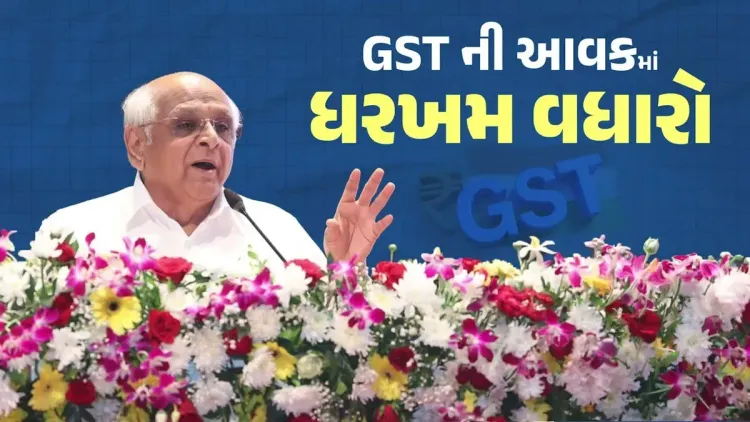
Gujarat Chief Minister Bhupendra Patel credited PM Modi's infrastructure expansion, higher production, and a pro-development climate for a sharp rise in GST collections in Gujarat and across India, posting the assessment on X on November 3, 2026.
Key Takeaways
CM Bhupendra Patel posted on November 3, 2026 attributing a 'substantial rise' in GST collections to PM Modi's governance.
He cited three drivers: expanded infrastructure, increased production and sales, and a development-oriented environment.
GST was launched on July 1, 2017 to replace multiple indirect taxes and create a single national market.
Gujarat is historically one of India's top GST-contributing states due to its large industrial and port-based economy.
Post-2014 central infrastructure programmes — including highway and logistics corridor networks — have been linked to lower logistics costs and higher manufacturing output in Gujarat.
Monthly GST data from the Ministry of Finance and upcoming state budgets will be the next factual checkpoint on these revenue claims.
Gujarat's tax coffers are growing — and Chief Minister Bhupendra Patel wants you to know exactly why. On Tuesday, November 3, 2026, the BJP leader pointed directly to expanded infrastructure, higher production, stronger sales, and a pro-development climate under Prime Minister Narendra Modi as the engines driving a significant surge in GST collections across the state and the country.
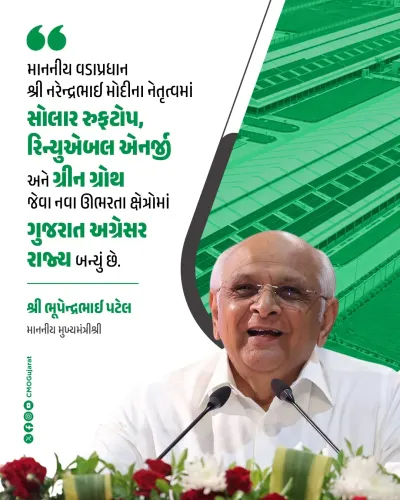
Writing in Gujarati on X, CM Patel stated that under Modi's leadership, 'comprehensive infrastructure facilities, increased production and sales, and a development-oriented environment have led to a substantial rise in GST collection' — both at the national and state level.
What GST growth actually signals about Gujarat's economy
The Goods and Services Tax, rolled out on July 1, 2017, replaced a patchwork of central and state levies with a unified national market. Since its launch, monthly GST receipts have become one of the most-watched barometers of India's economic health — capturing both consumption momentum and the formalisation of businesses that once operated outside the tax net.
Gujarat, with its dense industrial clusters, major ports, and manufacturing base, has historically punched above its weight in GST contribution. When national infrastructure programmes — including highway networks and logistics corridors launched after 2014 — improved supply chains and cut logistics costs, Gujarat-based manufacturers were positioned to benefit quickly. Higher output, smoother distribution, and broader formal-sector participation all feed directly into the GST headline number.
The political arithmetic behind the attribution
Patel's post is a deliberate piece of credit-mapping: connect visible economic outcomes back to central government policy, and by extension to Prime Minister Modi. It is a standard move in Indian federalism, where chief ministers of ruling-party states frequently amplify national policy wins to reinforce the governing narrative ahead of budget cycles and elections.
The message also serves a domestic audience: Gujarat businesses and voters who have lived through years of infrastructure build-out — new expressways, port expansions, industrial corridors — and can now see the revenue results. Linking those visible assets to a tax number gives the growth story a concrete number to anchor on.
What to watch next
The Ministry of Finance releases monthly GST collection data that will either validate or complicate this narrative. State budget presentations in the coming fiscal cycle will be the next moment when Gujarat's specific revenue trajectory — and its attribution — gets tested against audited figures. If the trend holds, expect the Modi-development-GST linkage to become a central plank in BJP's economic messaging heading into 2027.
In Indian politics, the revenue number that once looked like a dry finance-ministry bulletin has become a front-line political argument. Gujarat's chief minister just made that case — loudly, in his home language, on the country's loudest platform.
Point of View
Deployed whenever monthly receipts trend upward. The challenge is always attribution: GST growth reflects multiple variables — global demand, commodity cycles, formalisation trends — that no single policy fully owns. Still, the optics work: infrastructure is visible, GST growth is measurable, and the connection is intuitive enough for a broad electorate.
NationPress
3 Nov 2026
Frequently Asked Questions
Why did Gujarat CM Bhupendra Patel post about GST collections?
CM Patel attributed a significant rise in GST collections to PM Modi's infrastructure expansion, increased production, and a pro-development policy environment, using the data point to highlight economic progress under BJP governance.
What is GST and when was it launched in India?
The Goods and Services Tax is a unified indirect tax that replaced multiple central and state levies. It was implemented nationwide on July 1, 2017, to create a single national market.
How does Gujarat rank in GST contribution among Indian states?
Gujarat is historically one of India's top GST-contributing states, driven by its large industrial clusters, major ports, and manufacturing base.
How does infrastructure expansion affect GST collections?
Improved roads, logistics corridors, and industrial infrastructure lower supply-chain costs, boost manufacturing output, and draw more businesses into the formal economy — all of which increase taxable transactions and raise GST receipts.
Where can I check official monthly GST collection figures?
The Ministry of Finance publishes monthly GST revenue data, which is the primary official source for tracking national and state-level collection trends.