CM Bhupendra Patel Champions NEP at Viksit Gujarat 2047 Edu Conf

Synopsis
Gujarat CM Bhupendra Patel closed the 'Viksit Gujarat 2047: Higher Education for Future Workforce Readiness' conference in Ahmedabad, urging alignment of education and research with industry needs under the National Education Policy 2020.
Key Takeaways
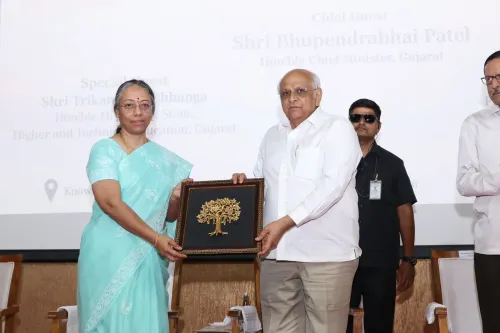
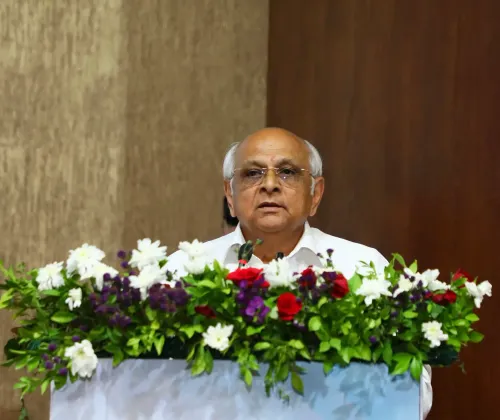
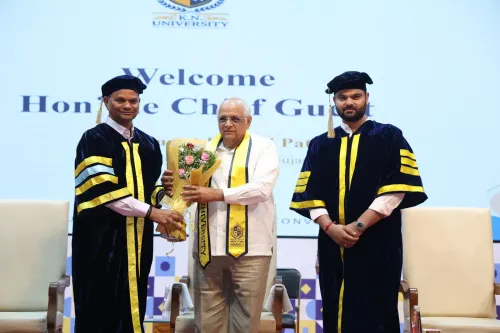
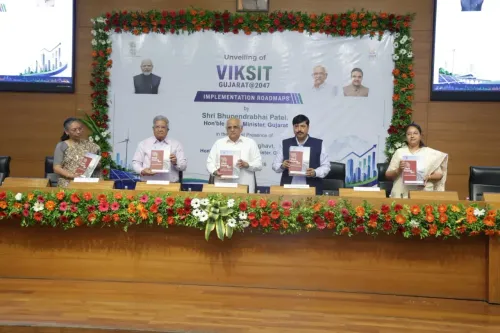
CM Bhupendra Patel addressed the valedictory session of the 'Viksit Gujarat 2047: Higher Education for Future Workforce Readiness' conference in Ahmedabad on 3 November 2026 .
The event was jointly organised by GRIT and the Gujarat Department of Higher Education .
Patel called for aligning education, research, and skills with evolving technology and industry requirements.
He credited PM Narendra Modi 's leadership and the National Education Policy 2020 as the framework for Gujarat's youth empowerment.
Viksit Gujarat 2047 is Gujarat's state-level articulation of the national Viksit Bharat 2047 development vision.
Academics, industry leaders, and policymakers participated, with their insights intended to strengthen the state's higher education ecosystem.
A vision for a future-ready Gujarat took centre stage in Ahmedabad on Tuesday, 3 November 2026, as Gujarat Chief Minister Bhupendra Patel addressed the valedictory session of the 'Viksit Gujarat 2047: Higher Education for Future Workforce Readiness' conference — a high-stakes gathering that put the state's education ambitions squarely under the national spotlight.
'A capable, skilled, and future-ready young generation forms the bedrock of a Viksit Gujarat,' the Chief Minister declared, framing the state's youth not as beneficiaries of policy but as its very foundation. The conference was jointly organised by GRIT and the Gujarat Department of Higher Education, bringing together academics, industry leaders, and policymakers in a single room.
NEP as Gujarat's Workforce Blueprint
At the heart of CM Patel's address was a pointed call to align education, research, and skills with 'evolving technology and industry needs' — language that maps directly onto the National Education Policy (NEP) 2020, India's landmark reform framework. Launched under Prime Minister Narendra Modi, the NEP overhauled decades-old curriculum architecture to foreground multidisciplinary learning, applied research, and industry linkage. For Gujarat, the policy is not a distant directive — it is the operational manual.
Patel credited PM Modi's 'visionary leadership' for keeping Gujarat 'steadfast in empowering our youth for global competition.' The explicit invocation of the NEP at a state valedictory signals that Gandhinagar intends to treat the conference's recommendations as actionable inputs, not archived proceedings.
Viksit Gujarat 2047 and the National Roadmap
The conference title is no accident. Viksit Gujarat 2047 is the state's deliberate echo of the central government's Viksit Bharat 2047 vision — the aspiration to make India a fully developed nation by its centenary of independence. Gujarat, consistently among India's highest-ranked states on economic output, is positioning higher education reform as its core contribution to that national arc.
The cross-section at the conference — academics, corporate voices, and administrators together — reflects a structural shift. State governments under BJP-led administrations have increasingly framed education not as a welfare measure but as an economic infrastructure decision, one where curriculum gaps are treated with the same urgency as roads or power grids.
What the Ahmedabad Dialogue Could Unlock
The immediate watch-point is whether the insights gathered at this conference translate into concrete NEP curriculum rollouts at Gujarat's universities and measurable industry-academia partnership announcements. Patel's closing of the valedictory session — rather than simply inaugurating it — suggests the government wanted direct ownership of the conference's conclusions, not just its optics.
For students currently in Gujarat's higher education system, the policy direction is clear: the state is betting that aligning degrees with technology and industry demands today is the only credible answer to global competition tomorrow. The conference has set the frame. The execution is next.
Point of View
The BJP government in Gujarat signals vertical alignment with New Delhi at a moment when states are competing to demonstrate implementation credibility on national reforms. The real test will be whether university-level curriculum changes and industry MoUs follow from this dialogue, or whether the valedictory address marks the high-water point of the initiative.
NationPress
3 Nov 2026
Frequently Asked Questions
What is the Viksit Gujarat 2047 conference about?
'Viksit Gujarat 2047: Higher Education for Future Workforce Readiness' is a conference organised by GRIT and the Gujarat Department of Higher Education in Ahmedabad, aimed at aligning the state's higher education system with technology and industry demands to build a future-ready workforce by 2047.
What did CM Bhupendra Patel say at the education conference?
CM Bhupendra Patel said that a capable, skilled, and future-ready young generation forms the bedrock of a Viksit Gujarat, and called for aligning education, research, and skills with evolving technology and industry needs under the National Education Policy.
What is the National Education Policy 2020?
The National Education Policy 2020 is India's landmark education reform framework launched under PM Narendra Modi, emphasising multidisciplinary learning, applied research, and skill alignment with industry — replacing a decades-old curriculum structure.
What is GRIT in Gujarat education?
GRIT is a Gujarat government body that co-organised the Viksit Gujarat 2047 higher education conference alongside the state's Department of Higher Education; its precise full mandate from this 2026 event is not independently detailed in available sources.
How does Viksit Gujarat 2047 connect to Viksit Bharat 2047?
Viksit Gujarat 2047 is the state's alignment with the central government's Viksit Bharat 2047 vision — the goal of making India a fully developed nation by its centenary of independence — with Gujarat using education reform as its primary state-level contribution to the national roadmap.