Pentagon Attributes Strait of Hormuz Shipping Disruptions to Iran

Synopsis
In a recent briefing, the Pentagon highlighted that Iran is solely responsible for disruptions in the Strait of Hormuz, a critical energy route. This revelation underscores ongoing tensions and the vital need for safety in maritime navigation.
Key Takeaways
Iran's actions are cited as the cause of disruptions in the Strait of Hormuz.
The U.S. is actively targeting Iranian naval capabilities.
The Strait of Hormuz is vital for global energy markets.
India's energy costs could be affected by any disruptions.
The U.S. has plans in place to address potential threats.
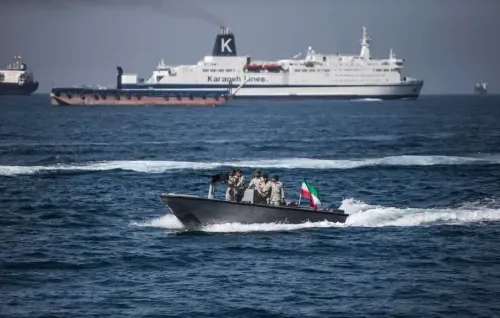
Washington, March 13 (NationPress) The Pentagon stated on Friday that the disruptions affecting commercial shipping in the Strait of Hormuz are attributed to Iran, rather than the United States or its allies, in this vital global energy corridor.
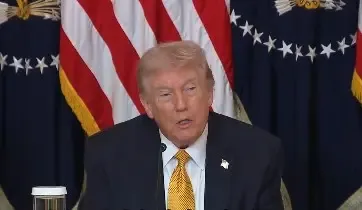
During a news briefing at the Pentagon, U.S. Defense Secretary Pete Hegseth remarked that while commercial vessels can navigate the waterway, their safety is compromised due to Iranian activities amid the ongoing conflict.
“The only factor hindering transit in the Straits currently is Iran's aggressive actions against shipping,” Hegseth emphasized.
The Strait of Hormuz serves as a crucial link between the Persian Gulf and worldwide markets, responsible for a substantial portion of the global oil supply, making any disruptions a focal point for energy-importing nations, including India.
Chairman of the Joint Chiefs of Staff Gen. Dan Caine confirmed that U.S. forces are actively targeting Iranian capabilities that pose threats to maritime navigation.
“Our bases and partners are persistently dismantling the Iranian Navy,” Caine stated, noting that operations also include strikes on Iran's mine-laying capabilities and naval infrastructure.
“This entails targeting Iran's mine-laying operations and crippling their capacity to strike commercial ships,” he explained.
Caine reported significant progress, declaring that U.S. military actions have notably weakened Iranian naval power throughout the campaign.
“In under two weeks, we have rendered the Iranian Navy combat ineffective,” he commented.
Nevertheless, he cautioned that Iran continues to possess the capacity to jeopardize shipping activities.
“Iran can still pose risks to friendly forces and commercial shipping, and our efforts in this regard are ongoing,” Caine stated.
Hegseth remarked that the United States had long prepared for the likelihood of Iran attempting to disrupt shipping through the strait.
“For decades, Iran has threatened maritime operations in the Strait of Hormuz,” he said.
“We have a contingency plan for every scenario,” he added.
Additionally, he mentioned that Washington is collaborating with other governmental bodies and international allies to ensure the uninterrupted flow of energy supplies.
“We are coordinating with our interagency partners to guarantee that energy continues to flow,” Hegseth concluded.
The strait has historically been regarded as a potential flashpoint during conflicts with Iran, which has frequently threatened to obstruct this critical route during times of heightened tension.
This narrow channel is essential for global energy markets, with approximately one-fifth of the world's oil shipments traversing it daily.
For India, one of the leading importers of Gulf crude, maintaining stability in the Strait of Hormuz is of utmost importance, as any disruptions can swiftly escalate energy costs and impact global shipping and insurance markets.
Point of View
It is essential to present an unbiased perspective on this developing story. The Pentagon's assertion regarding Iran's responsibility for disruptions in the Strait of Hormuz highlights a significant geopolitical issue. Maintaining maritime security in this vital corridor is crucial, particularly for energy-importing nations.
NationPress
17 Sept 2026
Frequently Asked Questions
Why is the Strait of Hormuz significant?
The Strait of Hormuz is a crucial maritime passage connecting the Persian Gulf to global markets, through which approximately one-fifth of the world's oil shipments travel daily.
What has the Pentagon said about Iran's actions?
The Pentagon has stated that Iran is responsible for disruptions to commercial shipping in the Strait of Hormuz, emphasizing that these actions threaten maritime traffic.
How are U.S. forces responding to the situation?
U.S. forces are actively targeting Iranian capabilities that threaten shipping, focusing on dismantling the Iranian Navy and its mine-laying operations.
What impact could disruptions in the Strait have on global markets?
Disruptions in the Strait of Hormuz can rapidly increase energy costs and affect global shipping and insurance markets, particularly for countries heavily reliant on Gulf crude.
Is there a plan in place for potential further disruptions?
Yes, the U.S. has contingency plans for various scenarios concerning potential disruptions in the Strait of Hormuz, to ensure the flow of energy supplies is maintained.