Trump Urges Global Economies to Aid in Securing the Strait of Hormuz After Major Iran Military Strikes
Synopsis
In a recent address, President Trump proclaimed that US military forces have effectively diminished Iran’s military capabilities. He called upon global economies to assist in securing the vital Strait of Hormuz, emphasizing its importance for global oil transportation.
Key Takeaways
Trump claims severe damage to Iran's military.
Over 7,000 US strikes have targeted Iranian assets.
Strait of Hormuz is vital for global oil supply.
Countries relying on the strait urged to contribute to its security.
US military actions have led to a significant reduction in Iranian missile and drone capabilities.
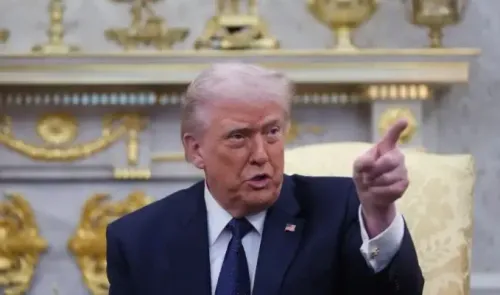
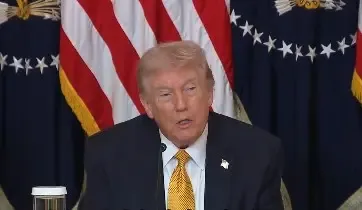
Washington, March 16 (NationPress) - President Donald Trump announced on Monday that American military forces have significantly undermined Iran’s military strength. He urged major global economies to assist in securing the Strait of Hormuz, which is a crucial energy corridor essential for the transportation of a large portion of the world’s oil.
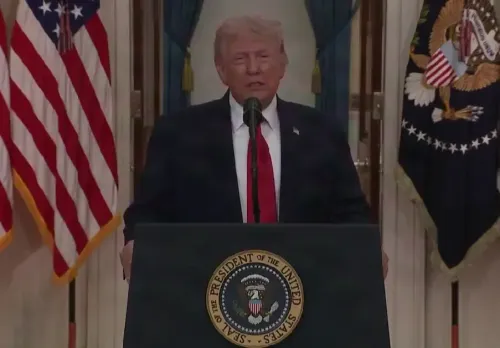
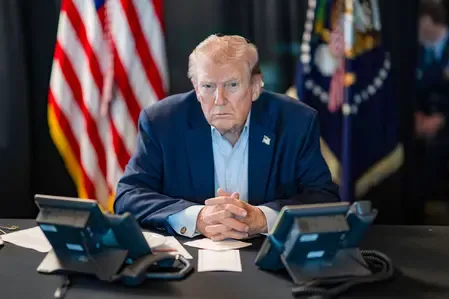
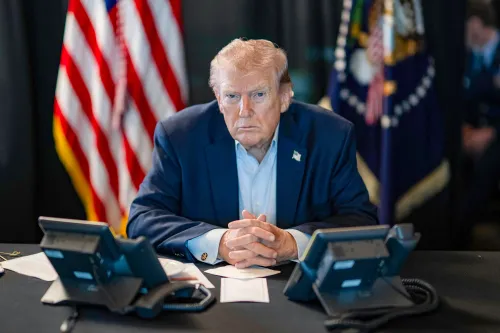
During a meeting with the board members of the Trump-Kennedy Centre at the White House, Trump stated that the US military operations against Iran have escalated in intensity recently.
“Our formidable military campaign aimed at neutralizing the threats from the Iranian regime has been in full swing over the past few days,” Trump remarked.
He asserted that the campaign has greatly diminished Iran’s military capabilities.
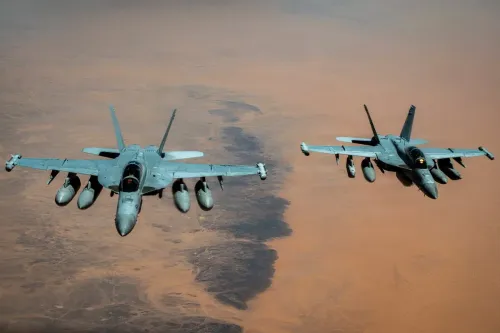
“They have been effectively destroyed,” Trump stated. “The Air Force has been wiped out, the Navy has been devastated. Numerous ships have been sunk.”
Trump indicated that the United States has executed an extensive series of strikes since the onset of the conflict.
“Since the conflict began, we have targeted over 7,000 locations throughout Iran,” he explained, noting that these included “primarily commercial and military sites.”
According to the President, these strikes have drastically curtailed Iran’s missile and drone operations.
“We have achieved a 90% decrease in their ballistic missile launches and a 95% decline in drone strikes,” he revealed.
Additionally, Trump mentioned that US forces have concentrated on dismantling facilities associated with Iran’s weapons production.
“We have also targeted the factories where they produce missiles and drones,” he added.
Furthermore, Trump highlighted significant damage to Iran’s naval capabilities.
“Over 100 Iranian naval vessels have been sunk or destroyed in the last week and a half,” he noted.
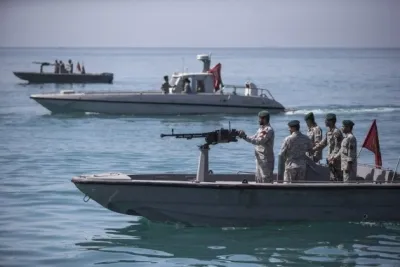
He also pointed out that US forces have focused on eliminating ships capable of deploying naval mines that pose threats to global shipping.
“We are severely degrading their ability to jeopardize commercial shipping in the Strait of Hormuz, having destroyed more than 30 mine-laying vessels,” Trump said.
Despite the aggressive US military actions, Trump emphasized that countries whose economies are heavily dependent on the Strait of Hormuz should contribute more to the protection of this crucial shipping route.
“We strongly encourage nations whose economies are more reliant on the strait than ours to step up,” he stated.
The President pointed out that the US imports a minimal amount of oil through this narrow passage compared to other significant economies.
“We receive less than 1% of our oil from the strait,” Trump clarified. “Japan relies on it for 95%. China for 90%. Many European nations depend on it significantly. South Korea receives 35%.”
“We want those countries to assist us with securing the strait,” he further explained.
Trump suggested that some longstanding US security allies have shown hesitance to contribute, even though America has committed troops to their defense.
“We have some nations where we station 45,000 troops to protect them,” he stated.
“Yet when we inquire if they possess any minesweeping capabilities, the response is, ‘We’d prefer not to get involved, sir.’”
Earlier, White House Press Secretary Karoline Leavitt informed reporters that various countries are reaping benefits from the US military’s campaign targeting Iran’s capabilities.
“These nations are greatly benefiting from the United States military neutralizing the Iranian threat,” she stated.
Leavitt added that Iran has posed risks not only to the US but also to its partners across the Middle East and Western allies.
“The rogue Iranian regime has long been a threat not just to the United States but also to our Gulf and Arab allies in the region,” she pointed out.
She also indicated that Iran’s missile capabilities threaten both European allies and US bases situated in the region.
“The ballistic missile threat that the US military is currently eliminating was an immediate danger to our European allies as well as our bases in the area,” Leavitt said.
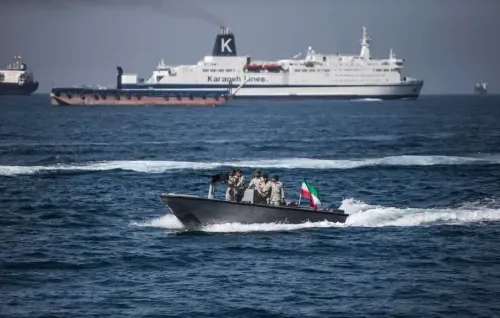
The Strait of Hormuz, which lies between Iran and Oman, is considered one of the world’s most vital energy chokepoints, responsible for approximately one-fifth of global oil shipments.
Conflicts involving Iran have frequently heightened tensions around this narrow passage, leading to disruptions that raise concerns about global energy prices and international trade.
Point of View
Trump's assertions about Iran's weakened military capabilities reflect a critical moment in US-Iran relations. The emphasis on securing the Strait of Hormuz highlights the interconnectedness of global economies and the importance of multilateral cooperation in maintaining stability in vital trade routes.
NationPress
7 Oct 2026
Frequently Asked Questions
What is the significance of the Strait of Hormuz?
The Strait of Hormuz is a crucial passage for oil shipments, carrying about one-fifth of global oil supply, making its security vital for global energy markets.
What actions has the US taken against Iran recently?
The US has conducted over 7,000 strikes targeting Iranian military and commercial installations, significantly reducing Iran’s missile and drone capabilities.
Which countries are encouraged to contribute to the security of the Strait?
Countries that rely heavily on the Strait of Hormuz for their oil supplies, such as Japan, China, and South Korea, are encouraged to assist in its security.
How has Iran's military been affected by US actions?
According to President Trump, Iran's military has suffered substantial losses, including the destruction of over 100 naval vessels and significant reductions in missile and drone attacks.
What are the implications of the US military campaign for global economies?
The campaign aims to stabilize the region and ensure the uninterrupted flow of oil, which is crucial for the economies of many countries relying on the Strait of Hormuz.