MP CM Yadav drives metropolitan push for Indore, Bhopal, Ujjain
Synopsis
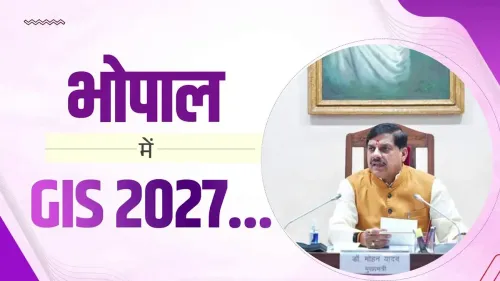
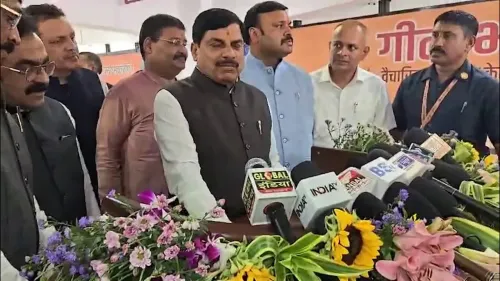
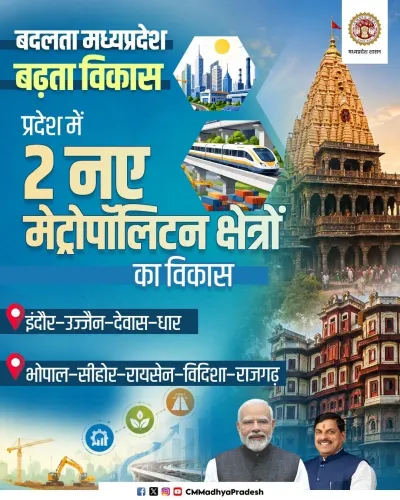
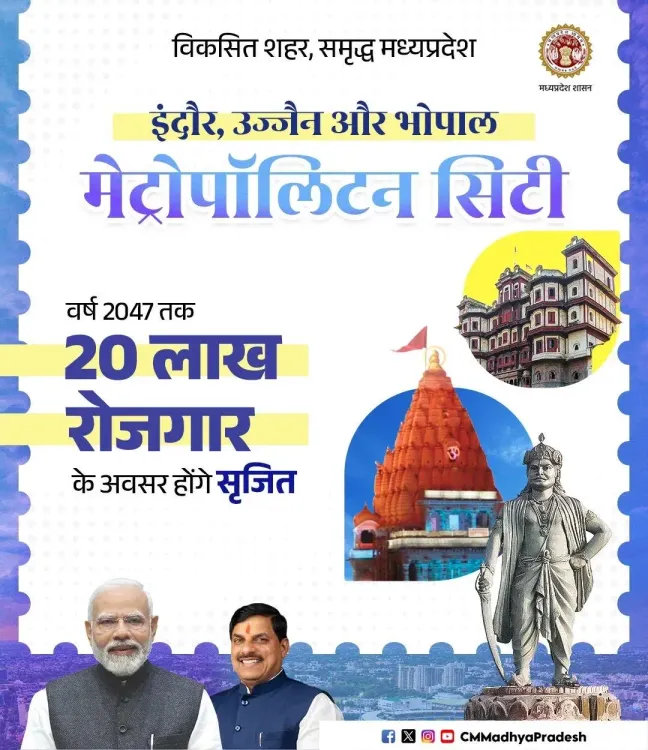
The Chief Minister's Office of Madhya Pradesh announced on 3 November 2026 that Indore, Bhopal, and Ujjain will be developed as metropolitan cities, signalling a major escalation in the state's urban infrastructure and governance ambitions under CM Dr. Mohan Yadav.
Key Takeaways
Indore, Bhopal, and Ujjain are being developed as metropolitan cities under the Madhya Pradesh government's urban development push.
The announcement was made by the Chief Minister's Office of Madhya Pradesh and attributed to CM Dr.
Mohan Yadav on 3 November 2026 .
Indore and Bhopal were previously selected under the Smart Cities Mission (2015) and have active metro rail projects.
Ujjain's inclusion reflects surging infrastructure demand tied to religious tourism and the Mahakal Corridor project.
Metropolitan city status can activate Metropolitan Planning Committees and unlock higher-tier central funding and land-use authority.
The move aligns with national urban schemes like AMRUT and India's broader push to elevate tier-2 cities to metropolitan governance standards.
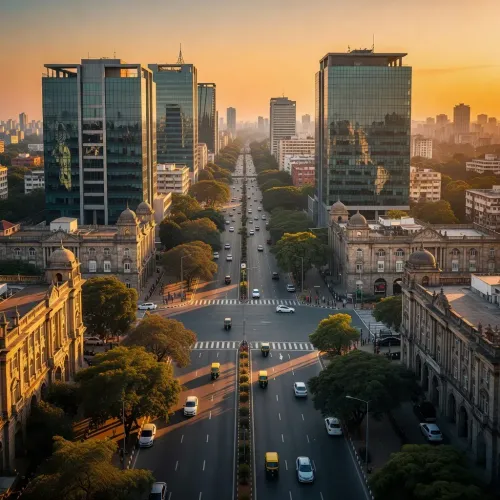
Three of Madhya Pradesh's most consequential cities are getting a new mandate — and a new identity. The Chief Minister's Office of Madhya Pradesh announced on Tuesday, 3 November 2026 that Indore, Ujjain, and Bhopal are being developed as full metropolitan cities, a step that the state government says will give urban growth in the region an entirely new trajectory.
The post, attributed to Chief Minister Dr. Mohan Yadav, declared: 'Shahron ke aadhunik vikas se Madhya Pradesh ki pragati ko nayi udaan' — 'Modern urban development gives Madhya Pradesh's progress new wings.' The three cities are being repositioned not merely as large towns but as planned metropolitan centres, a classification that carries significant implications for governance, infrastructure investment, and economic planning.
Why Indore, Bhopal, and Ujjain — and why now
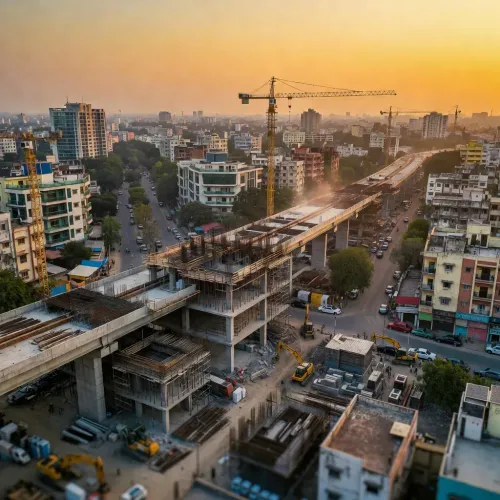
Indore, the state's commercial capital and its largest city, has already been through a decade of transformation. Selected under the Smart Cities Mission (2015), it consistently ranked at the top of national cleanliness surveys and has an active metro rail project underway with central assistance. Its inclusion in a metropolitan framework is a natural escalation of that investment cycle.
Bhopal, the state capital, carries both political and infrastructure weight — its metro rail corridor has been in development for years, and an upgraded metropolitan designation would unlock higher-tier planning authority and spending powers for the municipal corporation. Ujjain, meanwhile, represents a different logic entirely: a historic city whose infrastructure demands have surged alongside religious tourism, especially in the aftermath of the Mahakal Corridor project that reshaped its urban core.
The national pattern MP is tapping into
This move fits squarely into India's broader urban policy direction. Schemes like AMRUT (Atal Mission for Rejuvenation and Urban Transformation) and the Smart Cities Mission have been systematically pushing tier-2 cities toward metropolitan-scale governance and connectivity. States that have moved early — investing in metro rail, integrated mobility, and zoned commercial districts — have attracted the industrial and services investment that follows upgraded urban infrastructure.
Madhya Pradesh has made urban connectivity a consistent plank of its growth strategy under CM Mohan Yadav, who took office in December 2023. Framing three cities simultaneously as metropolitan zones signals an attempt to create an urban economic corridor across the state's western and central belt — linking Indore's commerce, Bhopal's administrative heft, and Ujjain's cultural and tourism economy into a single developmental arc.
What a metropolitan designation could mean on the ground
Metropolitan city status in India typically activates a distinct governance tier — a Metropolitan Planning Committee — and changes the calculus for central fund allocation, land-use authority, and infrastructure project sanctioning. For residents, it can mean faster approvals for housing projects, more robust public transit, and integrated utility planning across a wider urban agglomeration.
The real test will come in the next state budget and in central urban ministry allocations — whether the metropolitan ambition translates into fresh funding lines or merely repackages existing scheme money will determine how quickly this vision lands on the ground.
Three cities, one strategic bet: Madhya Pradesh is staking its next growth chapter on the belief that metropolitan-scale governance can do what incremental urban spending never quite managed.
Point of View
Bhopal's administrative infrastructure, and Ujjain's tourism pull under a single metropolitan policy umbrella, Madhya Pradesh is attempting to build an urban economic corridor that can compete with more industrialised states for investment. For CM Mohan Yadav, who has led the state since December 2023, this announcement reinforces an infrastructure-first political identity ahead of future electoral cycles. The move also positions the state to maximise central government transfers under schemes like AMRUT 2.0, where metropolitan-tier cities attract larger allocations. Whether the designation translates into structural governance reform or remains an aspirational label will depend heavily on legislative follow-through and the next Union Budget's urban allocation.
NationPress
3 Nov 2026
Frequently Asked Questions
Which cities in Madhya Pradesh are being developed as metropolitan cities?
Indore , Bhopal , and Ujjain are the three cities the Madhya Pradesh government has announced will be developed as metropolitan cities under its urban development initiative.
What does metropolitan city status mean for Indore, Bhopal, and Ujjain?
Metropolitan city status typically enables the formation of a Metropolitan Planning Committee, unlocks higher-tier central government funding, expands land-use authority, and supports integrated infrastructure planning including metro rail and utility networks.
Who announced the metropolitan city development plan in Madhya Pradesh?
The announcement was made by the Chief Minister's Office of Madhya Pradesh and attributed to Chief Minister Dr. Mohan Yadav on 3 November 2026 .
Is Indore already a smart city in Madhya Pradesh?
Yes. Indore was selected under the central government's Smart Cities Mission in 2015 and has undertaken major urban redevelopment and mobility projects, including an active metro rail project. The new metropolitan designation builds on that foundation.
How does Madhya Pradesh's metropolitan plan connect to national urban schemes?
The initiative aligns with national programmes like AMRUT (Atal Mission for Rejuvenation and Urban Transformation) and the Smart Cities Mission, which encourage tier-2 cities to adopt metropolitan-scale governance and infrastructure as part of India's broader urban growth strategy.