CM Bhajanlal Pitches Rajasthan to Top Renewable Investors
Synopsis
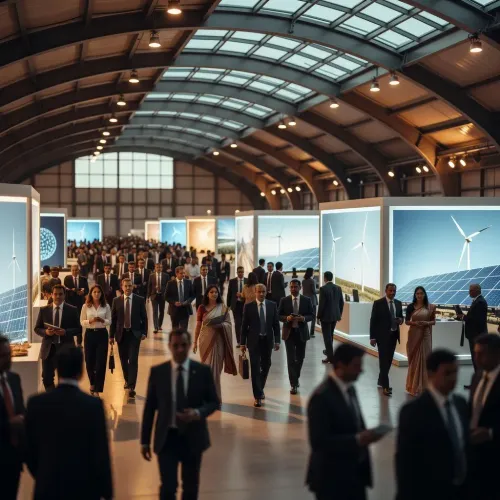
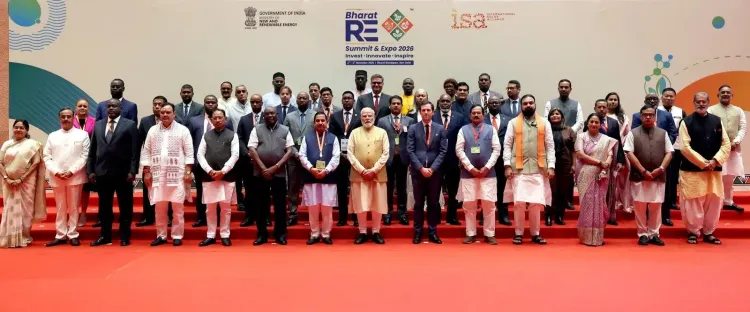
PM Modi inaugurated the Bharat Renewable Energy Summit 2026 at Bharat Mandapam, announcing India met its Paris Agreement 50% non-fossil capacity target five years early. CM Bhajanlal Sharma simultaneously hosted a 50-plus investor roundtable, drawing Brookfield, ReNew, Aditya Birla Renewables, Jindal Group, and Avada to pitch Rajasthan's renewable energy potential.
Key Takeaways
India achieved over 50 percent non-fossil electricity capacity in 2025 , five years ahead of the Paris Agreement target of 2030 .
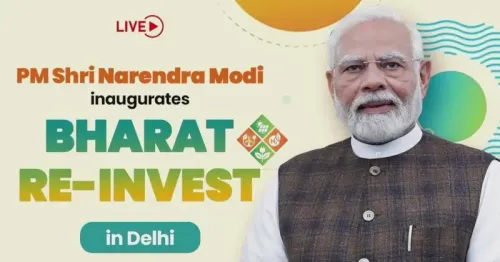
PM Narendra Modi inaugurated the Bharat Renewable Energy Summit and Expo-2026 at Bharat Mandapam, New Delhi on November 3, 2026 .
CM Bhajanlal Sharma conducted a roundtable with more than 50 major investors to attract renewable energy capital to Rajasthan .
Companies present included Brookfield, ReNew, Aditya Birla Renewables, Jindal Group , and Avada .
Union Minister Pralhad Joshi , Energy Minister Hiralal Nagar , and Chief Secretary V.
Srinivas were also present at the Rajasthan session.
Rajasthan already ranks among India's top states in installed renewable capacity, leveraging its high solar irradiance and wind potential.
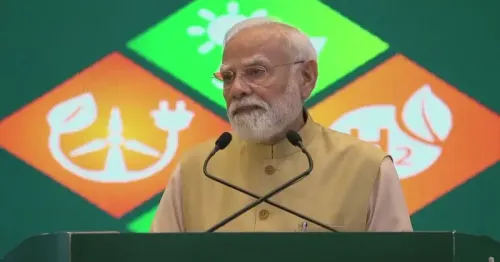
India crossed a landmark climate milestone five years ahead of schedule — and Rajasthan moved fast to capitalise on it. Prime Minister Narendra Modi inaugurated the 'Bharat Renewable Energy Summit and Expo-2026' at Bharat Mandapam, New Delhi, on Tuesday, November 3, 2026, announcing that India had already achieved its Paris Agreement target of having more than 50 percent of installed electricity capacity from non-fossil fuel sources — a goal set for 2030 but reached in 2025.
Modi's landmark declaration at Bharat Mandapam
Addressing the summit, PM Modi declared that India's non-fossil energy capacity had crossed the 50 percent threshold — fulfilling its updated Nationally Determined Contribution under the Paris Agreement a full five years early. He framed the achievement under India's guiding philosophy of 'Ek Dharti, Ek Parivar, Ek Bhavishya' ('One Earth, One Family, One Future'), positioning the country as a driver of global clean-energy cooperation rather than merely a participant in it.
India's updated climate pledge, submitted in 2022, had committed to reaching that 50 percent non-fossil capacity mark by 2030. Clearing that bar in 2025 — powered by an aggressive buildout of solar and wind capacity across sun-drenched and wind-rich states — underlines how sharply the country's energy mix has shifted since the National Solar Mission was launched in 2010.
Bhajanlal's roundtable — and the boardrooms in the room
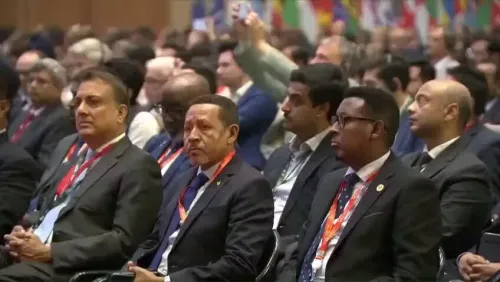
Chief Minister Bhajanlal Sharma wasted no time translating the national momentum into a state-level pitch. In the presence of Union Minister for New and Renewable Energy Pralhad Joshi, he convened a roundtable with more than 50 major investors, spotlighting Rajasthan's vast solar irradiance, wind corridors, and land availability as competitive advantages no developer can ignore.
The boardroom was stacked. Representatives from Brookfield, ReNew, Aditya Birla Renewables, Jindal Group, and Avada were among those present. CM Bhajanlal explicitly invited each of them to commit capital to the state, underscoring what planners have long argued: Rajasthan is not merely a promising renewable destination — it already ranks among India's top states in installed renewable capacity, and its geographic edge only grows more valuable as the grid expands.
Also present were Minister of State for Energy (Independent Charge) Hiralal Nagar and Chief Secretary V. Srinivas, signalling that Rajasthan's pitch carried both political and administrative weight.
Rajasthan's stall — and what comes next
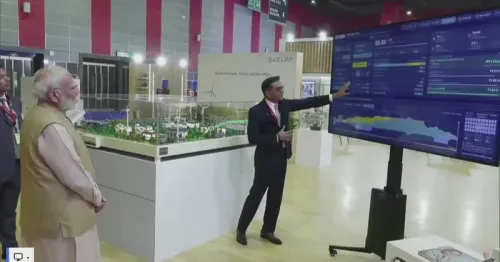
CM Bhajanlal also inaugurated and reviewed Rajasthan's exhibition stalls at the expo, giving the state a visible presence on the national platform. The real test, however, comes in the weeks after the cameras leave: whether the roundtable converts into signed memoranda of understanding, land allocation timelines, and transmission infrastructure commitments that developers need before a project moves off a pitch deck and onto the grid.
With India's clean-energy story now a verified global talking point — and corporate giants already seated at the table — Rajasthan's moment to lock in the next wave of gigawatts is right now.
Point of View
It positions itself as the logical home for the next tranche of corporate renewable investment. The presence of Union Minister Pralhad Joshi at the roundtable also signals strong Centre-state coordination on energy transition policy, which can accelerate project clearances. Whether this translates into binding commitments or remains aspirational will define whether the summit becomes a turning point or just a headline for Rajasthan's renewable ambitions.
NationPress
3 Nov 2026
Frequently Asked Questions
What is the Bharat Renewable Energy Summit 2026?
The Bharat Renewable Energy Summit and Expo-2026 is a national-level conference inaugurated by PM Narendra Modi at Bharat Mandapam, New Delhi on November 3, 2026 , bringing together government leaders and private investors to advance India's clean energy agenda.
Did India meet its Paris Agreement renewable energy target?
Yes. PM Modi announced at the summit that India had surpassed the 50 percent non-fossil electricity capacity target set under the Paris Agreement in 2025 — five years ahead of the 2030 deadline.
What companies attended Rajasthan's renewable energy roundtable?
Representatives from Brookfield, ReNew, Aditya Birla Renewables, Jindal Group , and Avada , among others, participated in the roundtable chaired by CM Bhajanlal Sharma .
Why is Rajasthan important for renewable energy in India?
Rajasthan ranks among India's leading states in installed renewable capacity, offering high solar irradiance, strong wind corridors, and large tracts of land suitable for utility-scale projects.
Who else was present at the Rajasthan investor roundtable?
Union Minister for New and Renewable Energy Pralhad Joshi , State Energy Minister Hiralal Nagar , and Chief Secretary V. Srinivas attended alongside CM Bhajanlal Sharma and more than 50 private investors.