US Issues Stark Warning: Potential Strikes on Iran's Energy Infrastructure Loom
Synopsis
In a critical statement, the U.S. warns Iran of possible strikes on its energy infrastructure if a diplomatic deal isn't reached. Defense Secretary Pete Hegseth stresses military readiness while expressing a preference for negotiation.
Key Takeaways
U.S. warns Iran of potential strikes on energy infrastructure if no deal is reached.
Defense Secretary emphasizes military readiness beyond current blockade .
Diplomatic solutions are preferred, but military options remain active .
Naval blockade is impacting Iran's economic lifelines.
Military officials confirm high readiness levels despite ceasefire.
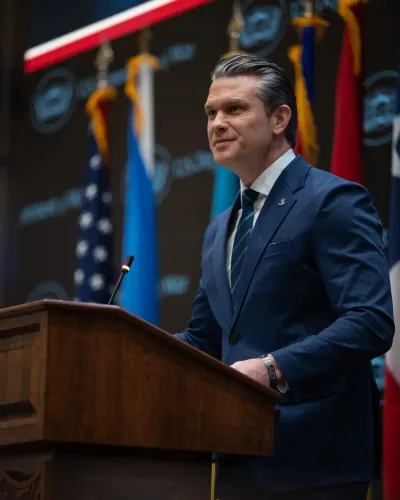
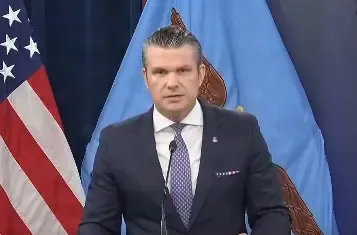
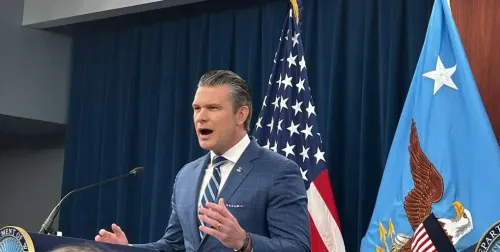
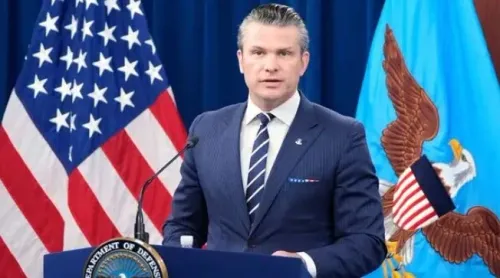
Washington, April 16, (NationPress) On Thursday, the United States issued a stern warning to Iran regarding its energy infrastructure, indicating that it could become a target if a diplomatic agreement is not reached. During a Pentagon briefing, Defense Secretary Pete Hegseth emphasized that American forces are ready to escalate operations beyond the existing blockade.
Hegseth stated that U.S. military personnel are poised to strike vital sectors, including power generation and energy facilities, should Tehran make unwise decisions. “We are fully prepared to act on your critical dual-use infrastructure… and your energy industry,” he asserted.
While expressing a preference for diplomatic solutions, he made it clear that military options remain actively available. “We’d prefer not to resort to this, but we stand ready to act at the direction of our President and with a simple push of a button,” he added.
Joining him were Air Force General Dan Caine, the Chairman of the Joint Chiefs of Staff, and Admiral Bradley Cooper, who oversees U.S. military operations in the Middle East as Commander of U.S. Central Command.
This warning coincides with the U.S. implementing a naval blockade targeting Iran’s ports and coastline, part of a larger strategy to exert pressure on Tehran following what officials have labeled as recent combat operations under Operation Epic Fury.
Hegseth noted that the blockade is already impacting Iran’s economic lifelines, particularly its energy exports. “Your energy is not moving and will not move, and we can maintain this pressure indefinitely,” he stated.
He described the blockade as a more measured approach compared to direct strikes but cautioned that escalation remains a viable option. “This blockade… is the more courteous way to proceed,” he warned, emphasizing that failure to reach a resolution could lead to attacks on infrastructure.
Military officials confirmed that U.S. forces are maintaining high readiness levels despite a ceasefire that has temporarily halted major combat operations. Caine remarked that the joint force is prepared “to react to major combat operations at literally a moment’s notice.”
The Pentagon reported that Iran’s military capabilities, particularly its command and control systems, have significantly diminished during recent operations. Hegseth noted that Tehran’s ability to coordinate has reached an all-time low, although he acknowledged that the regime still has a motive to avoid renewed conflict.
Cooper indicated that U.S. forces in the region are using this ceasefire period to enhance their operational readiness. “We’re rearming, we’re retooling, and we’re adjusting our tactics,” he said, adding that troops remain “highly motivated” following recent engagements.
He also highlighted collaboration with regional allies, including Gulf states and Israel, referring to them as “exceptional partners” in supporting joint defense efforts throughout the Middle East.
Point of View
It's crucial to recognize the significant implications of the U.S. warning to Iran. This situation underscores the delicate balance between military readiness and the pursuit of diplomatic solutions in international relations.
NationPress
19 Sept 2026
Frequently Asked Questions
What prompted the U.S. warning to Iran?
The U.S. issued a warning due to concerns over Iran's energy infrastructure and the potential for military escalation if a diplomatic deal is not reached.
Who made the warning on behalf of the U.S.?
The warning was articulated by Defense Secretary Pete Hegseth during a Pentagon briefing.
What military actions is the U.S. prepared to take?
The U.S. is prepared to target critical sectors of Iran's energy infrastructure if necessary, while also maintaining a naval blockade.
Is there a diplomatic solution sought by the U.S.?
Yes, the U.S. prefers a diplomatic resolution but has made it clear that military options remain fully operational.
How has Iran's military been affected recently?
Recent U.S. operations have significantly degraded Iran's military capabilities, particularly its command and control systems.