US Arms Supplies Under Pressure Amidst Iran Conflict: Implications for Ukraine Support

Synopsis
Amid a Senate hearing, US lawmakers express grave concerns over the depletion of American arms stockpiles due to the ongoing Iran conflict, which is raising alarms about the potential impact on support for Ukraine and the future of global arms control.
Key Takeaways
US arms supplies are under severe strain due to the ongoing conflict with Iran.
Support for Ukraine may be affected as American reserves deplete.
Lawmakers express concerns about the future of arms control.
China's nuclear expansion complicates the global security landscape.
Urgent reevaluation of military strategies is necessary to address current challenges.
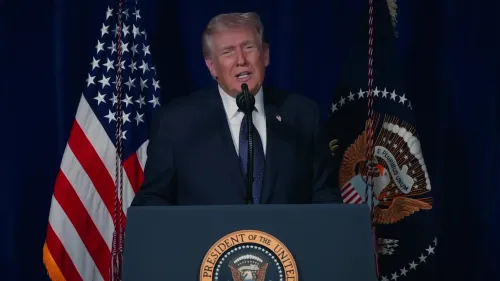
Washington, March 25 (NationPress) US legislators have raised alarms about the increasing strain on American ammunition inventories and the swiftly deteriorating global nuclear situation during a Senate hearing that unveiled significant worries regarding the Trump administration's military conflict with Iran and the trajectory of arms control.
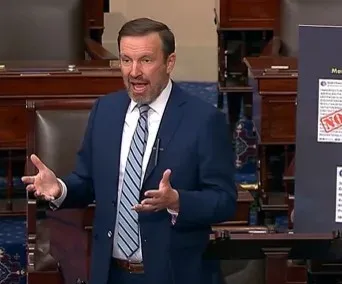
At a session of the Senate Foreign Relations Committee, Senator Jeanne Shaheen, the Ranking Member, highlighted that the rate of munitions usage has revealed critical deficiencies in both planning and strategic foresight.
“Last Thursday, nearly three weeks into the conflict with Iran, the Administration authorized over 16 billion dollars in arms sales to the Middle East... employing emergency powers to bypass the usual Congressional scrutiny,” she stated.
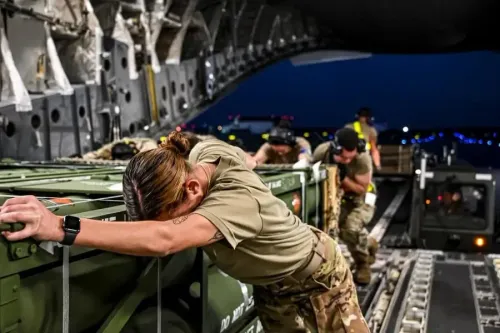
Shaheen characterized the current scenario as a “munitions and weapons” crisis, warning that US reserves are being swiftly exhausted. “In certain instances, we possess only around a quarter of the interceptors required,” she elaborated, expressing uncertainty regarding the ultimate objective of the war in Iran.
This pressure is already impacting other conflicts. “US support has become increasingly unreliable, prompting allies to seek out or stockpile American-made weaponry,” she noted, specifically mentioning Ukraine.
Shaheen remarked that “over 80 percent of their operations are now conducted via drones,” emphasizing a shift towards “autonomous systems and drone swarms.” However, she cautioned that “the support we have in the US is not keeping pace.”
Recent analyses have also raised alarms about the rapid depletion of US stockpiles of advanced missile defense technologies, questioning America's capacity to manage multiple simultaneous conflicts.
Committee Chairman Senator Jim Risch defended the administration’s strategy, situating the Iran conflict within a wider strategic context.
“Military actions in the Middle East have underscored what the United States must undertake to safeguard its citizens from imminent threats posed by adversaries,” he asserted.
Risch warned that the globe has transitioned into a “multipolar nuclear environment,” where the US contends with “two nuclear near-peer competitors in Russia and China,” alongside “rogue nations with nuclear ambitions.”
He contended that outdated arms control frameworks are inadequate. “Nuclear agreements from previous eras no longer fulfill our nation's requirements,” he said, adding that “if our adversaries are expanding their nuclear stockpiles, we regrettably must respond in kind.”
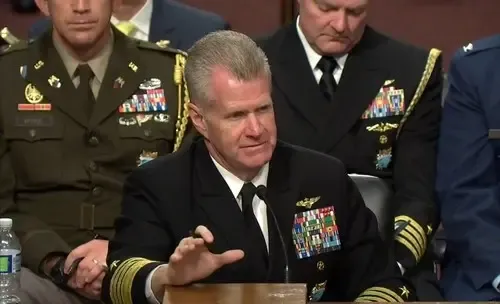
Under Secretary of State for Arms Control and International Security Thomas DiNanno informed lawmakers that the administration is actively pursuing “verifiable and enforceable arms control agreements that bolster American national security.”
He defended the transition away from legacy agreements, labeling the New START treaty as “a remnant of a security environment that has become disconnected from contemporary realities,” particularly in its failure to address China’s nuclear escalation.
Lawmakers from both parties expressed apprehension regarding the disintegration of arms control frameworks. Shaheen cautioned that “discussions on future arms control initiatives have come to a standstill,” noting that China’s unwillingness to engage effectively hinders progress.
She also pointed out escalating threats from Russia, including the deployment of tactical nuclear arms nearer to NATO and the experimentation with new systems that are increasingly difficult to monitor.
Simultaneously, China is “constructing over 300 new missile silos” and expanding its arsenal “with minimal transparency,” she indicated.
This hearing occurs amidst rising global tensions following US military actions against Iran, significantly amplifying the demand for advanced munitions and missile defense systems.
Point of View
The situation regarding US arms supplies is critical. The implications of the Iran conflict are far-reaching, potentially affecting global stability and US commitments to allies such as Ukraine. We must prioritize a comprehensive strategy to address these challenges while ensuring national security.
NationPress
22 Sept 2026
Frequently Asked Questions
What is the current state of US arms supplies?
US lawmakers have indicated that arms stockpiles are under significant pressure due to the ongoing conflict with Iran, raising concerns about the ability to support multiple global conflicts simultaneously.
How is the conflict in Iran impacting support for Ukraine?
The US's diminishing arms supplies are making support for Ukraine less predictable, prompting allies to seek alternatives for American-made weaponry.
What are lawmakers' concerns regarding arms control?
Lawmakers fear that the collapse of arms control frameworks, alongside China's refusal to participate in negotiations, could lead to increased global nuclear tension.
What strategies is the US government pursuing for arms control?
The administration is focusing on verifiable and enforceable arms control agreements to enhance national security, moving away from outdated agreements.
What risks does Russia's behavior pose?
The deployment of tactical nuclear weapons closer to NATO and new undetectable systems by Russia heightens the risks for global security.