Escalating Tensions in the US Senate Over Iran Military Strategy
Synopsis
A fierce debate erupts in the US Senate as Democrats demand clarity on President Trump's military strategy in Iran, while Republicans defend the operation and blame Democrats for the ongoing homeland security funding impasse. The conflict raises significant concerns over American troop safety and national security.
Key Takeaways
Senate Division: The US Senate is deeply divided over military actions in Iran.
Demand for Clarity: Democrats are demanding a clear strategy regarding the war.
Funding Implications: The ongoing shutdown is affecting key security operations.
Calls for Hearings: Democratic lawmakers are pushing for accountability from the administration.
Security Concerns: The safety of American troops remains a critical issue.
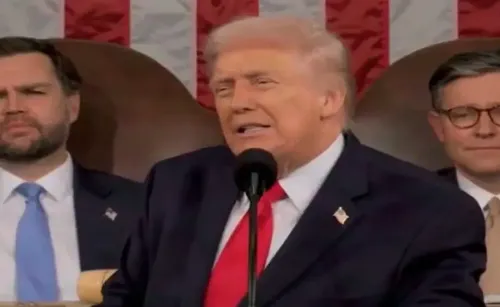
Washington, March 11 (NationPress) Tensions escalated among US senators regarding President Donald Trump’s military actions against Iran, with Democrats insisting on a comprehensive war strategy while Republicans staunchly defended the operation, attributing the prolonged impasse in homeland security funding to their counterparts.
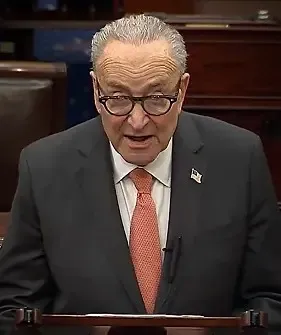
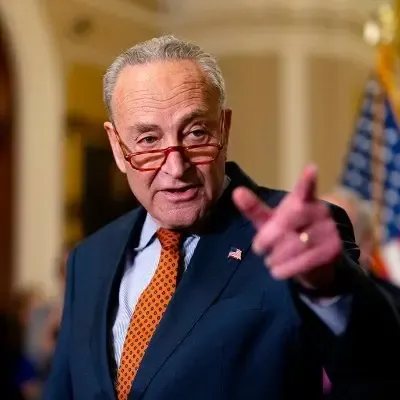
Following a closed policy luncheon, Senate Minority Leader Charles Schumer criticized the administration for providing inconsistent narratives about the conflict and failing to present a coherent plan.
“Trump’s explanations for the war in Iran are becoming increasingly perplexing and contradictory with each passing hour,” Schumer stated.
He highlighted the President's remarks suggesting the conflict may be nearing resolution, even as the Pentagon hinted at potential escalation.
“Yesterday, Trump nonchalantly stated, I think the war is very — is very complete, pretty much,” Schumer recounted. “However, this morning, Hegseth appeared before the cameras and declared today would witness the most intense strikes yet.”
Schumer accused the administration of disseminating false information regarding the situation.
“Donald Trump is being untruthful,” he asserted. “The president of the United States is propagating blatant falsehoods about a war he initiated.”
He cautioned that American troops are being endangered without a clearly defined strategy.
“This is war. American personnel are in jeopardy,” Schumer emphasized. “Yet the administration remains unable to articulate a clear strategy or end goal.”
Schumer mentioned that he and several Democratic colleagues have called for hearings, demanding that senior officials from the administration testify before Congress.
“We urged the Senate to compel Trump administration officials… to come and answer for their shortcomings and clarify what is truly happening,” he elaborated.
Democratic lawmakers also connected the discussions surrounding the Iran conflict to the ongoing shutdown impacting the Department of Homeland Security (DHS).
Schumer contended that Democrats are advocating for reforms in immigration enforcement agencies while still aiming to fund essential security operations.
“What we are requesting is very straightforward,” he stated. “Cease these roving patrols; ensure enforcement and accountability; no more secret police, cameras on, masks off.”
Senator Brian Schatz indicated that Democrats have proposed funding for agencies such as the Transportation Security Administration (TSA), the Coast Guard, the Federal Emergency Management Agency (FEMA), and the Cybersecurity and Infrastructure Security Agency (CISA) while discussions about immigration enforcement are ongoing.
“There is absolutely no justification for holding TSA, the Coast Guard, or FEMA hostage while negotiations are in progress,” Schatz remarked.
Republican leaders dismissed these allegations, accusing Democrats of obstructing funding for crucial security agencies.
Senate Majority Leader John Thune stated that the administration had attempted to negotiate with Democrats but received no response.
“The White House submitted their last proposal to the Democrats 12 days ago,” Thune noted.
He warned that the funding deadlock is beginning to impact operations at several national security agencies.
“You’re starting to see longer lines at the airports because TSA workers aren’t receiving their pay,” Thune explained.
Senator Katie Britt, who oversees DHS funding on the Senate Appropriations Committee, pointed out that the shutdown has persisted for weeks despite Republican negotiating efforts.
“We are now 24, 25 days into a government shutdown affecting the department responsible for keeping Americans safe,” Britt said.
“This is irresponsible, and it’s disingenuous,” she added. “They have not engaged in negotiations.”
Thune also defended the administration’s military actions against Iran, describing it as an essential security undertaking.
“I believe this is a critical mission that needs to be completed, and hopefully, it will be concluded soon,” he stated.
This contentious debate highlighted the profound divisions in Washington concerning both domestic security policy and the escalating conflict in the Middle East.
Point of View
The ongoing conflict between political parties over military strategy and funding underscores a critical need for clarity and accountability in governance. The safety of American troops and national security must remain paramount in these discussions.
NationPress
7 Oct 2026
Frequently Asked Questions
What sparked the conflict among US senators regarding Iran?
The conflict arose from disagreements over President Trump's military campaign against Iran, with Democrats seeking a coherent strategy and Republicans defending the operation.
How has the ongoing shutdown affected homeland security?
The shutdown has led to funding delays for essential agencies, impacting operations like the TSA and increasing wait times at airports.
What are Democrats demanding from the Trump administration?
Democrats are calling for hearings and clearer explanations regarding the military strategy in Iran and the implications for American troops.
What are the Republican leaders' views on the funding impasse?
Republican leaders argue that Democrats are obstructing critical security funding and that the administration has made efforts to negotiate.
What is the significance of the military campaign in Iran?
The military campaign is seen as a necessary security mission, but its execution and strategy have raised concerns among lawmakers.