Trump's Military Action Against Iran Sparks Political Turmoil
Synopsis
Tensions escalate in Washington as Trump's military actions against Iran trigger fierce political disputes. While Democrats view it as an unjustified conflict, Republicans argue it is essential for US security. The debate over congressional authorization and the potential for escalating conflict dominates the discourse.
Key Takeaways
Trump's military actions against Iran have sparked significant political debate.
Democrats criticize the absence of a clear military strategy.
Republicans defend the strikes as necessary for national security.
Concerns grow over potential escalation and economic repercussions.
A War Powers Resolution is being advocated by Democrats.
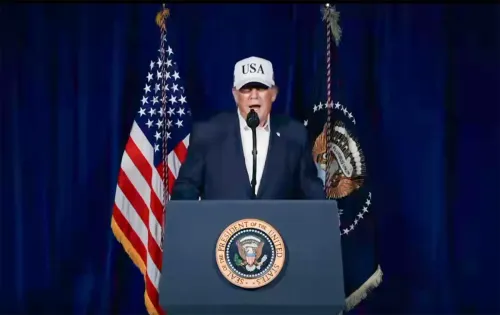
Washington, March 4 (NationPress) The military actions taken by US President Donald Trump against Iran have sparked a significant political clash in the capital, with Democrats labeling it an unwarranted war while Republicans assert that such measures were essential to counteract Iranian missile threats.
Democratic leaders have accused the current administration of dragging the United States into an expanding conflict in the Middle East without a definitive strategy or congressional authorization.
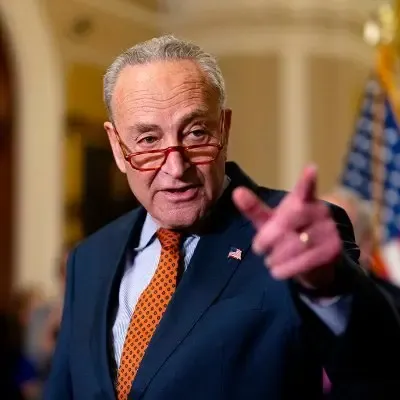
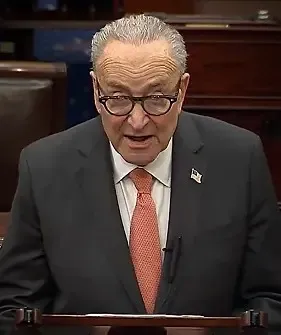
Senate Minority Leader Charles Schumer expressed his concerns after attending a classified intelligence briefing, stating that lawmakers emerged with heightened worries rather than comfort.
“I walked out of the briefing more concerned than reassured,” Schumer remarked. “If the justification for war was compelling, it would be consistent. However, the reasons are changing by the hour.”
Schumer highlighted the multiple justifications provided by the administration for this military engagement.
“Is it regime change, nuclear arms, missiles, defense, or preemptive action? When the reasons keep shifting, it indicates a lack of strategy. There is no coherent plan,” he stated.
He cautioned that the situation could escalate further and lead to broader economic repercussions.
“The conflict is expanding. Oil prices are already soaring. Wars without clear goals do not stay small; they escalate, resulting in greater bloodshed, duration, and costs,” Schumer warned.
Democratic members also pointed to the early casualties among American personnel.
“We have lost six American service members,” Schumer noted.
Senator Patty Murray condemned the decision to initiate military operations without congressional consent.
“This president has sent our troops into a conflict of choice from his resort in Florida, lacking clear goals or an end game, and without any authorization from Congress,” Murray criticized.
She argued that Americans are grappling with rising domestic costs and do not wish to be embroiled in another Middle Eastern conflict.
“They do not want to spend billions in taxpayer money to bomb Iran in a war that has already tragically claimed American lives,” she asserted.
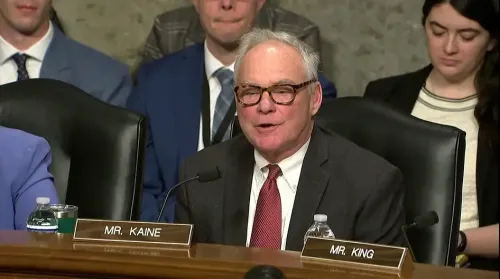
Senator Tim Kaine reflected on the lengthy history of costly wars in the region.
“Haven’t we learned anything from 25 years of conflicts in the Middle East?” he questioned.
Kaine warned that military actions lacking a clear rationale could place US troops in greater jeopardy.
“We safeguard our troops by conducting operations appropriately. We endanger them when we act recklessly,” he stated.
Democrats are advocating for a War Powers Resolution that would mandate Congress to vote on the continuation of US military actions against Iran.
In the House, Minority Leader Hakeem Jeffries stated that lawmakers have not been presented with evidence indicating that Iran poses an immediate threat to the US.
“There is no evidence provided to us that the United States was under imminent threat from Iran. Absolutely none,” Jeffries declared.
He informed reporters that the conflict has already spread and has resulted in American casualties.
“Donald Trump, without justification or congressional consultation, has embroiled America in a Middle Eastern war that we know will not conclude favorably,” he said.
Republican leaders defended the president’s actions, asserting that the strikes were vital for countering Iranian capabilities.
In a separate press conference, Senate Majority Leader John Thune claimed that Trump acted within his authority to safeguard US national security.
“I believe the president possesses the necessary authority to conduct the ongoing operations,” Thune stated.
He characterized the action as a preemptive measure against Iranian threats.
“It was undeniably a preemptive strike, and I believe there was an imminent threat,” Thune asserted.
Thune explained that Iranian ballistic missiles and regional military resources pose significant dangers to American forces and allies.
“No nation has more American blood on its hands than Iran,” he asserted.
“There are many controversies surrounding the War Powers Act, but I believe the president is acting in the nation’s best interest by ensuring the protection of Americans and their bases in that area, along with those of our allies,” Thune emphasized.
He noted that the authority being exercised by the president aligns closely with the powers used by President Obama in Libya and prior administrations, he argued.
Point of View
The recent military actions taken by President Trump against Iran have sparked intense debates. While the administration views this as a necessary step for national security, critics argue that it lacks a clear strategy and congressional approval. This division reflects deeper concerns about the US's engagement in Middle Eastern conflicts and the need for transparency and accountability.
NationPress
7 Oct 2026
Frequently Asked Questions
What triggered the political confrontation in Washington?
President Trump's military campaign against Iran has led to sharp divisions, with Democrats calling it unjustified and Republicans asserting it was necessary for national security.
What concerns did Senate Minority Leader Schumer express?
Schumer indicated that lawmakers left a classified briefing more concerned than reassured, pointing out inconsistencies in the administration's justifications for military action.
What are Democrats advocating for regarding US military actions against Iran?
Democrats are pushing for a War Powers Resolution that would require Congress to vote on the continuation of military operations against Iran.
How do Republicans defend Trump's military actions?
Republicans argue that the strikes were necessary to counter Iranian threats and assert that Trump acted within his authority to protect US national security.
What are the implications of escalating conflict in the region?
Leaders warn that wars without clear objectives tend to escalate, leading to higher costs, both in terms of lives and economic impact.