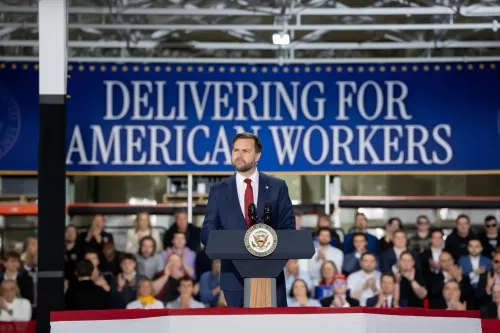
VP Vance: Trump Inherited Biden's Debt Bomb, Has a Fix

Synopsis
Vice President JD Vance declared on August 21, 2026 that the Trump administration inherited a 'debt bomb' from the Biden era and is pursuing a growth-first strategy to outpace debt accumulation — echoing the supply-side playbook of Trump's first term.
Key Takeaways
VP JD Vance described the U.S. fiscal situation inherited from the Biden administration as a 'debt bomb' in a White House post dated August 21, 2026 .
The Trump administration's stated strategy is to grow the economy faster than the debt accumulates, rather than rely on spending cuts or tax increases.
This framing mirrors the supply-side rationale behind the Tax Cuts and Jobs Act of 2017 from Trump's first term.
Specific details of the current economic plan and verified 2026 debt figures were not provided in the post.
The next policy test will be the administration's formal budget proposal and any Congress -bound debt-ceiling or appropriations legislation.
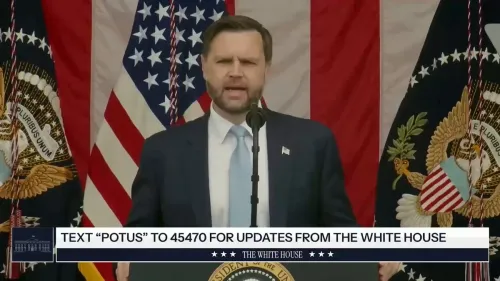
A debt bomb. That is the phrase Vice President JD Vance used on Friday, August 21, 2026, to describe the fiscal inheritance the Trump administration says it received from its predecessor — and he insists the White House already has a plan to outgrow it.
Quoting VP Vance directly, the White House posted: 'Even though we inherited this debt bomb from the Biden administration, we actually do have a plan to get the economy growing faster than the debt.' The statement frames the administration's economic strategy not as austerity — no sweeping spending cuts, no tax hikes — but as a growth-first bet: accelerate the economy fast enough that debt, as a share of output, shrinks on its own.
The Blame-and-Fix Frame Republicans Reach For
This is a well-worn playbook. Incoming Republican administrations have, for decades, attributed elevated federal debt to Democratic-era spending and positioned supply-side growth as the corrective. Trump's first term leaned on the Tax Cuts and Jobs Act of 2017, which slashed corporate and individual tax rates with the explicit argument that faster growth would eventually offset lost revenue. The second term appears to be reaching for a similar rhetorical and policy architecture. Joe Biden's four years — 2021 to 2025 — saw significant federal outlays tied to pandemic recovery, infrastructure, and climate legislation, which Republicans consistently characterised as inflationary and fiscally reckless. Democrats, in turn, point to the 2017 tax cuts as a primary driver of the debt trajectory. The exchange is as predictable as it is consequential: US taxpayers and the federal budget sit at the centre of a debate that shapes interest rates, entitlement funding, and the dollar's global standing.What 'Growing Faster Than the Debt' Actually Requires
The arithmetic behind Vance's claim is straightforward in theory, brutal in practice. For nominal GDP growth to outpace debt accumulation, the economy must expand faster than the annual deficit adds to the debt pile — a bar that requires sustained, above-trend growth. The specific contours of the administration's plan were not detailed in the post, and precise 2026 debt figures remain unverified. The next concrete test will come with the release of the administration's formal budget proposal and any associated debt-ceiling or appropriations legislation moving through Congress. Those documents will either substantiate Vance's growth thesis or expose it as a campaign-trail talking point dressed in White House letterhead. The debt clock keeps ticking. The plan, for now, is to outrun it.Point of View
The administration pre-loads an excuse if targets slip and a vindication narrative if they don't. The growth-over-austerity posture is consistent with Republican supply-side orthodoxy dating back decades, but it places enormous weight on sustained above-trend GDP expansion that has historically proved elusive. For India and emerging markets, the subtext matters: a U.S. administration betting on growth over consolidation tends to keep the dollar stronger for longer, with knock-on effects on capital flows and commodity prices. The real verdict on this strategy will arrive not in a social media post, but in the next budget document and the GDP prints that follow it.
NationPress
5 Oct 2026
Frequently Asked Questions
What did VP JD Vance say about the US debt?
VP JD Vance called the U.S. fiscal situation a 'debt bomb' inherited from the Biden administration and said the Trump administration has a plan to grow the economy faster than the debt accumulates.
What is the Trump administration's plan to reduce the US debt?
The administration has stated a growth-first approach — expanding the economy at a pace that outstrips debt accumulation — rather than relying on direct spending cuts or tax hikes. Specific policy details have not been publicly released.
How much debt did Biden leave for Trump?
Precise figures for the debt level at the end of the Biden administration in January 2025 are part of the public record, but specific 2026 debt figures cited by the administration could not be independently verified from available data.
What was the Tax Cuts and Jobs Act and how does it relate?
The Tax Cuts and Jobs Act of 2017 , passed during Trump's first term , cut corporate and individual tax rates with the argument that faster growth would offset lost revenue — the same supply-side logic underpinning Vance's current statement.
What happens next with US debt policy?
The critical milestones to watch are the Trump administration's next formal budget proposal and any debt-ceiling or appropriations legislation that moves through Congress , which will reveal the concrete mechanics of the growth plan Vance referenced.