White House Honors Fallen Troops on Memorial Day 2026

Synopsis
The White House marked Memorial Day on May 25, 2026, honouring American service members who gave their lives in duty. The tribute called freedom 'never free,' offered prayers for Gold Star Families, and continued a longstanding executive tradition of national military remembrance.
Key Takeaways
The White House issued a formal Memorial Day tribute on May 25, 2026 , honouring fallen U.S. service members.
The message declared that 'freedom is never free' and specifically acknowledged Gold Star Families — relatives of troops killed in action.
Memorial Day originated as Decoration Day in 1868 and became a federal holiday under the Uniform Monday Holiday Act of 1968 .
Annual White House commemorations are a consistent bipartisan tradition and are not tied to specific legislative actions.
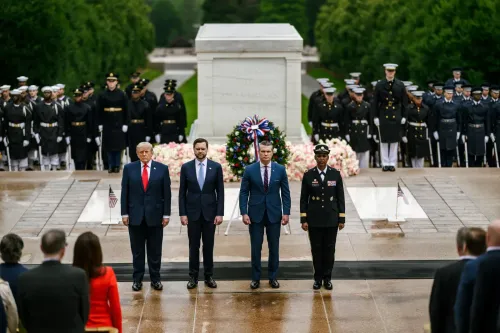
Observances typically include a presidential wreath-laying at the Tomb of the Unknown Soldier at Arlington National Cemetery .
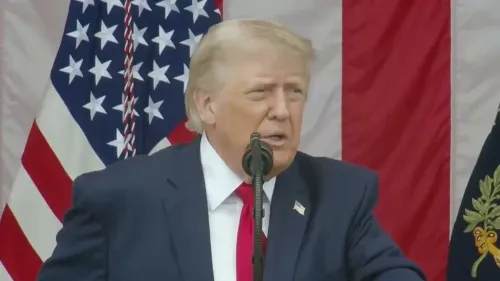
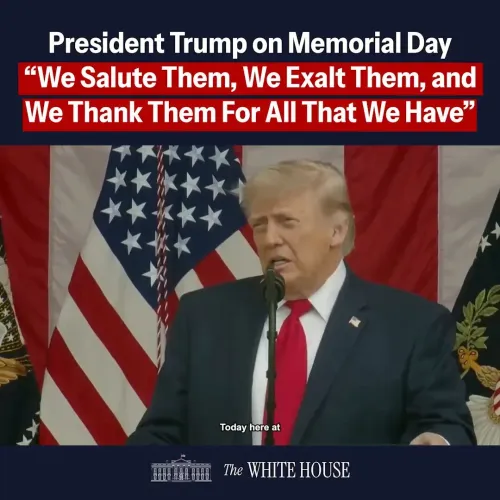
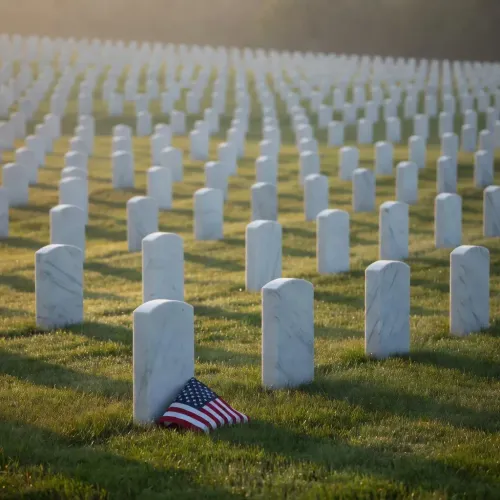
The White House marked Memorial Day on Monday, May 25, 2026, with a solemn tribute to American service members who died in the line of duty, calling freedom 'never free' and pledging remembrance for the nation's fallen warriors and their families.
Context
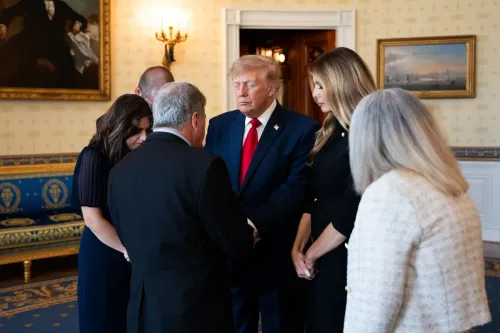
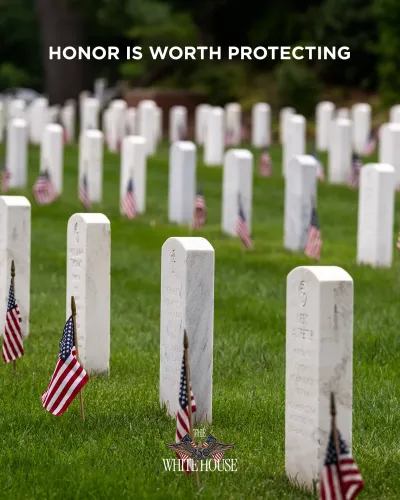
In its official post, The White House stated: 'Memorial Day is a solemn reminder that freedom is never free. Today, we honor the brave American heroes who made the ultimate sacrifice for our nation.' The message extended prayers to the loved ones of fallen service members and specifically acknowledged Gold Star Families — the term used for families of U.S. military personnel killed in action.
The tribute follows a longstanding executive tradition in which the White House issues formal commemorations on Memorial Day each year, pairing the message with observances at Arlington National Cemetery and other national memorials across the United States.
Policy Backdrop
Memorial Day traces its origins to Decoration Day, first proclaimed nationally in 1868 by General John A. Logan to honor those who fell in the Civil War. The holiday was formalised as a federal observance on the last Monday of May under the Uniform Monday Holiday Act of 1968, taking effect in 1971.
White House commemorations on this day have remained a consistent bipartisan tradition across administrations, routinely referencing Gold Star Families and the broader culture of military remembrance. The messages have historically not been tied to specific legislative or budgetary actions, serving instead as a national moment of collective mourning and gratitude.
Stakeholders and Impact
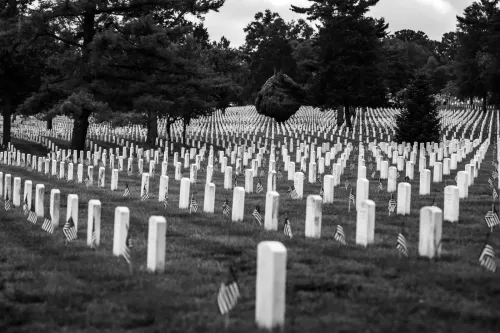
Gold Star Families — who bear the most direct personal loss — are central to the day's observances, receiving formal acknowledgement from the executive office. Veteran support organisations and military communities across the country mark the occasion with ceremonies, moments of silence, and visits to military cemeteries.
For Indian-Americans with ties to the U.S. Armed Forces, and for India's own diplomatic community in Washington DC, Memorial Day holds significance as a marker of American national identity and the values underpinning the U.S.-India strategic partnership, which rests in part on shared democratic and defence commitments.
What's Next
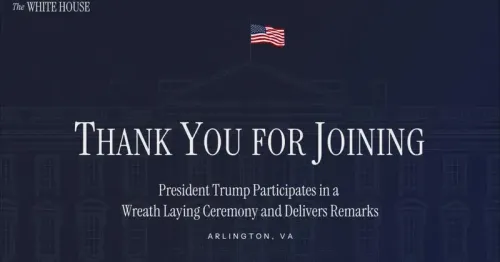
The Memorial Day weekend typically sees the President participate in a wreath-laying ceremony at the Tomb of the Unknown Soldier at Arlington National Cemetery in Virginia. Presidential proclamations and potential veterans' affairs announcements may accompany or follow the day's formal commemorations.
Congress traditionally observes the occasion with commemorative resolutions, and veterans' advocacy groups use the period to press for legislative action on issues including healthcare, benefits, and mental health support for military families. The annual observance serves as a recurring focal point for national dialogue on the costs and obligations of military service.
Point of View
Using the occasion to reinforce the social compact between the state and its military families. By foregrounding 'Gold Star Families,' the statement signals institutional recognition of personal sacrifice beyond battlefield statistics. For India, which watches U.S. civil-military culture closely as a strategic partner, such observances underscore the democratic values that anchor the bilateral relationship. The message carries no policy weight on its own, but its consistency year after year reflects how national identity is actively maintained through ritual commemoration.
NationPress
9 Oct 2026
Frequently Asked Questions
What is Memorial Day in the United States?
Memorial Day is a U.S. federal holiday observed on the last Monday of May each year to honour armed forces members who died in service to the country. It originated as Decoration Day in 1868 and was formalised as a federal holiday in 1971.
What are Gold Star Families?
Gold Star Families is the term used for families of U.S. military service members who were killed in action or died while serving. They receive formal recognition during national commemorations such as Memorial Day.
What did the White House say on Memorial Day 2026?
The White House posted that 'Memorial Day is a solemn reminder that freedom is never free,' honouring fallen American heroes, praying for their loved ones and Gold Star Families, and giving thanks for those who made the ultimate sacrifice.
Where does the U.S. President observe Memorial Day?
The President traditionally participates in a wreath-laying ceremony at the Tomb of the Unknown Soldier at Arlington National Cemetery in Virginia as part of the official Memorial Day observance.
Why does Memorial Day matter for India-US relations?
Memorial Day reflects core American values of democratic sacrifice and civil-military commitment, which form part of the shared ideological foundation of the India-U.S. strategic partnership, making it a noted occasion for India's diplomatic community in Washington DC.