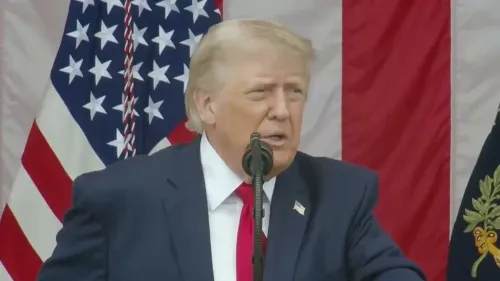
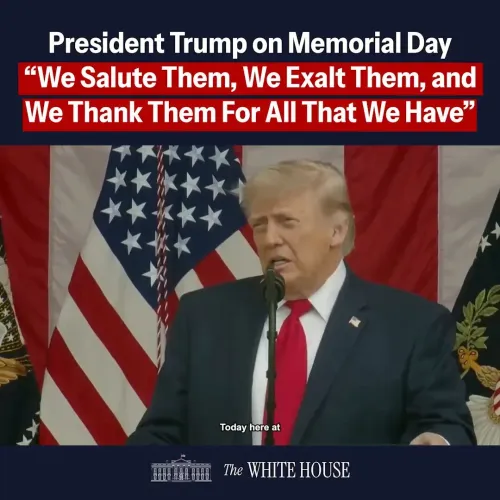
White House Links Memorial Day to American Independence
Synopsis
The White House posted a one-sentence Memorial Day tribute on 26 May 2026, declaring that 'there could be no Independence Day without Memorial Day' — framing military sacrifice as the foundation of American national identity ahead of the 4 July celebrations.
Key Takeaways
The White House posted a Memorial Day tribute on 26 May 2026 linking the holiday directly to Independence Day .
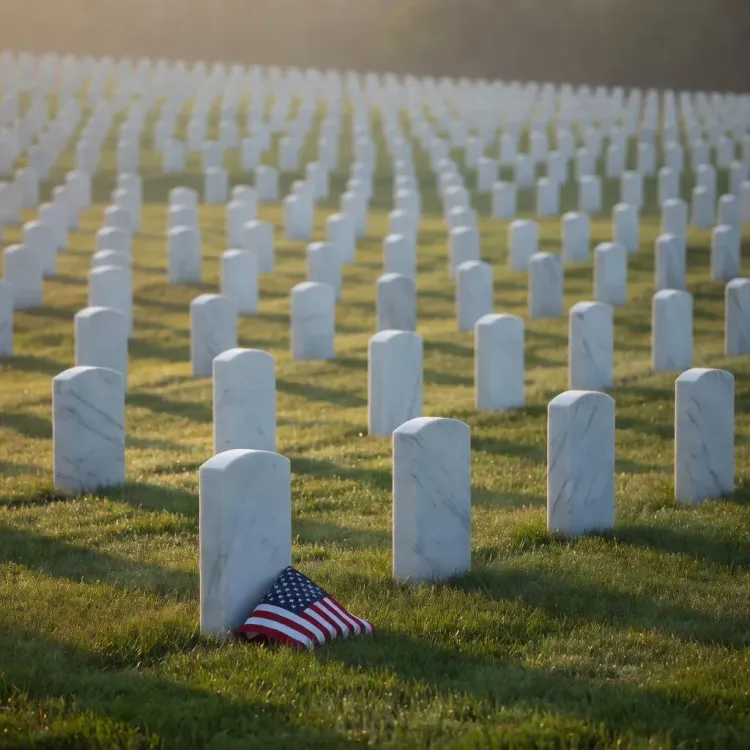
Memorial Day is a federal holiday observed on the last Monday of May, honouring U.S. military personnel who died in service.
The holiday's origins trace to Decoration Day , a post-Civil War observance; it was formalised under the Uniform Monday Holiday Act of 1971 .
The White House message framed military sacrifice as a structural prerequisite for the celebration of American independence on 4 July .
Such messaging follows a consistent pattern across administrations of connecting remembrance holidays to foundational national events.
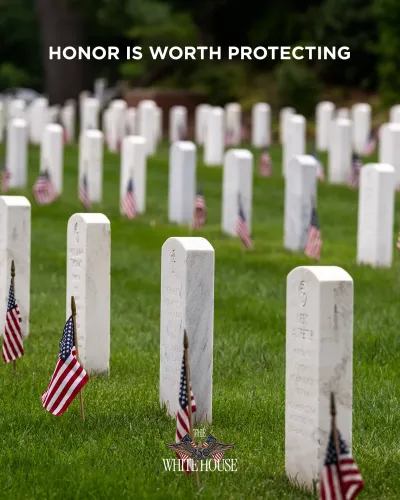
The White House, the official communications account of the Executive Office of the President of the United States, posted a brief but pointed tribute on Monday, 26 May 2025, connecting Memorial Day to the nation's founding celebration, stating: 'There could be no Independence Day without Memorial Day.'
Context
Memorial Day is a federal holiday observed on the last Monday of May each year, dedicated to honouring U.S. military personnel who died while serving the country. Its roots stretch back to Decoration Day, a post-Civil War observance when communities placed flowers on soldiers' graves. The holiday was formalised as a federal observance under the Uniform Monday Holiday Act of 1971, which moved it to the last Monday of May to create a three-day national weekend.
Independence Day, celebrated on 4 July each year, marks the adoption of the Declaration of Independence in 1776 and the formal founding of the United States. The White House's message draws a direct causal line between the two observances, framing military sacrifice as the precondition for national freedom.
Policy Backdrop
White House messaging on Memorial Day has, across multiple administrations, consistently linked military remembrance to broader patriotic milestones. Official proclamations typically frame the holiday not merely as a moment of grief but as a foundational act of national identity — one without which later celebrations of liberty would carry less meaning.
The brevity of the post — a single sentence accompanied by the American flag emoji — is itself a deliberate rhetorical choice. By placing Memorial Day as a prerequisite for Independence Day, the message elevates the holiday above a ceremonial footnote and positions it as structurally central to the American national story.
Stakeholders and Impact
The primary audience for such messaging includes military families, veterans' organisations, and the broader American public observing the long weekend. For families who have lost members in active service, the official acknowledgement carries weight beyond political symbolism.
For Indian readers and the Indian-American diaspora, the observance is also relevant: thousands of Indian-origin U.S. citizens and permanent residents serve in the American armed forces, and Memorial Day holds personal significance for a growing number of families with roots in South Asia.
What's Next
Attention now turns to 4 July 2026, when Independence Day observances — including potential presidential addresses at national memorials or military cemeteries — will test whether the White House follows through on this rhetorical framing with substantive ceremony. Presidential proclamations issued ahead of Independence Day are expected to echo the Memorial Day tribute, reinforcing the thematic link the White House has now publicly established.
Point of View
It reframes the summer patriotic calendar so that military sacrifice precedes — and therefore legitimises — national celebration. This framing is consistent across administrations and functions as a soft but durable form of civil-religious messaging that unites an otherwise polarised public around shared grief and gratitude. For a government communications account, the restraint of one sentence and a flag emoji signals confidence that the message needs no elaboration. The post also sets a rhetorical benchmark against which the administration's 4 July conduct will inevitably be measured.
NationPress
20 Sept 2026
Frequently Asked Questions
What did the White House post on Memorial Day 2026?
The White House posted: 'There could be no Independence Day without Memorial Day,' accompanied by the American flag emoji, on 26 May 2026.
What is Memorial Day and why is it celebrated in the US?
Memorial Day is a U.S. federal holiday observed on the last Monday of May to honour military personnel who died in service. It originated as Decoration Day after the Civil War and was made a permanent federal holiday under the Uniform Monday Holiday Act of 1971.
How is Memorial Day connected to Independence Day?
The White House's post frames Memorial Day as a prerequisite for Independence Day, arguing that the military sacrifices honoured in May made the freedom celebrated on 4 July possible.
Why does the White House post about Memorial Day every year?
White House statements on Memorial Day are a long-standing tradition across administrations, linking military remembrance to national identity and foundational patriotic milestones such as Independence Day.
What happens after Memorial Day in the US political calendar?
Following Memorial Day, attention shifts to Independence Day on 4 July, when presidential proclamations and national ceremonies are expected to continue the themes of military sacrifice and national freedom.