White House Credits Trump Policies as Inflation Eases
Synopsis
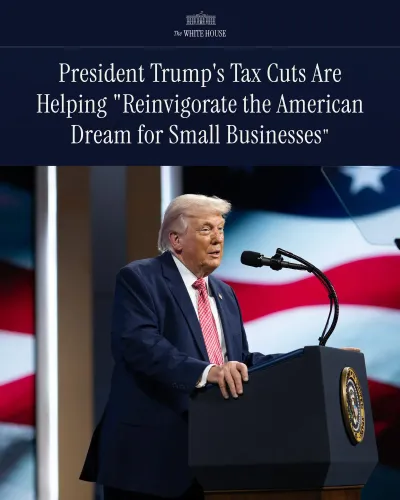
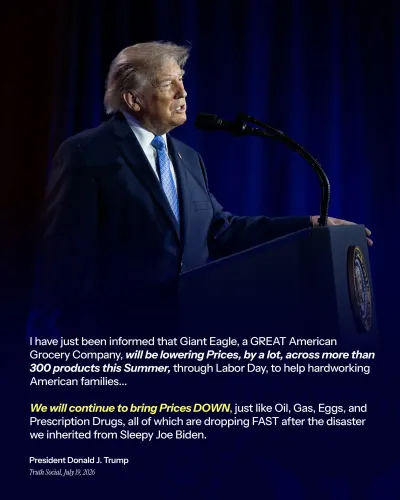
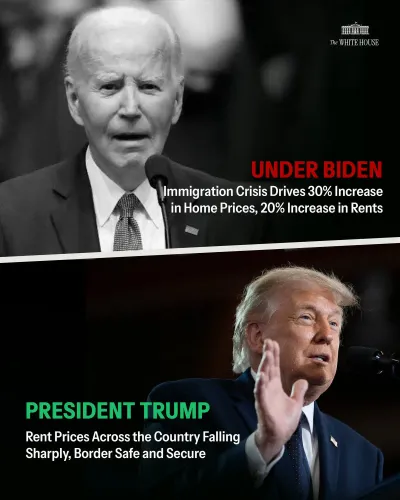
The White House on 15 July 2026 credited President Trump's pro-growth policies for steadying inflation and bringing prices down, directly blaming the Biden administration and Democrats for handing over what it called an economic mess.
Key Takeaways
The White House posted on 15 July 2026 crediting President Trump 's policies for easing inflation and falling prices.
The post explicitly blames Joe Biden and the Democratic Party for an inherited 'economic mess' of 'massive inflation and soaring prices.' Post-pandemic US inflation was driven by supply-chain disruptions, energy shocks, and large fiscal packages including the $1.9 trillion American Rescue Plan of 2021 .
The Tax Cuts and Jobs Act of 2017 and deregulation form the core of the Trump administration's 'pro-growth' policy framework cited in the post.
Independent verification of specific 2026 price-level changes or inflation readings is not available from public records at this time.
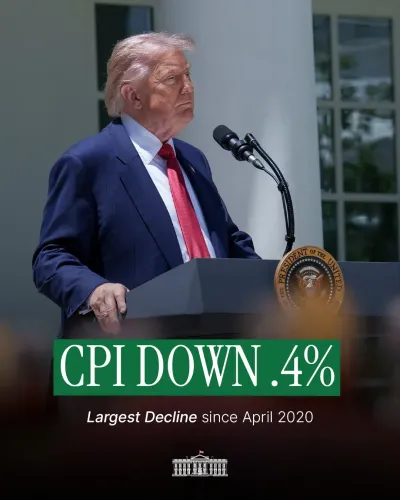
Monthly CPI and PPI data from the Bureau of Labor Statistics will be the key indicators to watch for confirmation of the White House's claims.
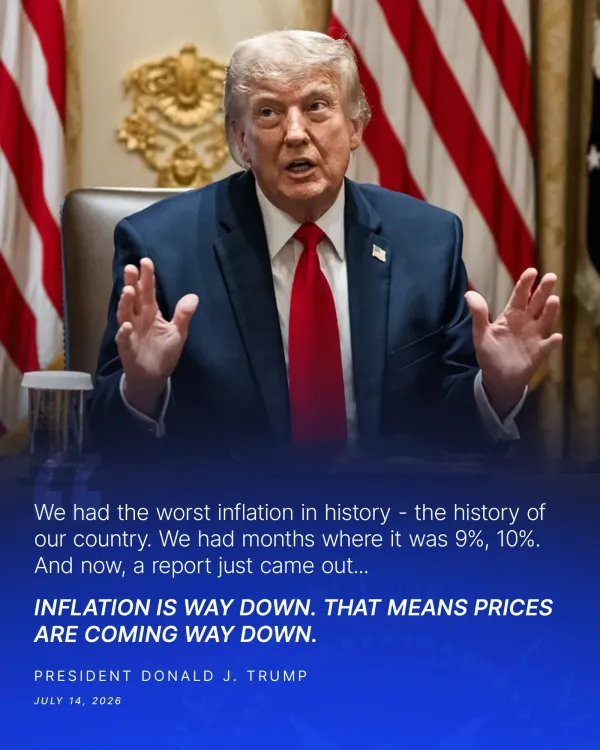
The White House, the official communications account of the Executive Office of the President of the United States, on Wednesday, 15 July 2026, attributed easing inflation and falling consumer prices to President Donald Trump's economic agenda, while directly blaming the prior Biden administration and the Democratic Party for what it called an inherited 'economic mess.'
Context
The post states: 'Biden and failed Democrats handed this administration an economic mess, with massive inflation and soaring prices. Thanks to President Trump's pro-growth policies, inflation is steadying and prices are coming WAY down.' The message follows a familiar pattern in American political communication — incoming administrations routinely assign blame for economic difficulties to their predecessors while crediting their own policies for any subsequent improvement.
Post-pandemic inflation in the United States was driven by a convergence of supply-chain disruptions, global energy shocks, and large fiscal stimulus packages enacted across both administrations. The American Rescue Plan of 2021, a $1.9 trillion relief package signed by President Joe Biden, was frequently cited by Republican critics as a key driver of the inflationary surge that followed.
Policy Backdrop
The Trump administration's economic framework has historically rested on the pillars of the Tax Cuts and Jobs Act of 2017, which lowered corporate and individual tax rates with the stated aim of stimulating investment and wage growth. Deregulation and trade policy shifts have also been central to the 'pro-growth' framing the White House invoked in the post.
On the other side of the ledger, the Inflation Reduction Act of 2022, passed under the Biden administration, introduced climate and healthcare spending measures with deficit-reduction offsets intended to exert downward pressure on prices over time. The competing claims of both administrations over which policies actually moved the inflation needle remain a matter of active political and economic debate.
Independent economists have consistently noted that presidential administrations have limited direct control over inflation in the short run, with the Federal Reserve's interest-rate decisions playing a more immediate role in price stabilisation.
Stakeholders and Impact
American consumers, small-business owners, and wage earners are the most directly affected by movements in consumer prices. For households — particularly those in lower and middle income brackets — elevated prices on groceries, fuel, and housing have been a persistent source of financial strain since the early 2020s.
If prices are indeed declining as the White House asserts, the relief would be most acutely felt by these groups. However, the research base available to NationPress does not include independently verified price-level data for 2026, and the specific claims in the post cannot be confirmed or quantified from public records at this time.
What's Next
Market watchers and policymakers will look to monthly Consumer Price Index (CPI) and Producer Price Index (PPI) releases from the Bureau of Labor Statistics as the authoritative measure of whether inflation is in fact 'steadying' and prices are falling. Any accompanying statements from the Federal Reserve on its interest-rate path will be equally consequential in shaping the economic outlook for the remainder of 2026.
With the White House sharpening its economic messaging, the political battle over who deserves credit — or blame — for America's price environment is set to intensify in the months ahead.
Point of View
A tactic both parties have deployed after every major recession or inflation cycle in modern American history. By framing price relief as a direct product of Trump's 'pro-growth policies,' the administration is building a political narrative ahead of what are likely to be consequential electoral cycles. The invocation of 'failed Democrats' signals that economic credibility will be a central battleground in 2026 messaging. Crucially, independent CPI data — not White House statements — will ultimately determine whether the claims hold public and market scrutiny.
NationPress
14 Oct 2026
Frequently Asked Questions
Why is the White House blaming Biden for inflation in 2026?
The White House argues that the Biden administration's large fiscal stimulus measures, particularly the $1.9 trillion American Rescue Plan of 2021, contributed to the inflationary surge that the Trump administration says it is now correcting. Blaming a predecessor for economic difficulties is a well-established pattern in US presidential politics.
What are Trump's pro-growth policies that the White House is referring to?
The Trump administration's pro-growth framework has historically centred on the Tax Cuts and Jobs Act of 2017, which cut corporate and individual tax rates, alongside broad deregulation and trade policy measures aimed at boosting domestic investment and wages.
Is US inflation actually coming down in 2026?
The White House asserts that inflation is steadying and prices are falling, but NationPress cannot independently verify specific inflation readings or price-level data for 2026 from publicly available records. Monthly CPI and PPI releases from the Bureau of Labor Statistics are the authoritative source to watch.
What caused high inflation in the United States after the pandemic?
Post-pandemic US inflation resulted from a combination of global supply-chain disruptions, energy price shocks following geopolitical events, and large fiscal stimulus packages enacted under both the Trump and Biden administrations during the COVID-19 crisis.
What role does the Federal Reserve play in controlling US inflation?
The Federal Reserve is the primary institution responsible for managing inflation in the United States through its control of interest rates and monetary policy. Economists generally regard Fed decisions as having a more immediate impact on price levels than executive-branch fiscal policies.