White House Hails US CPI Drop, Prices Fall Below Forecast
Synopsis
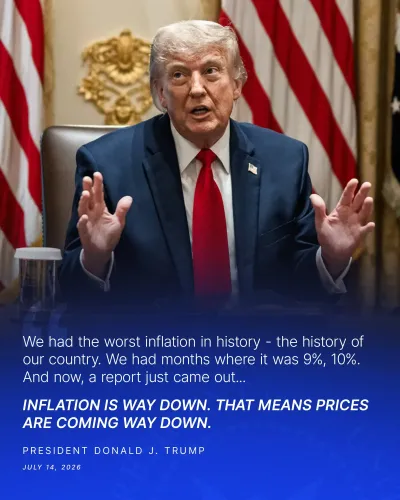
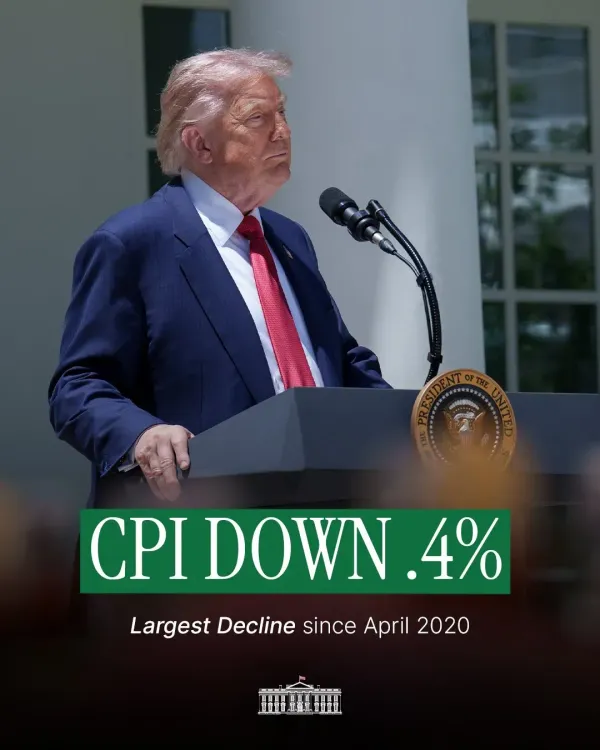
The White House declared on 14 July 2026 that US consumer prices are falling and the Consumer Price Index came in far below expectations, signalling a significant positive surprise in the latest monthly inflation data from the Bureau of Labor Statistics.
Key Takeaways
The White House posted on 14 July 2026 that US prices are falling and the CPI came in far below expectations.
The Consumer Price Index is published monthly by the Bureau of Labor Statistics and is the primary US inflation gauge.
US inflation hit a 40-year high in 2021-2022 following pandemic-era stimulus and supply disruptions.
The Federal Reserve began raising interest rates from March 2022 to return inflation to its 2 per cent target.
A below-forecast CPI reading raises expectations of potential Federal Reserve rate cuts , which would lower borrowing costs for consumers and businesses.
The next BLS CPI release and any FOMC statement will be closely watched to confirm whether the downward trend is sustained.
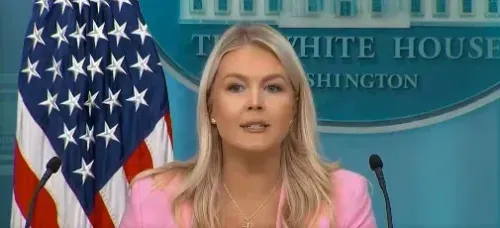
The White House, the official communications account of the Executive Office of the President of the United States, posted on X on Tuesday, 14 July 2026, announcing that consumer prices in the United States have fallen and that the Consumer Price Index came in well below analyst expectations.
The post read: 'PRICES FALLING, CPI FAR BELOW EXPECTATIONS!' — a terse but emphatic declaration signalling that the latest monthly inflation reading from the Bureau of Labor Statistics (BLS) delivered a positive surprise for the American economy.
Context
The Consumer Price Index is the United States government's primary gauge of inflation, tracking price changes across a broad basket of goods and services purchased by households. It is published monthly by the Bureau of Labor Statistics, a federal statistical agency within the Department of Labor. A reading that comes in 'far below expectations' indicates that actual price pressures were materially softer than what economists and market analysts had forecast ahead of the release.
White House communications teams have routinely issued public statements on the day of monthly CPI releases since at least 2022, using the data to frame the administration's economic narrative for voters and investors alike.
Policy Backdrop
The United States experienced its worst inflation surge in roughly 40 years during 2021 and 2022, driven by pandemic-era fiscal stimulus, supply-chain disruptions, and elevated energy costs. In response, the Federal Reserve began an aggressive rate-hiking cycle starting March 2022, raising the federal funds rate repeatedly in an effort to bring inflation back to its 2 per cent target.
Since that peak, successive administrations have closely tracked monthly CPI prints, and White House messaging on cooling inflation has become a standard feature of the political communication calendar. A reading that undershoots forecasts by a significant margin typically strengthens the case for the Federal Reserve's Federal Open Market Committee (FOMC) to consider easing monetary policy — a development that would reduce borrowing costs for households and businesses.
Stakeholders and Impact
For ordinary American consumers, a sustained fall in the CPI translates into slower growth — or an outright decline — in the prices of everyday items such as groceries, fuel, and rent. Households that have been squeezed by elevated prices since the post-pandemic surge stand to benefit most directly from a trend of easing inflation.
Investors and financial markets watch CPI releases closely because they directly influence expectations about Federal Reserve interest-rate decisions. A surprise downside print typically boosts equity markets and bond prices while pushing the US dollar lower. For policymakers, a CPI far below expectations provides political capital and may reduce pressure on the central bank to maintain restrictive rates.
What's Next
Attention will now shift to the next scheduled monthly CPI release from the Bureau of Labor Statistics and any subsequent statement from the Federal Open Market Committee on the outlook for interest rates. Market participants will be watching whether the trend of below-forecast inflation readings is sustained, which could accelerate expectations of a rate cut. If price stability continues to improve, it is likely to remain a central theme in the White House's economic messaging in the months ahead.
Point of View
All-caps post on a below-forecast CPI print is a deliberate piece of economic stagecraft — designed to convert a statistical release into a political win on the single issue, household costs, that has most animated American voters since the post-pandemic inflation surge. By framing the data as 'far below expectations,' the administration is not merely reporting a number but setting a narrative benchmark: that price stability is being delivered, and delivered ahead of schedule. This feeds directly into the broader arc of US monetary policy, where a sustained run of soft inflation readings would give the Federal Reserve political and economic cover to begin cutting rates. The timing and tone of such communications have become as important as the data itself in shaping market sentiment and public perception of economic management.
NationPress
13 Oct 2026
Frequently Asked Questions
What did the White House say about US inflation on 14 July 2026?
The White House posted on X on 14 July 2026 that prices are falling in the United States and that the Consumer Price Index came in far below analyst expectations.
What is the Consumer Price Index (CPI) in the United States?
The Consumer Price Index is the main US inflation measure, published monthly by the Bureau of Labor Statistics. It tracks price changes for a basket of goods and services bought by households, including food, fuel, and rent.
Why does a lower-than-expected CPI matter for the Federal Reserve?
A CPI reading that comes in below forecasts suggests inflation is cooling faster than anticipated, which increases the likelihood that the Federal Reserve may consider cutting interest rates — reducing borrowing costs for consumers and businesses.
How bad was US inflation before it started falling?
US inflation reached roughly 40-year highs in 2021 and 2022, driven by pandemic stimulus and supply-chain disruptions. The Federal Reserve responded by raising interest rates aggressively from March 2022 onward.
What happens next after a below-forecast US CPI reading?
Markets and policymakers will watch the next monthly CPI release from the Bureau of Labor Statistics and any statement from the Federal Open Market Committee for signals on whether the trend continues and whether interest rate cuts may follow.