Will the CPI Stay Below the 4 Percent Target? New Series to Enhance India's Consumption Insights
Synopsis
As India looks towards economic stability, the Consumer Price Index is projected to remain below the 4 percent threshold. This new series promises to refine our consumption insights while aligning with global practices. Discover how this shift could impact decision-making and the broader economic landscape.
Key Takeaways
CPI is projected to remain below 4% .
New series improves consumption data accuracy .
Food weight in CPI basket reduced .
Seasonal adjustments for food prices enhanced .
Greater alignment with international practices .
New Delhi, Feb 13 (NationPress) The Consumer Price Index (CPI) is anticipated to stay below the 4 percent target level, even with the recently launched CPI series. This new series will more accurately represent India’s consumption trends and align policy-related data with global standards, according to a report released on Friday.
The analysis from the Bank of Baroda noted, "It's critical to monitor the core inflation trajectory as the prices of precious metals could introduce upward pressure. Nevertheless, due to the careful adjustment of weights in the new CPI series, we predict it will remain within the targeted 4 +/- 2 percent range."
Furthermore, the Bank of Baroda emphasized that the updated series ensures the headline CPI, which is vital for monetary policy, remains relevant and in sync with international norms.
The new series has significantly improved the seasonal adjustments for the prices of various food items by recalibrating their weights, the report highlighted.
"Looking ahead, we foresee that the government's supply-side interventions will effectively sustain a favorable trajectory for food inflation," the bank projected.
The Bank of Baroda’s Essential Commodities Index (ECI) is currently at -0.4 percent year-on-year for the initial eleven days of February 2026, indicating that, aside from some edible oils and pulses, high-frequency food prices are predominantly stable and do not present an immediate threat, the report mentioned.
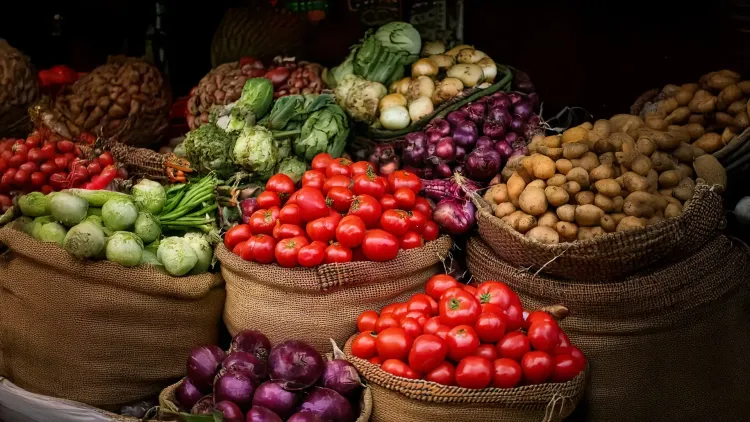
However, in the new baseline, food inflation has reversed the previous deflationary trend observed for the last seven months in the earlier series. This shift has been attributed to a reduction in the weight of the most volatile CPI basket known as TOP (Tomato, Onion, and Potato) vegetables.
The new CPI series has expanded the number of weighted items from 299 to 358, encompassing 1,465 rural and 1,395 urban markets, plus 12 online markets. It also lowers the food weight in the CPI basket from 45.8 percent to 40.1 percent.
New inclusions in the CPI estimation basket comprise rural housing, online media/streaming services, value-added dairy products, barley, pendrives, and external hard drives, among others.
Conversely, several items, such as radios, tape recorders, DVD players, and second-hand clothing, previously used for CPI estimation, have been excluded.
aar/na
Point of View
It's crucial to note that the adjustments in the CPI series reflect an effort to enhance accuracy and align with global standards. The focus on food inflation and core inflation monitoring indicates a proactive approach to economic stability, which is vital for the nation’s growth.
NationPress
11 Oct 2026
Frequently Asked Questions
What is the Consumer Price Index?
The Consumer Price Index (CPI) measures the average change over time in the prices paid by consumers for goods and services.
Why is the CPI important?
CPI is crucial for economic policy as it influences monetary policy decisions, cost-of-living adjustments, and inflation targeting.
What changes have been made in the new CPI series?
The new CPI series has increased the number of weighted items, improved seasonal adjustments, and reduced the weight of food in the CPI basket.
How does the CPI affect consumers?
Changes in the CPI can impact inflation rates, which in turn affect purchasing power, cost of living adjustments, and economic policy.
Is food inflation expected to rise?
While recent adjustments have reversed a deflationary trend, the government’s supply-side measures are expected to maintain a desirable food inflation trajectory.