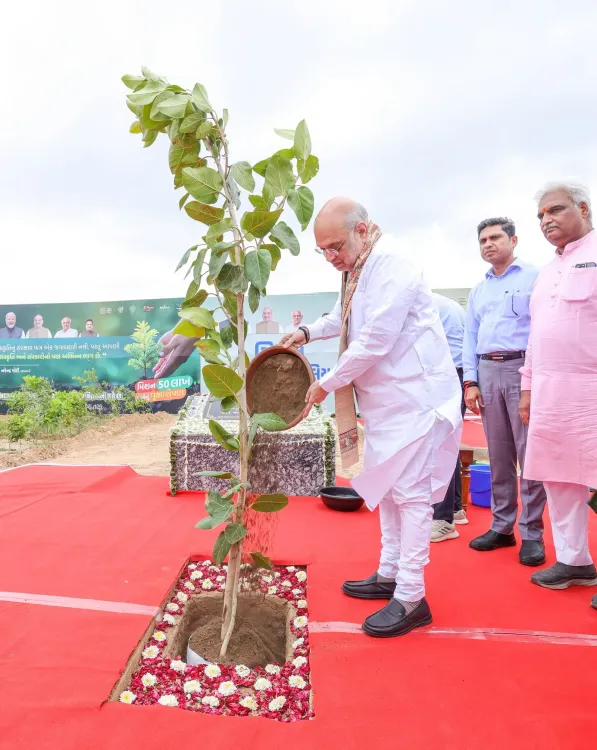
Amit Shah joins tree plantation drive in Gandhinagar constituency
Synopsis
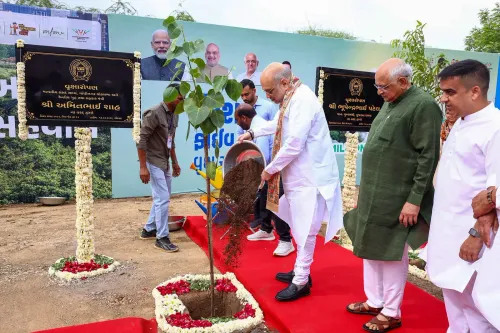
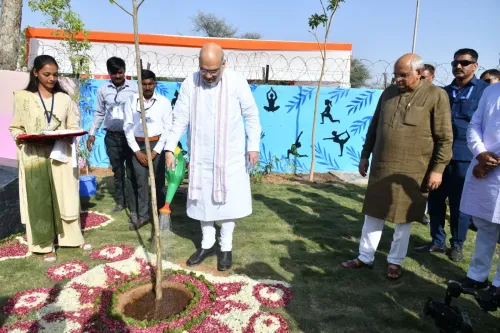
Union Home Minister Amit Shah joined a mass tree-plantation event in Gandhinagar's Naranpura Vidhan Sabha on 12 July 2026, saying residents have planted over 1.25 crore trees under the 'Hariyali Lok Sabha' campaign to green his parliamentary constituency.
Key Takeaways
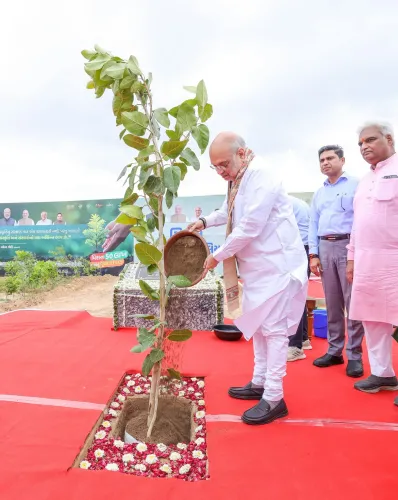
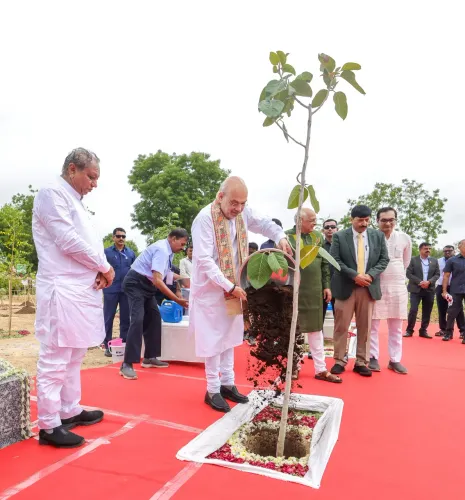
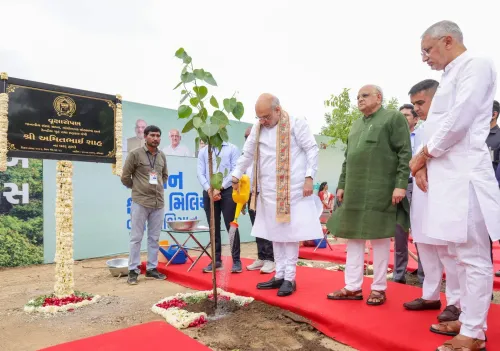
Union Home Minister Amit Shah participated in a tree-plantation drive on 12 July 2026 in the Stadium Ward, Naranpura Vidhan Sabha , part of Gandhinagar Lok Sabha .
The 'Hariyali Lok Sabha' campaign has seen residents collectively plant an estimated 1.25 crore-plus trees across the Gandhinagar constituency, according to Shah's post.
The drive is a constituency-level afforestation initiative aimed at achieving high-density green cover in and around the Gujarat state capital.
The campaign complements Gujarat 's long-running Van Mahotsav tradition and India's national green-cover targets under the National Mission for a Green India .
Urban local bodies and Gandhinagar residents are the key stakeholders; sapling survival rates will determine the campaign's lasting environmental impact.
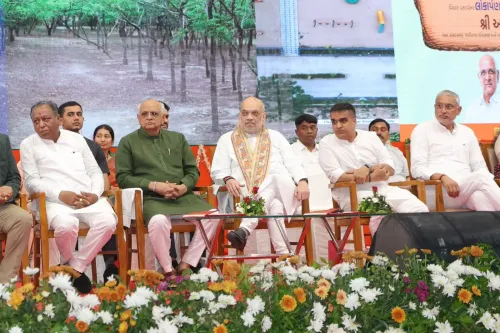
Union Home Minister Amit Shah on Sunday, 12 July 2026 participated in a mass tree-plantation drive under the 'Hariyali Lok Sabha' campaign in the Stadium Ward of Naranpura Vidhan Sabha, part of his Gandhinagar Lok Sabha constituency in Gujarat. The initiative has seen residents of the constituency collectively plant an estimated 1.25 crore-plus trees, Shah said, describing it as a significant milestone in the drive to make Gandhinagar a greener parliamentary constituency.
Context
Shah posted in Gujarati on X (formerly Twitter), stating that citizens of the Gandhinagar Lok Sabha area had made a 'vital contribution' — ('એક મહત્ત્વનું યોગદાન') [one important contribution] — towards realising the resolve to build a 'Hariyali Lok Sabha' [Green Parliament Constituency] through collective tree plantation. He added that as part of the campaign, he himself planted trees today in the Stadium Ward under Naranpura Vidhan Sabha.
The Gandhinagar parliamentary constituency covers urban and semi-urban zones surrounding the Gujarat state capital. Naranpura is one of the assembly segments within this belt and has seen rapid urbanisation in recent years, making green-cover initiatives particularly relevant.
Policy Backdrop
The Hariyali Lok Sabha campaign is a constituency-level afforestation effort aimed at achieving high-density tree cover across Gandhinagar. It draws on a broader tradition of mass plantation in Gujarat, where state governments have run annual Van Mahotsav programmes and large-scale plantation drives since the early 2000s as part of state forest policy.
At the national level, India's National Mission for a Green India — launched in 2014 under the National Action Plan on Climate Change — set targets to expand forest and tree cover across the country. Constituency-level campaigns by national leaders complement these central and state programmes, particularly in rapidly urbanising regions where green cover is under pressure.
Stakeholders and Impact
Gandhinagar residents and urban local bodies are the primary stakeholders in this drive. Community participation in mass plantation is considered a key factor in ensuring that saplings survive beyond the initial planting season, and local ward-level engagement — such as the Stadium Ward event — is seen as a way to build long-term ownership of green spaces.
Urban forestry efforts in Gujarat's capital region carry broader significance as Gandhinagar is a planned city that has seen expanding residential and commercial development. Sustained green-cover programmes are viewed by urban planners as essential to managing heat, air quality, and biodiversity in such rapidly growing zones.
What's Next
The release of official sapling-survival-rate data will be a key indicator of the campaign's real-world impact, as large-scale plantation numbers are often scrutinised for actual tree survival beyond the monsoon season. Observers will also watch whether similar 'Hariyali'-style drives are extended to neighbouring Gujarat constituencies ahead of the next Lok Sabha electoral cycle.
As urban India grapples with rising temperatures and shrinking green cover, constituency-level afforestation campaigns — backed by senior national leaders — are likely to become a recurring feature of political and environmental outreach across the country.
Point of View
A model that could be replicated across constituencies ahead of electoral cycles. It also aligns the BJP's political messaging with climate and environment themes at a time when urban heat and air quality are growing voter concerns in Gujarat's cities. The emphasis on community participation — rather than government-led planting alone — reflects a shift in how large-scale afforestation is being communicated to the public.
NationPress
12 Jul 2026
Frequently Asked Questions
What is the 'Hariyali Lok Sabha' campaign?
'Hariyali Lok Sabha' is a constituency-level afforestation campaign in the Gandhinagar Lok Sabha area of Gujarat, aimed at achieving high-density tree cover through mass community plantation drives.
How many trees have been planted under the Hariyali Lok Sabha campaign?
According to Union Home Minister Amit Shah's post on 12 July 2026, residents of the Gandhinagar Lok Sabha constituency have collectively planted an estimated 1.25 crore-plus trees under the campaign.
Where did Amit Shah plant trees on 12 July 2026?
Amit Shah planted trees in the Stadium Ward under Naranpura Vidhan Sabha, which falls within his Gandhinagar Lok Sabha constituency in Gujarat.
What is Naranpura Vidhan Sabha?
Naranpura is an assembly segment within the Gandhinagar district of Gujarat, covering urban areas near the state capital that have seen significant residential and commercial growth in recent years.
How does the Hariyali Lok Sabha campaign connect to national policy?
The campaign aligns with India's National Mission for a Green India, launched in 2014 under the National Action Plan on Climate Change, as well as Gujarat's own Van Mahotsav tradition of annual mass plantation programmes.