CM Bhupendra Patel hails Ahmedabad Miyawaki Guinness record

Synopsis
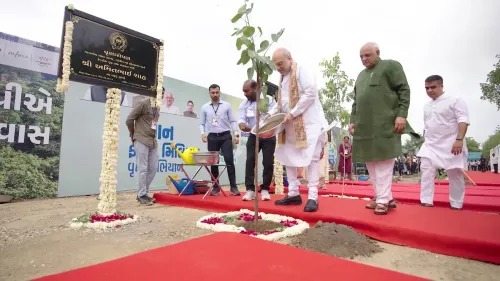
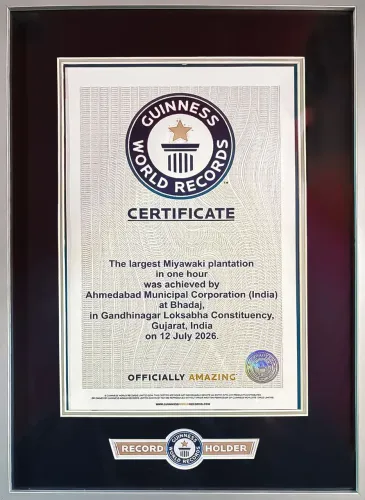
Ahmedabad claimed a Guinness World Record on 12 July 2026, planting over 3.61 lakh saplings in one hour at Bhadaj using the Miyawaki method. Gujarat CM Bhupendra Patel hailed the feat — involving AMC and 25,000-plus volunteers — as a realisation of PM Modi's environmental vision and Amit Shah's 'Hariali Lok Sabha' pledge.
Key Takeaways
Over 3.61 lakh saplings were planted in one hour at Bhadaj, Ahmedabad using the Miyawaki dense-planting method .
Gujarat CM Bhupendra Patel congratulated Amdavad Municipal Corporation and more than 25,000 volunteers on the achievement.
The event is claimed as a Guinness World Record , pending formal verification by Guinness adjudicators.
CM Patel linked the drive to PM Narendra Modi 's environmental conservation vision and India's COP26 carbon-sink commitments.
The plantation also advances Union Home Minister Amit Shah 's pledge to make the Gandhinagar parliamentary constituency a model 'Hariali Lok Sabha' (Green Parliament Seat).
Survival audits and possible replication across other Gujarat municipal corporations are expected as follow-up steps.
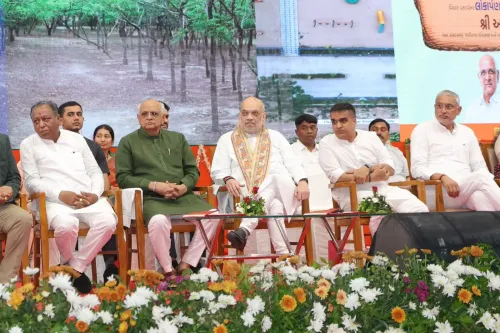
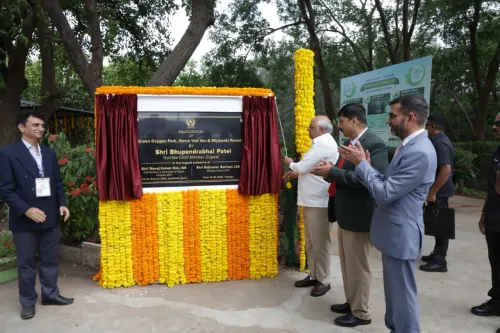
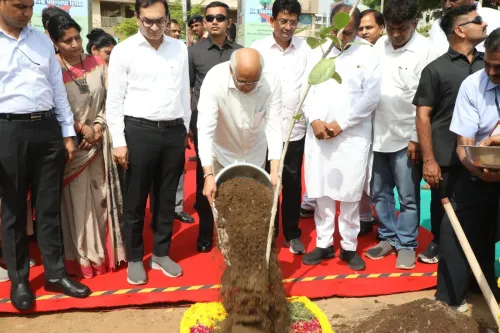
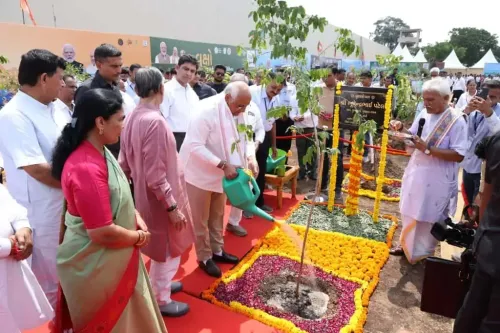
Gujarat Chief Minister Bhupendra Patel on Sunday, 12 July 2026, congratulated Ahmedabad Municipal Corporation (AMC) and more than 25,000 volunteers after the city claimed a Guinness World Record for planting over 3.61 lakh saplings in just one hour using the Miyawaki method at Bhadaj, on the outskirts of Ahmedabad.
Posting on X, CM Patel wrote: 'अभिनंदन अहमदाबाद!' ('Congratulations, Ahmedabad!'), calling the drive a 'historic effort' that realises Prime Minister Narendra Modi's vision of environmental conservation and fulfils Union Home Minister Amit Shah's pledge to make the Gandhinagar parliamentary constituency a 'Hariali Lok Sabha' ('Green Parliament Seat').
Context
The mass plantation event, organised by Amdavad Municipal Corporation, brought together citizens, non-governmental organisations, and volunteer groups for a single-hour drive at Bhadaj. The Miyawaki method — a Japanese dense-planting technique that creates fast-growing, self-sustaining mini-forests — was chosen for its ability to maximise biodiversity within compact urban spaces. The claimed record of 3.61 lakh-plus saplings in 60 minutes is pending formal Guinness World Records verification.
Policy Backdrop
The drive is rooted in India's COP26 commitment, announced in 2021, to create an additional carbon sink of 2.5 to 3 billion tonnes of CO2 equivalent through expanded forest and tree cover. PM Modi has championed environmental multilateralism since 2015, co-founding the International Solar Alliance and steering India's net-zero target to 2070. Gujarat has repeatedly served as a testing ground for community-led urban greening, linking local municipal action to national climate goals.
Amit Shah's 'Hariali Lok Sabha' initiative frames the Gandhinagar constituency — which includes parts of the Ahmedabad urban agglomeration — as a model green parliamentary seat, aligning civic plantation drives with a broader political commitment to visible environmental outcomes in the region.
Stakeholders and Impact
The AMC team and the 25,000-plus participants — comprising residents, voluntary organisations, and individual volunteers — are the immediate stakeholders. Urban residents of Ahmedabad stand to benefit from the canopy cover, air-quality improvements, and heat-island mitigation that a dense Miyawaki forest provides over time. Environmental groups have welcomed the public-participation model as a scalable, low-cost approach to greening rapidly urbanising Indian cities.
CM Patel underscored the intergenerational dimension, stating in his post that 'this record will prove extremely important in building a clean and green future for coming generations.' Gujarat's urban local bodies may look to this event as a template for similar drives across other municipal corporations in the state.
What's Next
The formal Guinness World Records verification process will be the immediate milestone to watch, as independent adjudicators assess the sapling count and the one-hour timeframe. Surveyors and environmental experts are also expected to conduct follow-up survival audits of the saplings in coming months to measure the drive's long-term ecological impact. Replication announcements in other Gujarat municipal corporations or wards within the Gandhinagar constituency are a likely next step, given the political and civic momentum generated by the event.
Point of View
Simultaneously crediting the Prime Minister and a senior central minister to reinforce political alignment. The Miyawaki method's visual impact — dense, fast-growing mini-forests — lends itself well to record-breaking optics, making it a favoured instrument for community-mobilisation events that double as political messaging. CM Patel's framing of the event as a legacy for 'coming generations' positions Gujarat's municipal machinery within India's long-term climate narrative ahead of future international climate forums. The real test will be whether post-planting survival audits and institutional follow-through sustain the ecological gains beyond the record-setting moment.
NationPress
12 Jul 2026
Frequently Asked Questions
What Guinness World Record did Ahmedabad set in July 2026?
Ahmedabad claimed a Guinness World Record for planting over 3.61 lakh saplings in just one hour at Bhadaj using the Miyawaki dense-planting method, organised by Amdavad Municipal Corporation with 25,000-plus volunteers. The record is subject to formal Guinness verification.
What is the Miyawaki method of plantation?
The Miyawaki method is a Japanese technique of planting multiple native species very close together to create a dense, self-sustaining mini-forest that grows faster and supports more biodiversity than conventional plantation drives.
Who organised the Ahmedabad Miyawaki plantation drive?
The drive was organised by Amdavad Municipal Corporation (AMC) , with participation from over 25,000 citizens, voluntary organisations, and individual volunteers from across Ahmedabad.
What is Amit Shah's 'Hariali Lok Sabha' initiative?
'Hariali Lok Sabha' is Union Home Minister Amit Shah's pledge to transform the Gandhinagar parliamentary constituency into a model green parliamentary seat through sustained plantation and urban greening drives.
How does the Ahmedabad plantation drive connect to India's climate commitments?
India pledged at COP26 in 2021 to create an additional carbon sink of 2.5 to 3 billion tonnes of CO2 equivalent through expanded forest and tree cover; urban Miyawaki drives like the Ahmedabad event are positioned as ground-level contributions toward that national target.