Trump's Tax Cuts Fuel Small Business Revival, White House Says
Synopsis
The White House declared on October 5, 2026 that President Trump's tax cuts are 'reinvigorating the American Dream' for small businesses, framing the policy as a direct economic lifeline for Main Street entrepreneurs across the United States.
Key Takeaways
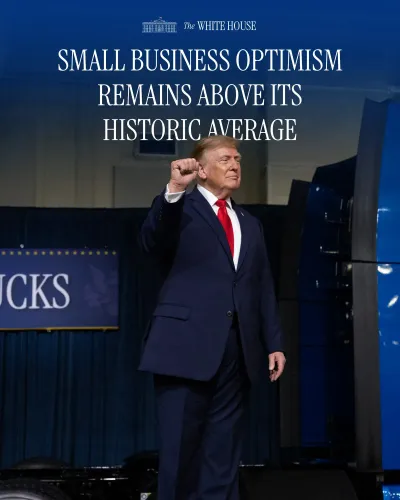
The White House posted on October 5, 2026 attributing renewed small business optimism to President Trump's tax cuts .
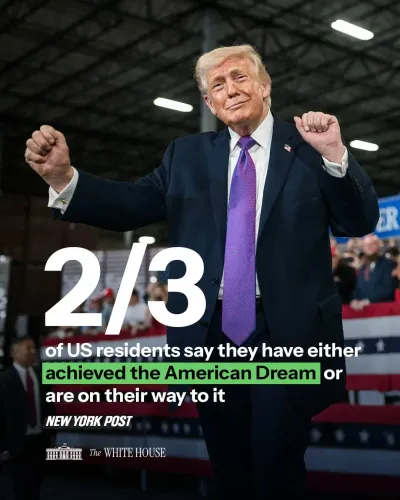
The administration used the phrase 'reinvigorate the American Dream' to frame tax relief as a cultural and economic restoration.
Small businesses — including pass-through entities such as sole proprietorships and S-corporations — represent the majority of American private-sector employers.
Small businesses employ roughly half the American private-sector workforce , making them a politically and economically pivotal constituency.
Critics argue such tax cuts disproportionately benefit higher-income owners and add to the federal deficit, a debate that remains unresolved.
The White House's messaging positions tax policy as both a fiscal tool and a narrative instrument aimed at working-class and entrepreneurial voters.
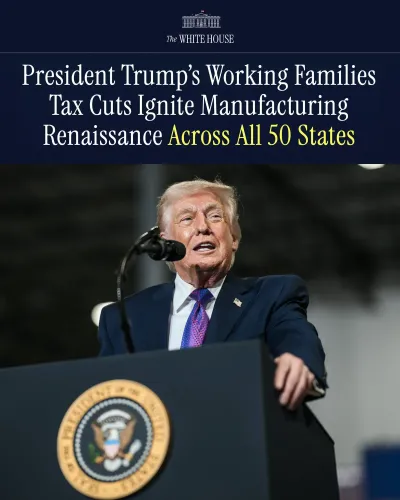
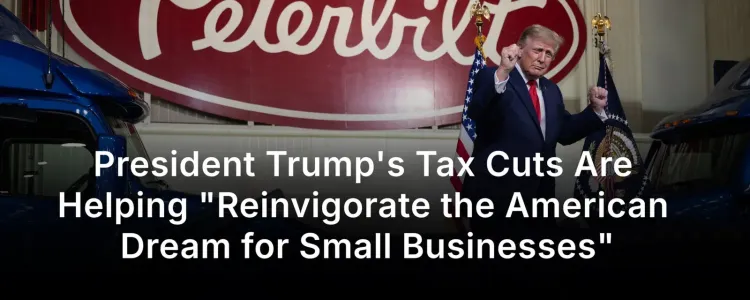
Small business owners across America are feeling the difference — and the White House wants the country to know it. On Monday, October 5, 2026, the official communications account of the Executive Office of the President posted on X, citing President Donald Trump's tax cuts as a direct driver of renewed optimism and opportunity for small businesses, calling the policy a tool to 'reinvigorate the American Dream.'
What Trump's Tax Framework Has Meant for Small Businesses
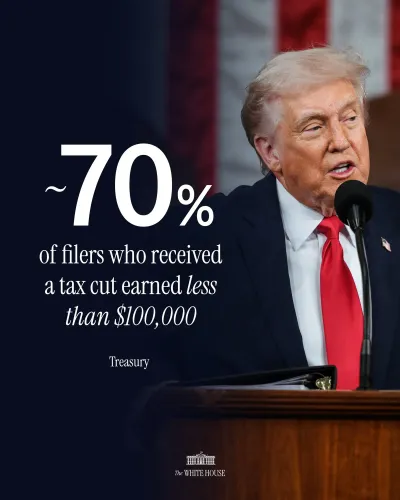
The framing of tax cuts as an engine for small business revival is a cornerstone of the Trump administration's domestic economic messaging. The core argument: lower corporate and pass-through business tax rates put more capital directly in the hands of entrepreneurs, allowing them to hire, expand, and invest without waiting for credit markets or government grants.
Pass-through businesses — sole proprietorships, partnerships, and S-corporations — make up the vast majority of American small businesses. Tax relief targeted at this segment is designed to have an outsized effect on Main Street relative to Wall Street, a distinction the White House has leaned into heavily in its public communications.
The 'American Dream' Framing and Its Political Weight
The phrase 'reinvigorate the American Dream' is not accidental. It positions the tax policy not merely as a fiscal measure but as a cultural restoration — connecting economic policy to a deeply held national identity around entrepreneurship, self-reliance, and upward mobility. For an administration seeking to consolidate support among independent business owners and working-class voters, this language carries deliberate political resonance.
Small businesses employ roughly half of the American private-sector workforce and represent one of the most politically cross-cutting constituencies in the country. Winning — or at least holding — their confidence is strategically significant heading into any policy or electoral cycle.
The Broader Debate the White House Doesn't Mention
Tax cut advocates argue that reduced rates spur investment, hiring, and wage growth. Critics, however, contend that the largest gains from such cuts flow disproportionately to larger businesses and high-income owners, while adding to the federal deficit — a concern that remains live in Washington's fiscal debates. Neither set of arguments is settled empirically, and the real-world distribution of benefits continues to be contested across economic and policy circles.
What the White House's post signals clearly: with the administration doubling down on this framing in October 2026, tax policy is being actively deployed as both an economic and a narrative instrument — one aimed squarely at the kitchen tables of American small business owners.
If the numbers bear out the optimism, it could cement the Trump tax agenda as a defining domestic legacy. If they don't, the gap between the headline and the balance sheet will be the story.
Point of View
' the administration is fighting not just a policy battle but a cultural one, staking the narrative on Main Street benefiting as much as Wall Street. The move also preempts any fiscal-hawk criticism by keeping the conversation on growth and opportunity rather than deficit impact. How measurably small business formation and revenue data track against this rhetoric will ultimately determine whether the framing holds.
NationPress
6 Oct 2026
Frequently Asked Questions
How are Trump's tax cuts helping small businesses in 2026?
The White House says President Trump's tax cuts are 'reinvigorating the American Dream' for small businesses by reducing the tax burden on entrepreneurs, freeing up capital for hiring and expansion. The administration specifically highlights relief for pass-through businesses such as sole proprietorships and S-corporations.
What did the White House say about small businesses and the American Dream?
On October 5, 2026, the White House posted on X stating that President Trump's tax cuts are helping 'reinvigorate the American Dream for Small Businesses,' framing the policy as a cultural and economic restoration for Main Street entrepreneurs.
What is a pass-through business and why do tax cuts matter for them?
A pass-through business — such as a sole proprietorship, partnership, or S-corporation — passes its income directly to the owner's personal tax return. Tax cuts on this income type directly increase the take-home earnings of small business owners, making them a primary target of the Trump administration's tax relief agenda.
Do Trump's tax cuts benefit small businesses more than large corporations?
The administration argues yes, pointing to pass-through relief that targets the structure most small businesses use. Critics, however, contend that the largest gains flow to high-income owners and large corporations, and that the cuts add to the federal deficit — a debate that remains active among economists and policymakers.
Why is the White House talking about small businesses in October 2026?
Small businesses employ roughly half the American private-sector workforce and represent a key political and economic constituency. The White House's messaging in October 2026 positions tax policy as a central achievement of the Trump administration's domestic agenda, ahead of continued policy and electoral cycles.