CM Rekha Gupta Expands ANMOL Newborn Screening in Delhi

Synopsis
Delhi Chief Minister Rekha Gupta has announced the expansion of ANMOL, the city's newborn screening programme, aiming to extend timely diagnostic checks and improved care to more infants across Delhi under the SevaSankalpAbhiyan campaign.
Key Takeaways
ANMOL , Delhi's newborn health screening programme, is being expanded by CM Rekha Gupta .
The goal is to ensure timely screening and better care reach a greater number of newborns across Delhi .
The announcement was made under the #SevaSankalpAbhiyan campaign, the BJP Delhi government's welfare accountability initiative.
The expansion is framed within the #ViksitDelhi narrative, aligning city health investment with the national Viksit Bharat vision.
Specific targets, timelines, and budget details were not disclosed in the announcement.
Every hour in Delhi, a newborn arrives without a guarantee that a hidden metabolic disorder will be caught in time. Delhi Chief Minister Rekha Gupta announced on Tuesday, 7 October 2026 that the city's ANMOL newborn screening programme is set for a significant expansion — pushing timely diagnostic checks and improved care to a larger share of the capital's youngest residents.
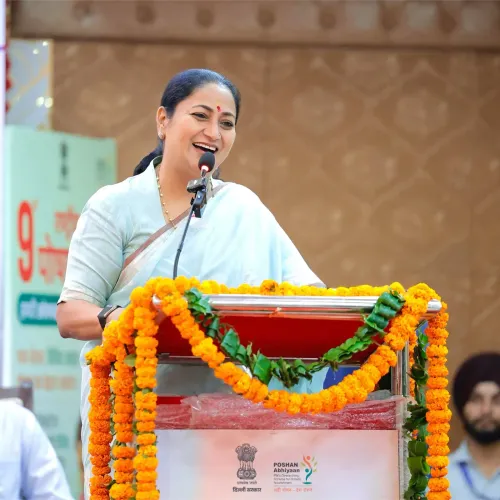
Posting under the hashtags #ViksitDelhi and #SevaSankalpAbhiyan, Chief Minister Gupta wrote: 'We launched ANMOL; now it is going to be expanded, so that timely screening and better care can reach more and more newborns in Delhi.' The statement signals a scaling-up phase for a programme already in operation, rather than a fresh policy announcement.
What ANMOL targets — and why early screening matters
Newborn screening programmes are designed to detect conditions — metabolic, hormonal, and genetic disorders among them — that carry no visible symptoms at birth but can cause severe developmental harm if left undiagnosed even for a few weeks. Early detection transforms outcomes: a child identified and treated within the first days of life can develop normally, while one who slips through the net may face irreversible damage.
ANMOL (the acronym translates roughly to 'priceless' in Hindi, reflecting the programme's intent) was introduced under the current Delhi government as part of its maternal and child health push. The expansion announced by CM Gupta aims to close coverage gaps, reaching newborns in government hospitals and community health centres who may not yet be enrolled in the programme.
SevaSankalpAbhiyan — the campaign frame
The announcement sits inside the broader #SevaSankalpAbhiyan — a seva (service) and sankalp (resolve) campaign that the Delhi BJP government has used to publicly track and communicate welfare deliverables. Framing the ANMOL expansion within this campaign places it on a visible accountability ladder: the government is not just announcing a plan but associating it with a named, trackable initiative that citizens and political observers can monitor.
The #ViksitDelhi hashtag — 'Developed Delhi' — echoes the national Viksit Bharat vocabulary, anchoring city-level health investment in the larger BJP development narrative ahead of the next electoral cycle.
What the expansion could mean for Delhi's newborns
Delhi records hundreds of thousands of births annually across its sprawling network of public hospitals, dispensaries, and peripheral health centres. Even a modest increase in screening coverage — catching an additional fraction of the city's newborns — could translate into dozens or hundreds of children receiving life-altering early intervention each year. The key metric to watch: whether the expansion reaches tier-two government facilities and urban-slum primary health posts, where coverage has historically been thinnest.
The Chief Minister stopped short of providing specific targets — number of additional facilities, a rollout timeline, or a budget outlay — leaving those details for a formal policy notification.
A government that treats a newborn's first hours as a diagnostic window, not just a birth statistic, is making a quiet but consequential bet on Delhi's next generation — and the ANMOL expansion will be judged by exactly how many of those windows it refuses to let close.
Point of View
Hashtag-anchored scheme that creates a visible welfare trail heading into future electoral cycles. By embedding the announcement within SevaSankalpAbhiyan, the Rekha Gupta administration is building a public accountability ledger that is harder for opposition parties to ignore. The absence of hard targets, however, leaves the announcement vulnerable to the standard critique that Delhi's health expansions are strong on intent and thin on specifics. The real test will be whether coverage data from tier-two facilities shows meaningful movement within the next two budget cycles.
NationPress
6 Oct 2026
Frequently Asked Questions
What is the ANMOL programme in Delhi?
ANMOL is Delhi's newborn health screening programme launched under the current BJP-led state government to detect metabolic, hormonal, and genetic disorders in infants at birth, enabling early treatment.
Why is newborn screening important?
Newborn screening detects hidden disorders that carry no visible symptoms at birth but can cause severe developmental harm if untreated; early diagnosis enables timely intervention and normal development.
What did CM Rekha Gupta announce about ANMOL?
Chief Minister Rekha Gupta announced that the ANMOL programme will be expanded to cover more newborns in Delhi, ensuring timely screening and better care reach a larger number of infants.
What is the SevaSankalpAbhiyan campaign?
SevaSankalpAbhiyan is a welfare and public-service campaign run by the Delhi BJP government to communicate and track governance deliverables for Delhi's residents.
What does Viksit Delhi mean?
'Viksit Delhi' means 'Developed Delhi' and is the BJP Delhi government's branding framework for development initiatives, echoing the national Viksit Bharat vision.