Shivraj Singh Chouhan Dedicates India's First Indigenous H5N1 Bird Flu Vaccine
Synopsis
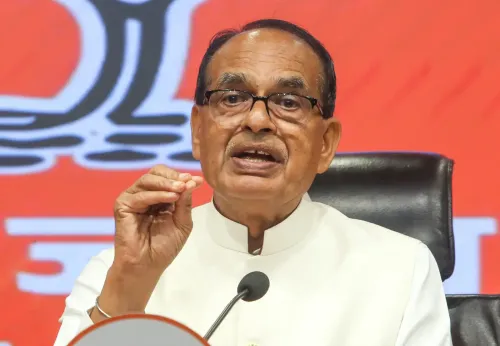
Union Agriculture Minister Shivraj Singh Chouhan on 20 November 2026 dedicated India's first indigenous H5N1 avian influenza vaccine — developed by ICAR-NIHSAD in Bhopal — to the nation, marking a potential turning point in protecting India's poultry sector from recurring bird flu outbreaks.
Key Takeaways
India's first indigenous H5N1 bird flu vaccine has been dedicated to the nation by Union Agriculture Minister Shivraj Singh Chouhan on 20 November 2026 .
The vaccine was developed by ICAR-NIHSAD (National Institute of High Security Animal Diseases), located in Bhopal, Madhya Pradesh .
Until this development, India had no domestically produced H5N1 vaccine, relying solely on mass culling to contain outbreaks.
The breakthrough aligns with India's Atmanirbhar Bharat push for self-reliance in critical veterinary and agricultural inputs.
The vaccine has the potential to protect poultry farmers from the devastating economic losses triggered by recurring H5N1 outbreaks and culling drives.
Field deployment through state animal husbandry departments will be the next critical phase to watch.
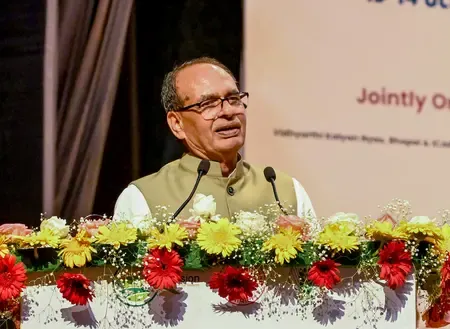
India's decades-long vulnerability to H5N1 bird flu — and the mass cullings and trade shocks that follow every outbreak — took a decisive turn on Friday, 20 November 2026, when Union Agriculture Minister Shivraj Singh Chouhan dedicated the country's first indigenously developed H5N1 avian influenza vaccine to the nation. The vaccine was developed by ICAR-NIHSAD (National Institute of High Security Animal Diseases) at its high-security facility in Bhopal, Madhya Pradesh.
Posting on X, the Minister announced: 'Bhopal mein ICAR-NIHSAD dwara viksit Bharat ki pahli swadeshi H5N1 bird flu vaccine rashtra ko samarpit' — 'India's first indigenous H5N1 bird flu vaccine, developed by ICAR-NIHSAD in Bhopal, dedicated to the nation.'What ICAR-NIHSAD Built — and Why It Matters
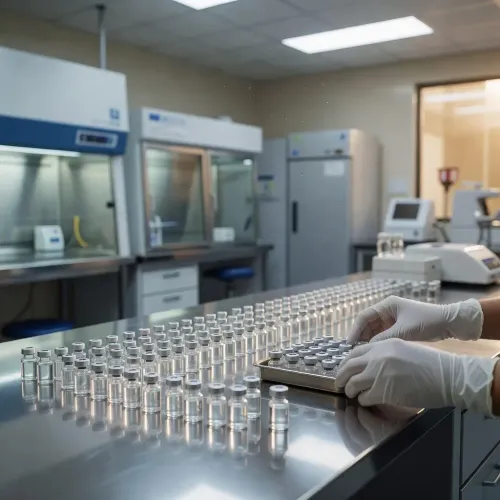
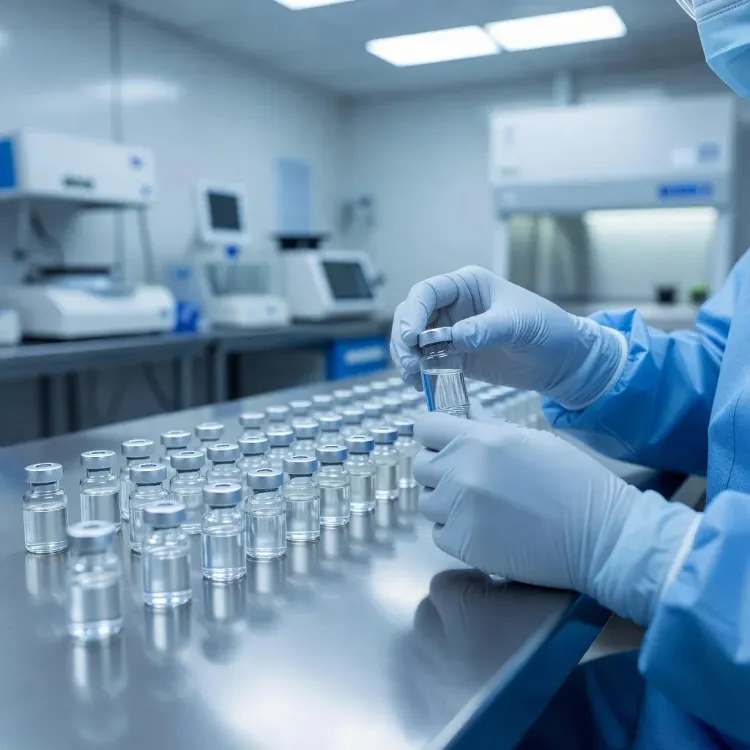
ICAR-NIHSAD is India's apex laboratory for high-risk transboundary animal diseases, operating under the Indian Council of Agricultural Research (ICAR), the apex autonomous body under the Ministry of Agriculture and Farmers Welfare. The Bhopal facility operates at the highest biosafety levels, making it one of the few institutions in India equipped to handle live H5N1 virus for research and vaccine development.
Until now, India had no domestically manufactured H5N1 vaccine, leaving the country's poultry sector — one of the largest in the world — entirely dependent on outbreak-response culling as the primary containment tool. Every major H5N1 wave over the past two decades has triggered mass poultry culls across states, devastating smallholder farmers and disrupting both domestic supply chains and export prospects.
The Atmanirbhar Dimension: Breaking the Import Dependency
The development sits squarely within India's broader Atmanirbhar Bharat push to build self-reliance in critical agricultural and veterinary inputs. For animal health specifically, dependence on imported vaccines carries twin risks: supply delays during the precise early window when containment is possible, and high per-dose costs that put prophylactic vaccination out of reach for small and marginal poultry farmers.
An indigenous H5N1 vaccine changes both equations. Domestic manufacturing can scale to meet outbreak demand rapidly, and cost structures can be calibrated for state animal husbandry department procurement. ICAR has in recent years accelerated its livestock health research pipeline, and this vaccine represents one of the most consequential outputs of that investment.
What Happens Next: From Bhopal Lab to Poultry Farm
The immediate question is field deployment. The dedication ceremony marks a policy milestone, but the vaccine's real test will come as state animal husbandry departments assess protocols for vaccination campaigns — particularly in high-risk zones with dense poultry populations. Any reduction in outbreak-driven culling would directly protect the livelihoods of poultry farmers who currently absorb catastrophic losses during H5N1 events with little recourse.
Chouhan, who as a four-term Chief Minister of Madhya Pradesh oversaw agricultural policy in the state that now hosts this breakthrough, brought the announcement to a natural audience — farmers and rural communities he has long positioned himself as a champion for. NIHSAD's location in Bhopal adds a rare moment of regional scientific pride to what is, at its core, a national food-security achievement.
India has drawn a line between the era of culling-only response and the possibility of prevention. Whether that line holds depends on how fast the vaccine moves from the high-security lab in Bhopal to the vaccination syringes of a district veterinarian.
Point of View
A shift with direct implications for poultry-sector stability and rural livelihoods. For the BJP government, it is a tangible Atmanirbhar Bharat deliverable in agricultural science, well-timed to consolidate Chouhan's credibility as a farmers' minister. The harder policy work — pricing, procurement by state governments, and mass deployment logistics — will determine whether this remains a laboratory milestone or translates into measurable reduction in outbreak losses. If field performance matches the promise, it could also strengthen India's standing as an exporter of veterinary biologicals to other H5N1-vulnerable economies.
NationPress
20 Nov 2026
Frequently Asked Questions
What is India's first indigenous H5N1 bird flu vaccine?
It is an avian influenza vaccine developed by ICAR-NIHSAD (National Institute of High Security Animal Diseases) in Bhopal, Madhya Pradesh, dedicated to the nation by Union Agriculture Minister Shivraj Singh Chouhan on 20 November 2026. It is described as the first H5N1 vaccine developed entirely within India.
Who developed the H5N1 bird flu vaccine in India?
The vaccine was developed by ICAR-NIHSAD — the National Institute of High Security Animal Diseases — an institute of the Indian Council of Agricultural Research (ICAR) based in Bhopal, Madhya Pradesh.
Why is an indigenous H5N1 vaccine important for India?
India's poultry sector has suffered repeated economic losses from H5N1 outbreaks, with mass culling as the only containment tool. An indigenous vaccine can enable prevention, reduce import dependency, lower costs for state procurement, and protect the livelihoods of millions of poultry farmers.
What is ICAR-NIHSAD and where is it located?
ICAR-NIHSAD is the National Institute of High Security Animal Diseases, an ICAR institute in Bhopal, Madhya Pradesh. It specialises in research on transboundary and high-risk animal diseases, including avian influenza, and operates at the highest biosafety levels.
Will the H5N1 vaccine be available to poultry farmers across India?
Following the formal dedication, the next phase involves field deployment through state animal husbandry departments. Specific vaccination campaigns, pricing, and roll-out timelines are expected to be announced as the government moves the vaccine from the laboratory stage to the field.