India's first indigenous bird flu vaccine to launch Nov 20, developed by ICAR-NIHSAD
Synopsis
India is on the verge of a significant animal health breakthrough: for the first time, an indigenous vaccine targeting the dominant H5N1 bird flu strain in Indian poultry will be formally launched on 20 November. With over 500 outbreaks recorded since 2006 and a potential 1.5% GDP hit from an uncontrolled outbreak, the ICAR-NIHSAD-developed vaccine could prove to be a critical line of defence for farmers and public health alike.
Key Takeaways
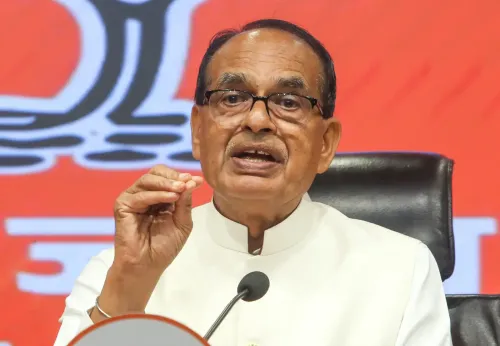
Agriculture Minister Shivraj Singh Chouhan will unveil India's first indigenous Inactivated H5N1 bird flu vaccine on 20 November 2026 .
The vaccine, developed by ICAR-NIHSAD Bhopal , targets the Clade 2.3.2.1a H5N1 strain — currently the dominant bird flu virus in Indian poultry.
India has recorded more than 500 combined H5N1 and H5N8 outbreaks since the disease was first detected in 2006 .
A major uncontrolled outbreak could reduce India's GDP growth by up to 1.5 per cent and put over 20 per cent of the country's poultry population at risk.
The WHO has recorded 1,003 human H5N1 cases , including 479 deaths , across 25 countries since 2003, underscoring the zoonotic threat.
No commercial vaccine was previously available against the Clade 2.3.2.1a strain circulating in India.
Agriculture Minister Shivraj Singh Chouhan is set to unveil India's first indigenously developed bird flu vaccine — the 'Inactivated H5N1' avian influenza vaccine for chickens — on 20 November 2026, according to an official statement released on Wednesday. The vaccine, developed by ICAR-NIHSAD Bhopal, targets the Clade 2.3.2.1a H5N1 virus strain, which is responsible for most bird flu outbreaks in Indian poultry.
A First for Indian Poultry Science
Until now, no specific commercial vaccine has been available against the H5N1 Clade 2.3.2.1a strain circulating within India. The development of an indigenous formulation is therefore considered a significant milestone for the country's animal health infrastructure. The vaccine is designed to offer targeted protection against the highly pathogenic strains currently prevalent in Indian poultry farms.
Scale of the Threat: Why This Vaccine Matters
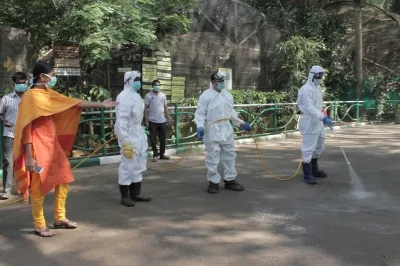
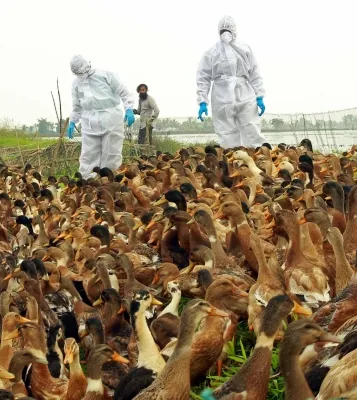
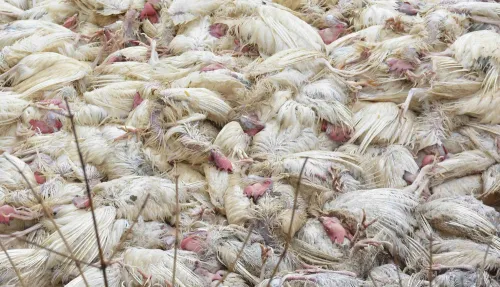
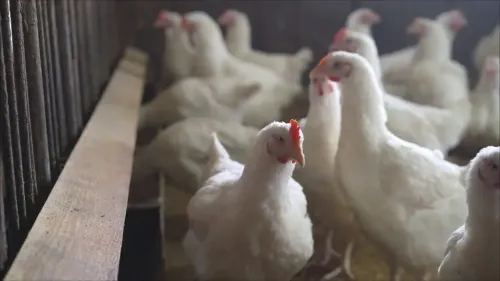
Highly Pathogenic Avian Influenza (HPAI), commonly known as bird flu, can cause nearly 100 per cent mortality among infected bird populations, triggering mass culling events and severe disruptions to poultry trade. Since the disease was first detected in India in 2006, more than 500 combined outbreaks of H5N1 and H5N8 subtypes have been reported across the country, according to the Agriculture Ministry.
The economic consequences are stark. The 2006 bird flu outbreak alone caused estimated direct and indirect losses of ₹2,200–3,000 crore. A subsequent outbreak in Manipur resulted in losses equivalent to 0.5 per cent of that state's GDP. Projections suggest a major outbreak could shave up to 1.5 per cent off India's overall GDP growth, while more than 20 per cent of the country's poultry population could be at risk if the disease spreads unchecked.
Zoonotic Risk and Global Public Health Context
The threat is not confined to poultry farms. The World Health Organization (WHO) has recorded 1,003 human cases of H5N1 avian influenza, including 479 deaths, across 25 countries — including India — since 2003. In recent times, the Clade 2.3.2.1a strain has also been detected in multiple mammal species, alongside three human cases linked to the strain, raising concerns about cross-species transmission. Controlling its spread in poultry is therefore seen as a critical step in limiting wider zoonotic risk.
ICAR-NIHSAD's Role and What Comes Next
The vaccine has been developed at the ICAR-National Institute of High Security Animal Diseases (ICAR-NIHSAD) in Bhopal, one of India's premier biosafety research facilities. The formal launch on 20 November by Minister Chouhan is expected to mark the transition from development to rollout planning. Wider deployment across India's poultry sector — which supports the livelihoods of millions of farmers — will depend on production scale-up and regulatory clearances in the coming months.
Point of View
But the harder work begins after the ribbon-cutting. India's track record on scaling up animal health interventions to the farm level has been uneven, and with over 500 outbreaks in two decades, the gap between laboratory achievement and field deployment is precisely where the country has repeatedly stumbled. The zoonotic dimension — three human Clade 2.3.2.1a cases already documented — makes the rollout timeline a public health question, not merely an agricultural one. The real measure of this breakthrough will be how quickly ICAR-NIHSAD and the Agriculture Ministry can move from unveiling to mass production and farmer-level distribution.
NationPress
18 Nov 2026
Frequently Asked Questions
What is India's first indigenous bird flu vaccine?
It is the 'Inactivated H5N1' avian influenza vaccine developed by ICAR-NIHSAD Bhopal, designed to protect chickens against the Clade 2.3.2.1a H5N1 strain — the virus responsible for most bird flu outbreaks in Indian poultry. It is the first domestically developed vaccine targeting this specific strain, as no commercial alternative previously existed for it.
When and where will the bird flu vaccine be launched?
Agriculture Minister Shivraj Singh Chouhan is scheduled to formally unveil the vaccine on 20 November 2026. The vaccine was developed at the ICAR-National Institute of High Security Animal Diseases (ICAR-NIHSAD) in Bhopal, Madhya Pradesh.
Why is bird flu a serious threat to India's poultry sector?
Highly Pathogenic Avian Influenza (HPAI) can cause nearly 100 per cent mortality among infected birds, triggering mass cullings and trade disruptions. More than 500 outbreaks have been reported in India since 2006, and a major uncontrolled outbreak could reduce India's GDP growth by up to 1.5 per cent while putting over 20 per cent of the country's poultry population at risk.
Does bird flu pose a risk to humans?
Yes. The WHO has documented 1,003 human H5N1 cases, including 479 deaths, across 25 countries — including India — since 2003. The Clade 2.3.2.1a strain has also been detected in multiple mammal species and linked to three human cases, raising concerns about cross-species transmission that the new vaccine aims to help reduce at the source.
What were the economic losses from previous bird flu outbreaks in India?
The 2006 bird flu outbreak caused estimated direct and indirect losses of ₹2,200–3,000 crore. A later outbreak in Manipur caused losses equivalent to 0.5 per cent of the state's GDP. Beyond farms, outbreaks also affect global trade, poultry product prices, and the livelihoods of millions of farmers.