CM Rekha Gupta doubles ASHA workers' pay to ₹6,000

Synopsis
Delhi CM Rekha Gupta has announced the doubling of monthly incentive pay for the city's 6,690 ASHA workers — from ₹3,000 to ₹6,000 — under the Seva Sankalp Abhiyan, calling it a commitment to those who serve Delhi's health around the clock.
Key Takeaways
6,690 ASHA workers in Delhi will see their monthly base incentive doubled from ₹3,000 to ₹6,000 .
Delhi CM Rekha Gupta announced the initiative on 6 October 2026 , with a formal launch described as imminent.
The hike is being rolled out under the Seva Sankalp Abhiyan , the BJP Delhi government's welfare-commitment campaign.
ASHA workers are incentive-based community health workers under the National Health Mission , serving as the first link between households and public health facilities.
The announcement frames the pay revision as a government 'promise' to workers who operate day and night in Delhi's communities.
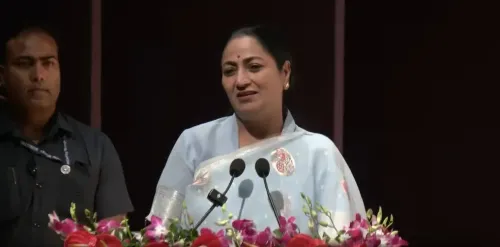
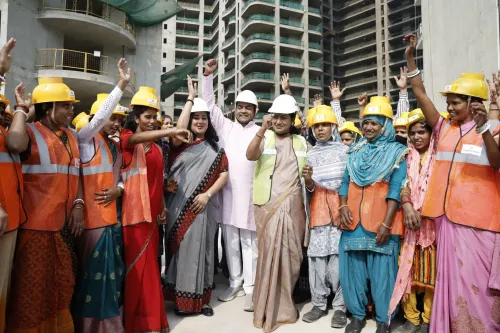
For 6,690 ASHA workers quietly working through Delhi's lanes — tracking pregnancies, tracing tuberculosis cases, nudging families toward vaccines — a promised raise is finally becoming official. Delhi Chief Minister Rekha Gupta announced on Tuesday, 6 October 2026 that the incentive amount for the city's ASHA workers will be doubled, rising from ₹3,000 to ₹6,000 per month, with the formal launch of the initiative set to begin shortly.
Posting in Hindi under the hashtags #ViksitDelhi and #SevaSankalpAbhiyan, CM Gupta framed the move as far more than a pay revision: 'This is not merely a decision to increase the amount. This is a promise made to our ASHA sisters — that the government will stand by them with full commitment as they toil day and night in service of Delhi's health.'
Who are Delhi's 6,690 ASHA workers?
ASHA — Accredited Social Health Activist — is a grassroots cadre created under the National Rural Health Mission (NRHM), now folded into the National Health Mission (NHM), to serve as the first point of contact between communities and the public health system. In an urban setting like Delhi, ASHA workers navigate dense mohallas, JJ clusters, and resettlement colonies, registering pregnant women, escorting them to government facilities, and following up on immunisation and nutrition.
Their work is incentive-based rather than salaried — meaning every task they complete triggers a specific payment, with a base monthly incentive on top. That base figure of ₹3,000, which has drawn criticism from ASHA unions across states for years as inadequate given the physical demands of door-to-door health outreach, is what the Delhi government is now targeting for revision. The new figure of ₹6,000 represents a clean doubling of that baseline support.
The 'Seva Sankalp Abhiyan' frame
CM Gupta chose to anchor the announcement inside the Seva Sankalp Abhiyan — a service-commitment campaign branding that the Delhi BJP government has been using to communicate welfare actions since taking office. By tagging the raise under this banner, the administration positions the ASHA incentive hike alongside other citizen-welfare pledges rather than presenting it as a stand-alone administrative order. The dual hashtag strategy — #ViksitDelhi (Developed Delhi) and #SevaSankalpAbhiyan — signals the government's intent to weave frontline health-worker welfare into its broader development narrative.
What the doubling means on the ground
A jump from ₹3,000 to ₹6,000 in base incentive is significant for workers whose total monthly earnings — including task-based incentives — often hover in a modest range. For Delhi's 6,690 ASHA workers, the aggregate additional outflow to the government will run into several crore rupees annually, though the CM's post did not specify a budget line or implementation date beyond 'the launch is about to begin.' The phrase 'shubharambh hone ja raha hai' (the auspicious beginning is about to happen) suggests a formal roll-out event is imminent rather than already complete.
ASHA workers became a household name during the COVID-19 pandemic, when their door-to-door surveys and vaccination mobilisation became visible to middle-class Delhi in a way routine maternal and child health work rarely does. That visibility has since translated into louder demands — from the workers themselves and from health advocates — for compensation that matches their actual role in sustaining primary healthcare. CM Gupta's announcement arrives in that context: a political acknowledgement that grassroots health infrastructure runs on human beings who need tangible support, not just recognition.
Whether the revision triggers similar pressure on other states to revisit their own ASHA incentive structures will be a key subplot to watch as the formal launch unfolds.
Point of View
Sympathetic constituency of frontline women workers at the intersection of healthcare and welfare, two arenas where Delhi BJP has sought to distinguish itself from the previous AAP administration. Embedding the announcement in the 'Seva Sankalp Abhiyan' brand is a deliberate attempt to build a coherent welfare identity rather than present isolated sops. The move also echoes a broader national pattern: after COVID-19 exposed the backbone role of ASHA workers, state governments across the spectrum have faced sustained pressure — including strikes — to revise incentives that critics argue have not kept pace with the scale of duties. Delhi's doubling, if implemented cleanly, could raise the floor of political expectation on ASHA pay in other states.
NationPress
6 Oct 2026
Frequently Asked Questions
What is the new ASHA worker salary in Delhi 2026?
Delhi has announced an increase in the base monthly incentive for ASHA workers from ₹3,000 to ₹6,000 , effective under the Seva Sankalp Abhiyan initiative launched by CM Rekha Gupta.
How many ASHA workers are there in Delhi?
Delhi has 6,690 ASHA (Accredited Social Health Activist) workers , all of whom are covered by the announced incentive hike.
What is the Seva Sankalp Abhiyan in Delhi?
The Seva Sankalp Abhiyan is a welfare-commitment campaign framework used by the Delhi BJP government under CM Rekha Gupta to communicate and implement citizen-welfare initiatives, including the ASHA worker pay revision.
Are ASHA workers government employees or salaried?
ASHA workers are not salaried government employees. They are incentive-based community health volunteers under the National Health Mission (NHM) , earning payments linked to specific health tasks plus a base monthly incentive.
When will Delhi ASHA workers get ₹6,000 incentive?
CM Rekha Gupta's post indicates the formal launch of the revised incentive structure is imminent as of 6 October 2026 , though a precise implementation date or budget order was not specified in the announcement.