CM Sai Eyes Singapore Zoo Expertise for Nandanvan Safari
Synopsis
Chhattisgarh CM Vishnu Deo Sai met Mandai Wildlife Group CEO Bennett Neo to explore a knowledge partnership for Nandanvan Jungle Safari in Nava Raipur — Asia's largest man-made jungle safari — aiming to bring Singapore Zoo-level expertise to central India.
Key Takeaways
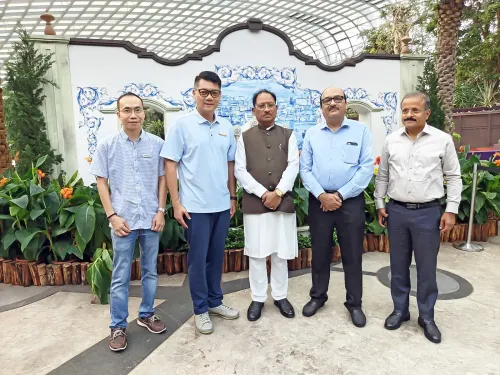
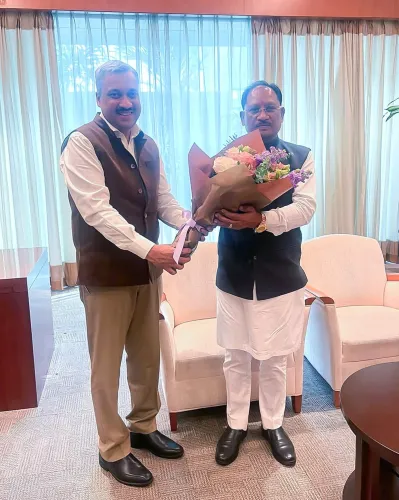
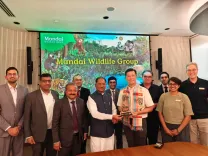
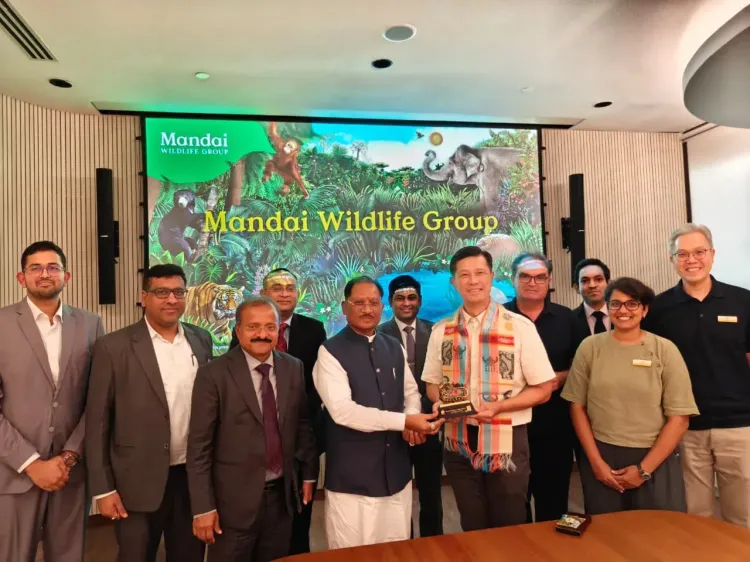
CM Vishnu Deo Sai met Mandai Wildlife Group CEO Bennett Neo and his team alongside a Chhattisgarh state delegation.
The meeting explored a collaboration and knowledge partnership for Nandanvan Jungle Safari, Nava Raipur , described as Asia's largest man-made jungle safari .
Mandai Wildlife Group operates the Singapore Zoo , the Night Safari , and other globally renowned wildlife attractions.
Areas of collaboration discussed include animal care, park design, and visitor experience — Mandai's core areas of global expertise.
The partnership is framed as an opportunity to create new employment and tourism revenue for Chhattisgarh and raise the state's global tourism profile.
No formal agreement has been announced yet; discussions remain at the exploration stage .
A jungle safari billed as Asia's largest just got a shot at going truly world-class. Chhattisgarh Chief Minister Vishnu Deo Sai held a productive meeting with Mr. Bennett Neo, Group CEO of Mandai Wildlife Group, and his team, alongside a Chhattisgarh state delegation, to explore a formal collaboration and knowledge partnership for Nandanvan Jungle Safari in Nava Raipur.
Mandai's Global Pedigree and What Chhattisgarh Wants
Mandai Wildlife Group is no ordinary partner to bring to the table. The Singapore-based organisation operates some of the world's most visited wildlife attractions — including the iconic Singapore Zoo and the Night Safari — and has built a global reputation for excellence in animal care, immersive park design, and visitor experience. For Nandanvan, which sprawls across Nava Raipur and carries the distinction of being Asia's largest man-made jungle safari, the pitch is straightforward: tap Mandai's decades of operational expertise to transform a regional attraction into a destination that can compete on the global tourism map.
CM Sai described the discussions as productive, with both sides exploring concrete areas of knowledge transfer — from animal welfare protocols and habitat design to the visitor-experience frameworks that make Singapore's wildlife parks world-famous draws. The scope, as framed by the Chief Minister, is ambitious: help Nandanvan grow into a 'world-class wildlife destination' while generating fresh economic opportunities for Chhattisgarh's tourism sector.
Nandanvan's Scale — and the Gap a Partnership Could Close
Nandanvan Jungle Safari in Nava Raipur already commands attention for its sheer size, but size alone does not make a destination. The gap between a large local safari and a globally competitive wildlife park lies precisely in the areas Mandai excels: conservation science, animal care standards, and the kind of curated visitor experience that turns a one-time visitor into a returning one. A partnership, if formalised, would bring Singapore's proven playbook to central India's forests — a transfer of institutional knowledge that few Indian state-run wildlife parks have managed to secure at this level.
For Chhattisgarh, a state rich in forest cover and biodiversity but still building its tourism infrastructure, the stakes are real. Tourism revenue, conservation visibility, and skilled employment all ride on whether Nandanvan can convert its physical scale into genuine global appeal.
From Meeting Room to Map
No formal agreement has been announced yet — CM Sai's post frames this as an exploration of collaboration, not a signed deal. The next step will be watched closely: whether both sides move toward a memorandum of understanding or a phased knowledge-exchange programme that begins to reshape Nandanvan's operations on the ground.
If the partnership lands, Chhattisgarh's jungle safari could find itself in the same sentence as Singapore's Night Safari — not by coincidence, but by design.
Point of View
The deal would also signal that India's tier-two capitals, not just metros, are now actively competing for global knowledge partnerships in the experiential economy. The real test will come in whether knowledge-transfer translates into upgraded visitor standards and conservation outcomes on the ground.
NationPress
6 Oct 2026
Frequently Asked Questions
What is Nandanvan Jungle Safari and where is it located?
Nandanvan Jungle Safari is located in Nava Raipur , the planned capital of Chhattisgarh, and is described as Asia's largest man-made jungle safari .
Who is Mandai Wildlife Group and what does it operate?
Mandai Wildlife Group is a Singapore-based organisation renowned for wildlife conservation and visitor experience. It operates major attractions including the Singapore Zoo and the Night Safari .
What did CM Vishnu Deo Sai discuss with Mandai Wildlife Group?
CM Sai explored a collaboration and knowledge partnership covering animal care, park design, and visitor experience to help develop Nandanvan Jungle Safari into a world-class wildlife destination.
Has Chhattisgarh signed a deal with Mandai Wildlife Group?
No formal agreement has been announced. CM Sai's post describes the meeting as an exploration of collaboration , not a finalised partnership or signed memorandum of understanding.
How will a Mandai partnership benefit Chhattisgarh's tourism sector?
The proposed collaboration aims to bring global expertise in animal care and park management to Nandanvan, generating new tourism opportunities, employment, and greater international visibility for Chhattisgarh.