Delhi Cabinet doubles ASHA workers' incentive to ₹6,000, plans 10,000 student hostels
Synopsis
In a wide-ranging Cabinet sitting on 15 September, Delhi doubled pay for its 6,725 ASHA workers, kicked off a 10,000-bed student hostel drive, backed a ₹15,000 crore inter-state dam project that could transform the city's water security, and sanctioned ₹266 crore for 500 solar-powered tourist toilet blocks — all in a single day.
Key Takeaways
The Delhi Cabinet doubled the monthly incentive for 6,725 ASHA workers from ₹3,000 to ₹6,000 on 15 September 2026 .
The government initiated a plan to provide hostel accommodation for 10,000 students — covering both girls and boys — with locations and policy still being finalised.
Delhi signed an inter-state MoU on the ₹15,000 crore Kishau Multipurpose Dam Project on the Tons river (Himachal Pradesh–Uttarakhand border), expected to yield 422 MW of power and 517 million cubic metres of water annually.
An expenditure of ₹266.26 crore was approved for 500 ultra-modern tourist toilet blocks with solar panels and CCTV.
Chief Minister Rekha Gupta chaired the Cabinet and also attended the Delhi Engineers Association's Engineers' Day event.
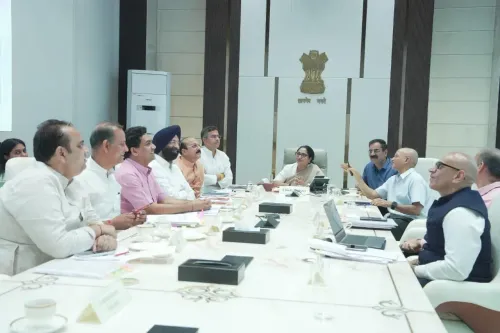
The Delhi Cabinet, chaired by Chief Minister Rekha Gupta, on Tuesday, 15 September 2026, approved a doubling of the monthly incentive for 6,725 ASHA workers — from ₹3,000 to ₹6,000 — and launched the groundwork for safe and affordable hostel accommodation for 10,000 students across the national capital. The decisions were among a cluster of welfare and infrastructure measures cleared at the Cabinet sitting.
ASHA Workers Get Direct Benefit Boost
The incentive hike for the Accredited Social Health Activist (ASHA) workers will be disbursed as direct financial benefits, according to an official statement. ASHA workers are the frontline link between communities and government health schemes, playing a central role in child vaccination drives and connecting beneficiaries to public healthcare programmes.
The Delhi government said the move is intended to strengthen the primary healthcare system at its grassroots level. The incentive had remained at ₹3,000 per month before Tuesday's revision, and the doubling represents the most significant revision to the scheme in recent years.
Student Hostel Policy Under Preparation
On student welfare, the Cabinet initiated the process to provide hostel facilities covering both girls and boys, with secure campuses and student-friendly amenities. The Chief Minister's Office (CMO) said locations are being identified and a dedicated policy is under preparation for time-bound implementation. The scheme is designed to help students — particularly those from outside Delhi — focus on their education without the burden of expensive or unsafe accommodation.
Kishau Dam MoU: A Long-Term Water Security Bet
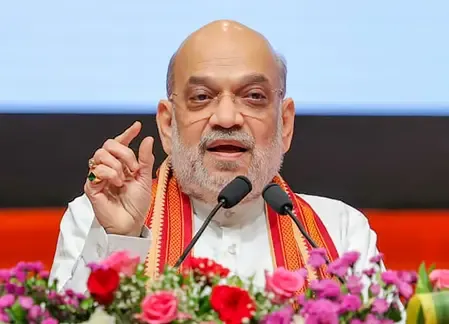
The Cabinet also expressed gratitude to Prime Minister Narendra Modi, Home Minister Amit Shah, and Jal Shakti Minister C.R. Paatil for facilitating the signing of an inter-state Memorandum of Understanding (MoU) on the Kishau Multipurpose Dam Project. Delhi has signed the MoU alongside five other states.
The ₹15,000 crore project is situated on the Tons river along the Himachal Pradesh–Uttarakhand border. It is expected to generate 422 MW of hydroelectric power, irrigate 97,000 hectares, and supply 517 million cubic metres of drinking water annually — with a direct impact on Delhi's seasonal water stress and the rejuvenation of the Yamuna.
The CMO stated: 'Delhi has signed the MoU with five other states. For the national capital, benefits are substantial and long-term. It will strengthen drinking water security, improve availability during lean-flow months, reduce seasonal pressure on supply and support rejuvenation and conservation of Yamuna.' The office added that Delhi would 'gain a stronger, more reliable water framework for its growing population, while also contributing to irrigation, water conservation and clean energy across North India.'
This comes amid long-standing concerns about Delhi's dependence on upstream river flows, which have historically made the city vulnerable to supply shortfalls in summer months.
500 Ultra-Modern Toilet Blocks Approved
Separately, the Delhi government's expenditure and finance panel cleared an outlay of ₹266.26 crore for the construction of 500 ultra-modern toilet blocks for tourists. The facilities will be equipped with solar panels, CCTV surveillance, and mechanical ventilation systems, the government said.
Engineers' Day Event
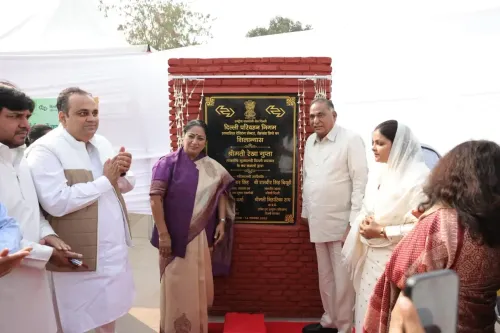
Chief Minister Rekha Gupta also attended an event organised by the Delhi Engineers Association on the occasion of Engineers' Day. In a post on X, Gupta said the occasion included floral tributes to 'Bharat Ratna' Mokshagundam Visvesvaraya, attended alongside State BJP President and Minister of State Harsh Malhotra.
With policy frameworks for both the student hostel scheme and the Kishau dam project still being finalised, the full impact of Tuesday's Cabinet decisions will become clearer in the months ahead.
Point of View
000 to ₹6,000 is a visible welfare signal, but the figure still sits well below what health advocates have long demanded for workers who are effectively the backbone of primary care delivery in India's cities. The Kishau Dam MoU is arguably the more consequential decision — Delhi's water insecurity is a structural problem that has outlasted multiple administrations, and a ₹15,000 crore inter-state project that adds 517 million cubic metres annually could meaningfully shift that calculus, though such projects routinely stretch timelines by years. The student hostel announcement, meanwhile, is still at the location-identification stage, which means it deserves scrutiny at the implementation phase rather than applause at the announcement phase.
NationPress
15 Sept 2026
Frequently Asked Questions
What did the Delhi Cabinet decide for ASHA workers on 15 September 2026?
The Delhi Cabinet approved doubling the monthly incentive for 6,725 ASHA workers from ₹3,000 to ₹6,000 on 15 September 2026. The increase will be paid as a direct financial benefit and is aimed at strengthening Delhi's primary healthcare system.
What is the Kishau Multipurpose Dam Project and how does it benefit Delhi?
The Kishau Multipurpose Dam Project is a ₹15,000 crore infrastructure project on the Tons river along the Himachal Pradesh–Uttarakhand border. It will generate 422 MW of hydroelectric power, irrigate 97,000 hectares, and supply 517 million cubic metres of drinking water annually, directly addressing Delhi's seasonal water shortages and supporting Yamuna rejuvenation.
What is Delhi's plan for student hostel accommodation?
The Delhi Cabinet has initiated a process to provide safe and affordable hostel accommodation for 10,000 students, covering both girls and boys. Locations are being identified and a dedicated policy is under preparation, with the government promising time-bound implementation.
How much has Delhi approved for tourist toilet blocks?
The Delhi government's expenditure and finance panel cleared ₹266.26 crore for the construction of 500 ultra-modern toilet blocks for tourists. These will be fitted with solar panels, CCTV cameras, and mechanical ventilation systems.
Who is Delhi's Chief Minister and which party leads the Cabinet?
Delhi's Chief Minister is Rekha Gupta, who chairs the Delhi Cabinet. The Cabinet is led by the Bharatiya Janata Party (BJP), and the Tuesday sitting also saw Gupta attend an Engineers' Day event organised by the Delhi Engineers Association.