White House Touts Working Families Tax Cuts, Hits Democrats
Synopsis
The White House says President Trump's Working Families Tax Cuts are already delivering results — more hiring, higher wages, new equipment, and growing Main Street businesses — while underscoring that every Democrat in Congress voted against the relief package.
Key Takeaways
The White House announced on October 5, 2026 that the Working Families Tax Cuts are producing measurable economic results.
Claimed early outcomes include more hiring, higher wages, new equipment purchases, and growing businesses .
The administration highlighted that every single Democrat voted against the legislation, sharpening the partisan contrast.
Trump and congressional Republicans are credited as the sole architects of the relief.
No formal data report or third-party economic assessment was attached to the announcement.
A sweeping Republican tax package is already reshaping paycheques and business balance sheets across America, the White House declared on Monday, October 5, 2026 — and it drew a sharp partisan line in doing so, noting that 'every single Democrat' voted against the relief.
What the White House is claiming
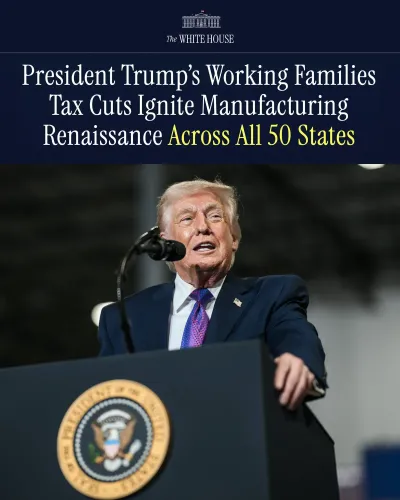
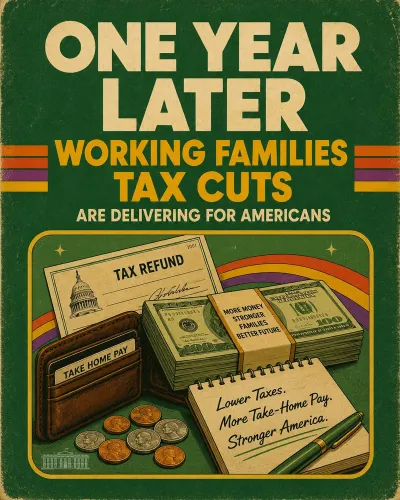
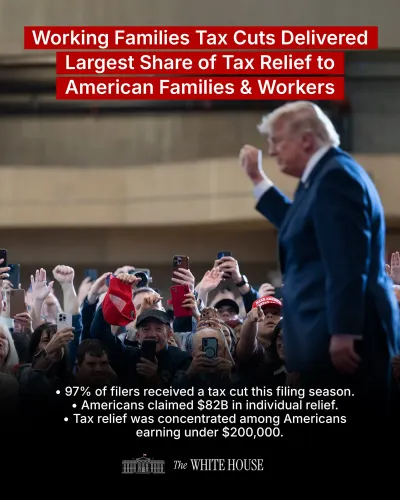
The official White House account on X credited President Donald J. Trump and congressional Republicans with passing the Working Families Tax Cuts, framing the legislation as direct economic relief for ordinary Americans. The post lists four early outcomes: more hiring, higher wages, new equipment purchases, and growing small businesses — the classic 'Main Street' indicators that economists watch in the months after a major fiscal change.
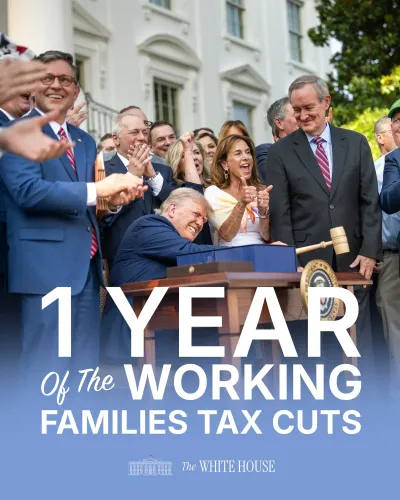
The framing is deliberately political. By spotlighting unanimous Democratic opposition, the White House is setting up a contrast heading into the legislative and electoral calendar — painting the tax cuts as a Republican-delivered benefit that Democrats tried to block.
The 'Main Street' argument and what it rests on
The White House's language — hiring, wages, equipment, business growth — tracks closely with standard supply-side arguments that corporate and income-tax relief frees up capital that employers then deploy. Whether those outcomes are directly attributable to this specific package, rather than broader economic conditions, is a question economists would scrutinise closely. The administration has not released a formal data report alongside this post.
For an Indian audience, the stakes are tangible: the US remains India's largest export destination, and a healthier American consumer and business environment generally supports demand for Indian goods, services, and tech exports. A confident US economy also shapes Federal Reserve rate decisions that move global capital flows — including into and out of Indian markets.
The partisan divide and what comes next
The White House's emphasis on 'every single Democrat' voting against the cuts signals that the administration plans to campaign aggressively on this legislation. Tax policy rarely lands as a clean partisan win — opposition parties routinely argue that such cuts disproportionately benefit the wealthy — but the White House is betting that visible, everyday effects on wages and hiring will make the economic argument for them.
With the cuts now in effect, the next few quarters of US jobs data and wage reports will become the real verdict — numbers neither party can fully spin.
Point of View
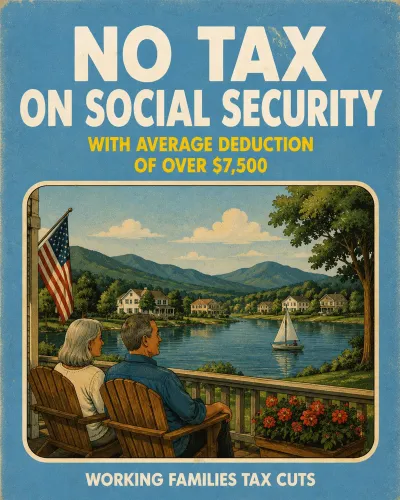
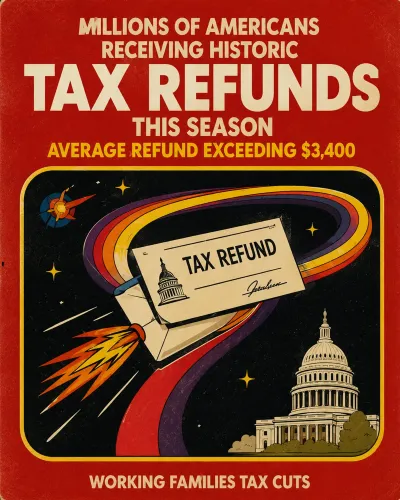
And the administration's decision to lead with 'Main Street' imagery rather than macro data suggests it is targeting persuadable working-class voters rather than economists. For India and other trade-dependent economies, the more consequential question is whether the stimulus sustains US consumer demand or, conversely, tightens the fiscal environment in ways that pressure the Federal Reserve's rate path.
NationPress
6 Oct 2026
Frequently Asked Questions
What are the Working Families Tax Cuts?
The Working Families Tax Cuts are a Republican-backed tax relief package signed under President Donald J. Trump, aimed at reducing the tax burden on working and middle-class American households and small businesses.
Did any Democrats vote for Trump's Working Families Tax Cuts?
According to the White House, not a single Democrat voted in favour of the Working Families Tax Cuts — a claim the administration is actively using to draw a sharp partisan contrast.
What is the impact of US tax cuts on India?
A stronger US economy driven by tax relief can boost demand for Indian exports and IT services, but changes in US fiscal policy also influence Federal Reserve decisions that affect global capital flows into Indian markets.
What economic effects is the White House claiming from the tax cuts?
The White House says the cuts are already producing more hiring, higher wages, new equipment investment, and growing small businesses across the country.
When did the White House make this tax cut announcement?
The White House posted its claims about the Working Families Tax Cuts on Monday, October 5, 2026 , via its official account on X.