Rahul Gandhi demands FIR in pellet gun case, targets Modi-Shah
Synopsis
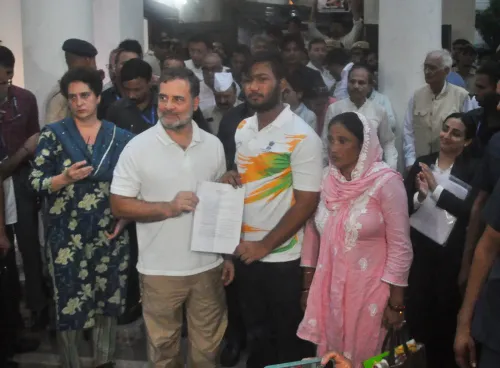
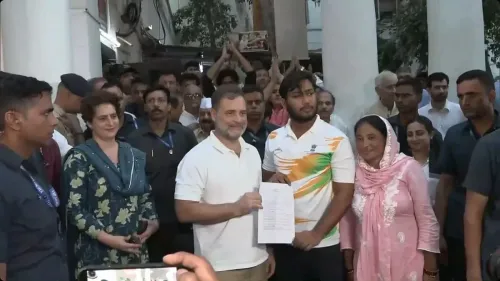
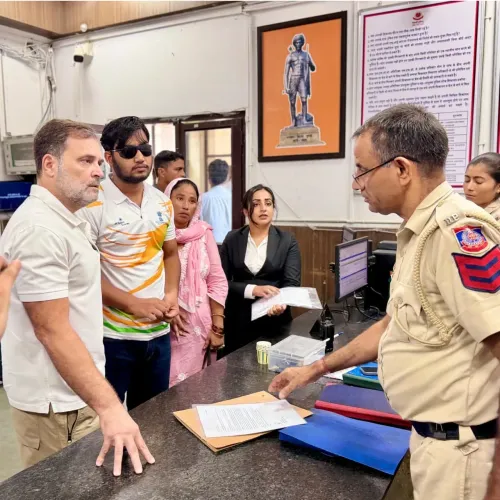
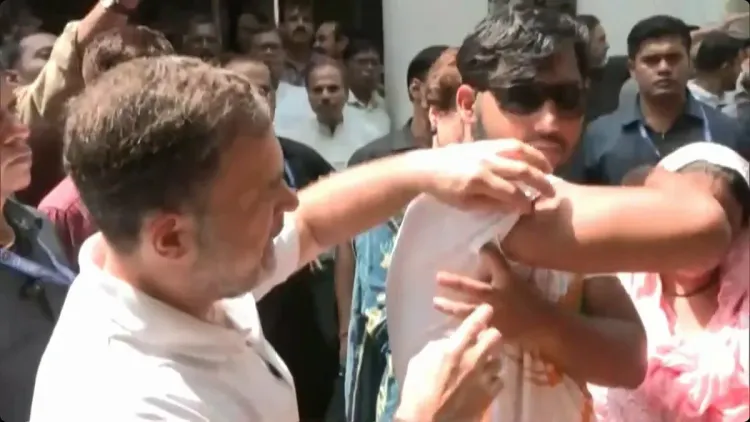
Congress leader Rahul Gandhi demanded FIR registration in the Sahil pellet gun case on 21 August 2026, accusing PM Modi and Home Minister Amit Shah of denying justice to youth injured during peaceful protests. He pledged the party would not relent until the guilty face strict action.
Key Takeaways
Rahul Gandhi posted on 21 August 2026 demanding an FIR in the case of Sahil , allegedly shot with a pellet gun during a peaceful protest.
Gandhi directly named PM Narendra Modi and Home Minister Amit Shah as responsible for the failure to register the FIR.
He argued that the absence of an FIR amounts to official sanction for firing pellet guns at peaceful demonstrators while denying them justice.
Gandhi pledged that Congress would maintain pressure until the FIR is registered and strict action is taken against those accused.
The use of pellet guns in crowd control and the blocking of protest-related FIRs have been recurring political fault lines in India for over a decade.
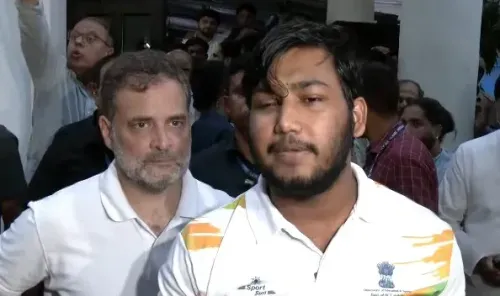
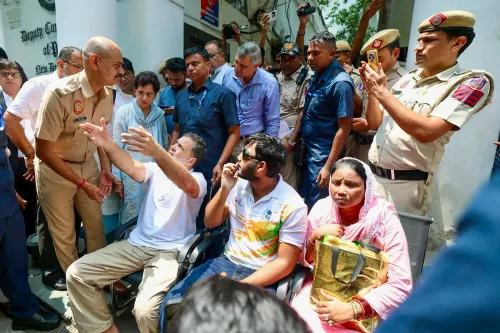
A young man named Sahil was allegedly shot with a pellet gun during a peaceful protest — and according to Congress leader Rahul Gandhi, no FIR has been registered against those responsible. On Friday, 21 August 2026, Gandhi took to X to demand accountability, warning that his party would not stand down until justice is delivered.
In his post, Gandhi wrote: 'साहिल की FIR दर्ज न होने देने का एक ही मतलब है' — 'There is only one meaning to blocking Sahil's FIR.' He argued that under the rule of Prime Minister Narendra Modi and Home Minister Amit Shah, security forces can openly fire pellet guns at youth engaged in peaceful demonstrations, yet those youth cannot get justice. 'Until the FIR is registered, until there is assurance of strict action against the guilty — we will stand firm,' he declared.
Pellet guns and protest accountability: a decade-long fault line
The use of pellet guns as a crowd-dispersal measure has been a flashpoint in Indian political debate for well over a decade. Critics argue the weapons — designed to be non-lethal — cause severe, often permanent eye injuries and are disproportionate against unarmed demonstrators. Opposition parties, including the Congress, have repeatedly raised the issue in Parliament and in public forums, demanding stricter rules of engagement and mandatory FIR registration when civilians are injured by security forces.
The refusal or delay in registering FIRs in protest-related incidents has been a recurring grievance. Without an FIR, no formal investigation can begin, effectively shielding those accused of excessive force from prosecution. Gandhi's post frames this procedural failure not as bureaucratic inertia but as a deliberate political choice at the highest level of the Union government.
Gandhi's direct challenge to the Home Ministry
By naming Modi and Shah specifically — rather than a state government or local police — Gandhi is placing the accountability squarely on the central leadership. Amit Shah, as Union Home Minister, holds overarching responsibility for law enforcement and internal security policy across India. The framing is a familiar Congress tactic: elevate a local grievance to a national indictment of the BJP's governance record.
Gandhi's conditional pledge — 'we will stand firm' until FIR registration and credible action against the accused — signals that the Congress intends to sustain pressure on this case, likely through parliamentary questions, public rallies, or legal interventions.
If Sahil's FIR remains unregistered, this case could become the next test of whether the opposition's sustained pressure translates into institutional action — or simply adds to a long ledger of unresolved protest grievances.
Point of View
Local grievance into a systemic indictment of the BJP's governance by naming the Prime Minister and Home Minister directly. The pellet gun issue carries particular resonance because it sits at the intersection of civil liberties, police accountability, and the rights of young protesters — demographics the Congress has been actively courting. By making FIR registration the explicit threshold for withdrawal of pressure, Gandhi is setting a measurable, public benchmark that will be hard for the government to ignore without political cost. Whether the case generates sustained parliamentary or judicial scrutiny will determine if this moment moves the needle or fades into the pattern of unresolved protest grievances.
NationPress
5 Oct 2026
Frequently Asked Questions
What is Rahul Gandhi demanding in the Sahil pellet gun case?
Rahul Gandhi is demanding the immediate registration of an FIR in the case of Sahil, a young man allegedly shot with a pellet gun during a peaceful protest. He has also called for strict action against those responsible and has pledged that Congress will not back down until both conditions are met.
Why is an FIR so important in protest injury cases in India?
An FIR (First Information Report) is the mandatory first step that triggers a formal police investigation in India. Without an FIR, no official inquiry into the accused can proceed, which effectively prevents prosecution of security personnel or others accused of using excessive force.
Why are pellet guns controversial in India?
Pellet guns, though classified as non-lethal crowd-control weapons, have caused severe injuries including permanent blindness in multiple protest situations in India. Critics argue their use against unarmed demonstrators is disproportionate, and the issue has been debated in Parliament repeatedly over the past decade.
Why did Rahul Gandhi name Modi and Amit Shah specifically?
By naming Prime Minister Narendra Modi and Home Minister Amit Shah, Gandhi places accountability at the central government level rather than with local or state authorities. As Home Minister, Amit Shah oversees law enforcement and internal security policy across India.
What action could follow Rahul Gandhi's post on the Sahil case?
Congress could pursue the matter through parliamentary questions, adjournment motions, public protests, or by supporting legal petitions. The party's stated position is to maintain pressure until the FIR is registered and credible action is taken against the accused.