US targets China's critical minerals grip with $205bn DFC push
Synopsis
The Trump administration has deployed its full development finance arsenal — $205 billion in DFC capacity, a $1.8 billion Critical Minerals Consortium, and $1.5 billion in Asian energy infrastructure — in a direct bid to dismantle China's grip on global supply chains. But Democrats are already flagging the processing gap: controlling mines means little if Chinese refiners still handle the output.
Key Takeaways
The Trump administration told the House Foreign Affairs Committee on 16 July that it is reorienting US development finance to counter China's dominance in critical minerals and strategic supply chains.
DFC now holds $205 billion in investment capacity with a pipeline of 340+ deals worth $78 billion .
A $600 million DFC contribution anchors a $1.8 billion Critical Minerals Consortium with Orion Resource Partners ; an additional $900 million targets mining expansion. $1.5 billion approved for energy infrastructure across South and Southeast Asia to promote American LNG and equipment.
MCC has approximately $1.3 billion of its portfolio directed at US critical minerals priorities.
Ranking Member Gregory Meeks warned that mineral processing — not just mining — must be central to the strategy, flagging China's continued dominance of refining capacity.
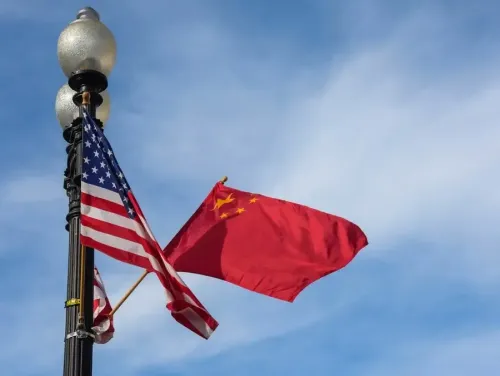
The Trump administration on 16 July told lawmakers it is fundamentally reorienting US development finance and overseas investment to break America's dependence on China for critical minerals, energy, telecommunications, and other strategic supply chains — arguing that economic security is now inseparable from national security.
Appearing before the House Foreign Affairs Committee, senior officials from the US International Development Finance Corporation (DFC), the US Trade and Development Agency (USTDA), and the Millennium Challenge Corporation (MCC) laid out a coordinated strategy to build Western-aligned alternative supply chains across Africa, the Indo-Pacific, Latin America, and Central Asia.
The Strategic Stakes
Committee Chairman Brian Mast opened the hearing with a blunt assessment: the United States 'cannot remain dependent on China' for the materials, technologies, and infrastructure that power its economy and military.
'The Chinese Communist Party has spent decades building control over mines, processing capacity, ports, logistic networks, technology platforms,' Mast said. 'Those dependencies were not created by accident. They were built to give Beijing leverage over the United States of America, over our allies, and over literally anybody.'
This comes amid a broader bipartisan consensus that China's dominance over critical mineral supply chains — from cobalt in the Democratic Republic of Congo to rare earths processed in Chinese facilities — represents a structural vulnerability for Western economies and defence sectors.
DFC's $205 Billion Investment Firepower
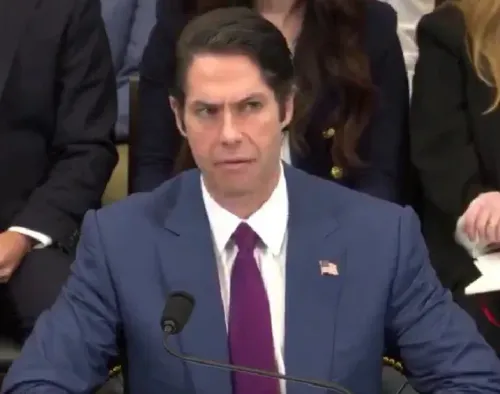
DFC Chief Executive Officer Benjamin Black told the committee that the agency, recently reauthorised by Congress, now commands $205 billion of investment capacity and has rebuilt its pipeline to more than 340 deal opportunities totalling $78 billion across energy, technology, and critical minerals.
'Under President Trump's leadership, DFC is equipped to be a leading force for restoring US economic security,' Black said.
Among the headline commitments was a $600 million contribution to a $1.8 billion Critical Minerals Consortium with Orion Resource Partners, alongside an additional $900 million in financing approved to expand mining and mineral projects — directly targeting what Black described as China's 'strategic choke holds.'
The DFC also approved $1.5 billion for energy infrastructure across South and Southeast Asia to accelerate the use of American liquefied natural gas and equipment in the region. A separate telecommunications project in Kazakhstan is designed to replace Chinese equipment with 'trusted service providers,' Black added.
USTDA and MCC: Building the Foundation
USTDA Deputy Director Thomas R. Hardy said his agency focuses on preparing infrastructure projects that attract private investment while strengthening resilient supply chains. He cited active projects along the Lobito Corridor in Angola, Zambia, and the Democratic Republic of Congo, as well as initiatives in the Philippines and Pacific island nations — all framed as 'trusted alternatives to strategic competitors.'
MCC Acting Chief of Staff Dan Petrie said the agency lays the 'public sector foundation for private sector-led growth,' noting that approximately $1.3 billion of MCC's current portfolio is contributing directly to US critical minerals priorities.
Democratic Pushback and the Processing Gap
Several Democratic lawmakers voiced support for supply-chain diversification but raised pointed concerns about the administration's approach. Ranking Member Gregory Meeks argued that dismantling parts of US foreign aid had weakened America's competitive position against China — and stressed that processing, not just mining, must remain central to any credible critical minerals strategy.
Other Democratic members questioned whether the administration's heavy emphasis on geopolitical competition was coming at the expense of broader development assistance programmes that historically built US goodwill in resource-rich nations.
Notably, China's dominance is not merely at the extraction stage — it controls a substantial share of global mineral processing capacity, meaning that even mines financed by Western capital often route output through Chinese refiners. Addressing that bottleneck remains an unresolved challenge in the strategy outlined Wednesday.
What Comes Next
The hearing signals that the administration intends to use DFC, USTDA, and MCC as coordinated instruments of economic statecraft rather than traditional development lenders. With 340-plus deals in the pipeline and bipartisan agreement on the China threat, the funding machinery appears in place — the open question is whether partner countries will prioritise US-aligned supply chains over established Chinese infrastructure relationships. Industry observers and lawmakers alike will be watching whether the processing gap identified by Meeks is addressed in subsequent legislative or executive action.
Point of View
But the strategy has a structural blind spot that Ranking Member Meeks identified and the administration did not answer: China's chokehold is at the processing stage, not just the mine face. Financing new mines in Africa or Central Asia while Chinese refiners still handle the bulk of global processing capacity does not break the dependency — it merely moves it one step upstream. The real test of this strategy will be whether the US can finance competitive processing infrastructure at scale, something that requires far longer time horizons and more patient capital than deal pipelines typically accommodate. Without that, Wednesday's hearing risks being remembered as an ambitious framing exercise rather than a structural fix.
NationPress
15 Oct 2026
Frequently Asked Questions
What is the US strategy to reduce dependence on China for critical minerals?
The Trump administration is using federal development finance agencies — DFC, USTDA, and MCC — to build Western-aligned supply chains across Africa, the Indo-Pacific, Latin America, and Central Asia. The DFC alone now has $205 billion in investment capacity and a pipeline of over 340 deals worth $78 billion targeting energy, technology, and critical minerals.
What is the $1.8 billion Critical Minerals Consortium?
It is a consortium co-financed by the DFC, which is contributing $600 million, alongside Orion Resource Partners, bringing the total to $1.8 billion. The fund is designed to finance mining and mineral projects that reduce China's 'strategic choke holds' on global supply chains, according to DFC CEO Benjamin Black.
Why are Democratic lawmakers critical of the administration's approach?
Several Democratic members of the House Foreign Affairs Committee supported supply-chain diversification in principle but argued the administration's focus on geopolitical competition is coming at the cost of broader development aid. Ranking Member Gregory Meeks specifically warned that mineral processing — not just mining — must be prioritised, since China dominates global refining capacity.
Which regions are targeted under the US critical minerals strategy?
The strategy targets Africa (including the Lobito Corridor across Angola, Zambia, and the DRC), the Indo-Pacific (Philippines and Pacific island nations), South and Southeast Asia (for energy infrastructure), Latin America, and Central Asia (including a telecom project in Kazakhstan).
What role does the Millennium Challenge Corporation play in this strategy?
The MCC focuses on improving roads, regulatory systems, and investment conditions in partner countries to attract private capital. Approximately $1.3 billion of MCC's current portfolio is directed at US critical minerals priorities, according to Acting Chief of Staff Dan Petrie.