US Launches $500 Million Initiative to Bolster Critical Minerals Processing

Synopsis
The United States has announced a substantial funding program of up to $500 million to enhance domestic processing of critical minerals, aiming to secure the battery supply chain vital for defense, transportation, and energy industries.
Key Takeaways
The US has announced a funding initiative of up to $500 million to enhance critical minerals processing.
This funding aims to strengthen the battery supply chain for industries like defense and energy.
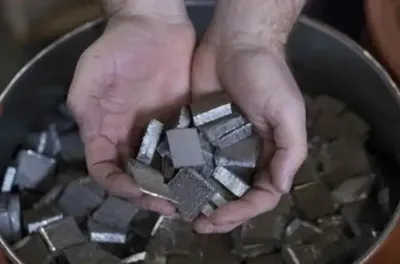
Key materials targeted include lithium , nickel , and graphite .
The initiative marks the third funding round from the DOE’s programs.
It emphasizes domestic production to bolster national security and energy independence.
Washington, March 14 (NationPress) The United States has unveiled a significant funding initiative of up to $500 million aimed at enhancing domestic processing capabilities for critical minerals. This move is designed to fortify the battery supply chain, which is integral to various industries including defense, transportation, and energy.
The U.S. Department of Energy (DOE) has announced that this funding opportunity will focus on improving the processing, manufacturing, and recycling of critical minerals within the country. This initiative reflects Washington's commitment to decrease its dependence on international supply chains for essential materials.
Funding will be distributed through a Notice of Funding Opportunity (NOFO) issued by the DOE’s Office of Critical Minerals and Energy Innovation (CMEI).
US Energy Secretary Chris Wright emphasized, “For too long, the United States has depended on adversarial foreign entities to supply and process critical materials essential for battery manufacturing and materials processing.”
Wright continued, “Under President Trump’s guidance, the Department of Energy is taking a proactive stance in strengthening domestic industries, positioning the US to excel in the AI race, meet growing energy demands, and achieve energy dominance.”
This initiative aims to enhance the domestic battery supply chain that supports various sectors including defense, grid resilience, transportation, and manufacturing.
The DOE states that the funding will facilitate the development of demonstration or commercial facilities responsible for processing, recycling, or manufacturing critical materials utilized in batteries.
These materials encompass traditional battery minerals such as lithium, graphite, nickel, copper, and aluminum, as well as additional minerals found in commercially available batteries.
This funding opportunity marks the third round issued through the DOE’s Battery Materials Processing and Battery Manufacturing and Recycling programs.
Projects funded will concentrate on three primary areas:
- Domestic processing of critical minerals from raw materials to enhance the US's capacity for advanced battery components.
- Recycling initiatives aimed at improving the recovery of battery minerals from manufacturing scrap, off-spec materials, and end-of-life batteries.
- Expansion of domestic manufacturing capabilities for strategic battery materials, components, and technologies.
The Energy Department noted that this initiative seeks to bolster supply chain resilience as global demand for advanced batteries continues to rise.
Assistant Secretary of Energy Audrey Robertson remarked that this effort signifies enhanced collaboration with partners in the Indo-Pacific.
“I am pleased to be in Japan meeting with our allies, highlighting the critical link between essential materials and energy security,” Robertson stated.
“Processing critical minerals is a crucial aspect of our national supply chain. Increasing domestic production, particularly through recycling, will enhance national security and ensure that the United States and its partners are equipped to tackle the energy challenges of the 21st century,” she added.
Robertson is currently engaging with regional allies in Japan at the Indo-Pacific Energy Security Ministerial and Business Forum, where discussions focus on supply chain resilience and energy cooperation.
Critical minerals are pivotal in the global competition for advanced technologies, electric vehicles, and energy systems. The United States and its allies are increasingly prioritizing the security of supply chains in response to concerns regarding reliance on foreign processing and refining.
Battery materials such as lithium, nickel, and graphite play a vital role in electric vehicles, grid storage systems, and other emerging energy technologies, making them a strategic priority for governments aiming to enhance industrial and energy security.
Point of View
The recent announcement by the US government to invest in critical minerals processing reflects a strategic shift towards energy independence and supply chain resilience. This funding initiative is not only vital for national security but also reinforces the importance of domestic production in the face of global competition.
NationPress
19 Sept 2026
Frequently Asked Questions
What is the purpose of the $500 million funding?
The funding is aimed at enhancing domestic processing of critical minerals and strengthening the battery supply chain across various industries including defense, transportation, and energy.
Which department is responsible for this funding initiative?
The funding opportunity is managed by the U.S. Department of Energy (DOE) through its Office of Critical Minerals and Energy Innovation (CMEI).
What types of materials will this funding target?
The initiative will focus on critical minerals such as lithium, graphite, nickel, copper, and aluminum, which are essential for battery manufacturing.
Why is this initiative important for the United States?
This initiative is crucial for reducing reliance on foreign supply chains, enhancing national security, and securing the US's position in the global energy market.
How will the funding be distributed?
Funding will be allocated through a Notice of Funding Opportunity (NOFO) and will support projects related to processing, recycling, and manufacturing of critical materials.