US bill targets China's grip on critical minerals, eyes supply chain overhaul
Synopsis
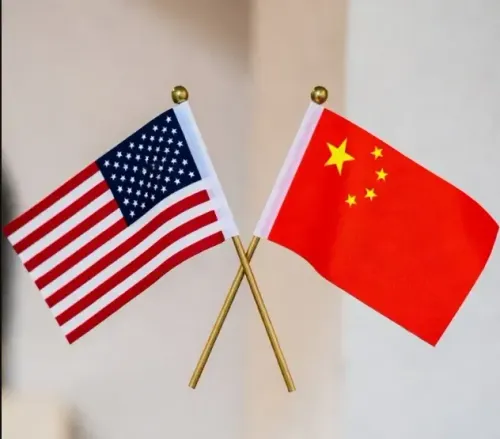
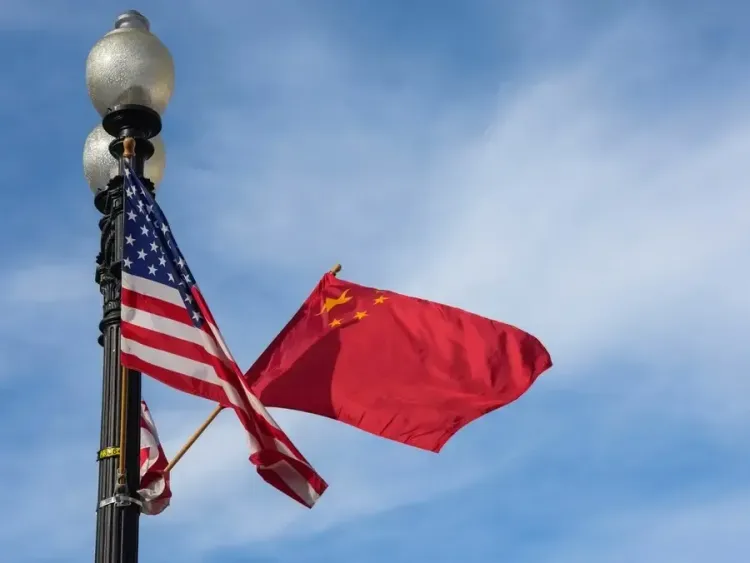
China controls over 70% of rare-earth mining and 90% of refining — and a bipartisan Senate bill now aims to directly challenge that grip. The Critical Mineral Executive Coordination Act would plant a minerals 'czar' inside the White House National Security Council and train US diplomats for supply-chain diplomacy. With companion legislation already through the House, the push is gaining real legislative momentum.
Key Takeaways
Senators Tim Scott and Raphael Warnock introduced the Critical Mineral Executive Coordination Act on 25 September 2026 .
The bill would create a permanent special adviser for critical minerals and supply chains within the National Security Council .
A new training programme at the Foreign Service Institute would build diplomatic expertise on critical minerals.
China controls more than 70% of global rare-earth mining and roughly 90% of refining capacity, according to background material accompanying the bill.
Companion legislation was introduced in the House of Representatives by Congressman Ami Bera and Representative Young Kim .
India joined the US-led Minerals Security Partnership in 2023 , alongside Australia, Canada, Japan, South Korea, and European partners.
A bipartisan group of US senators has introduced legislation on 25 September 2026 aimed at strengthening Washington's diplomatic capacity and White House coordination on critical minerals — a direct move to reduce China's stranglehold over supply chains essential to defence, semiconductors, and advanced technology.
What the Bill Proposes
Republican Senator Tim Scott and Democratic Senator Raphael Warnock introduced the Critical Mineral Executive Coordination Act, joined by co-sponsors Senators Jacky Rosen, Tim Kaine, Chris Coons, and John Curtis. The legislation would establish a dedicated training programme at the Foreign Service Institute to equip US diplomats with expertise on critical minerals and America's strategic competition with China.
Crucially, it would also create a permanent special adviser to the president for critical minerals and supply chains, housed within the National Security Council. Senator Kaine described the proposed position as a critical-minerals 'czar' who would coordinate federal agencies across government departments.
Why China's Dominance Alarms Washington
Background material accompanying the bill states that the Chinese Communist Party controls more than 70 per cent of global rare-earth mining and approximately 90 per cent of global refining capacity. That concentration has raised alarm in Washington about potential supply disruptions and Beijing's ability to weaponise its position as leverage in political or trade disputes.
'Critical minerals are the building blocks for advanced technology. From powering our cellphones to our nation's most advanced weapons systems, they are essential to America's national security,' Scott said. He added that the bill 'helps make sure the US — not China — leads the way.'
Warnock said the bill 'addresses alarming vulnerabilities by educating our federal workers and diplomats on the importance of securing our nation's critical mineral supply chains and how to better support our domestic industries.'
House Companion Bill and the DOMINANCE Act
Indian-American Congressman Ami Bera and Republican Representative Young Kim introduced companion legislation in the House of Representatives. According to the lawmakers, the Senate proposal advances two provisions already included in the House-passed DOMINANCE Act — a broader measure that seeks to formalise Washington's role in international mineral partnerships and improve coordination of diplomatic and financing tools.
'I'm encouraged to see the Senate continue the bipartisan work we advanced through the House-passed DOMINANCE Act,' Bera said. 'I appreciate Senators Scott and Warnock's leadership in carrying forward key provisions that will strengthen our diplomatic expertise and improve coordination across the federal government.'
India's Role and the Minerals Security Partnership
India joined the US-led Minerals Security Partnership in 2023, a grouping that also includes Australia, Canada, Japan, South Korea, and several European nations. The partnership works to encourage investment in responsible critical-mineral supply chains — and the new Senate legislation, if enacted, could deepen coordination between the US and partner countries including India.
This comes amid a broader Western push to diversify away from Chinese-controlled supply chains, accelerated by semiconductor shortages and rising geopolitical tensions over Taiwan. The bill must still clear both the Senate and the House before reaching President Donald Trump for signature; lawmakers have not announced a timetable for its consideration.
Point of View
But they address process, not supply. China's 90% refining dominance cannot be reversed by better coordination alone — it requires massive upstream investment in allied nations, including India, and that is not yet in this bill. The DOMINANCE Act framing is politically convenient, but the harder legislative lift — funding new mines, processing plants, and allied offtake agreements — remains ahead. India's presence in the Minerals Security Partnership makes it a natural beneficiary of US diversification pressure, but only if New Delhi moves faster on its own rare-earth processing capacity.
NationPress
25 Sept 2026
Frequently Asked Questions
What is the Critical Mineral Executive Coordination Act?
It is a bipartisan US Senate bill introduced on 25 September 2026 by Senators Tim Scott and Raphael Warnock that would create a permanent White House adviser for critical minerals and a diplomat training programme to reduce US dependence on China's rare-earth supply chains. The bill has companion legislation in the House of Representatives.
Why is China's control over critical minerals a concern for the US?
According to background material accompanying the bill, the Chinese Communist Party controls more than 70 per cent of global rare-earth mining and approximately 90 per cent of refining capacity. Washington fears supply disruptions and Beijing's ability to use that dominance as leverage in political or trade disputes, particularly given minerals' role in semiconductors, electric vehicles, and advanced weapons.
What is the proposed White House minerals adviser role?
The bill would establish a permanent special adviser to the president for critical minerals and supply chains within the National Security Council. Senator Tim Kaine described the position as a critical-minerals 'czar' who would coordinate strategy across all relevant federal agencies.
How does this relate to India?
India joined the US-led Minerals Security Partnership in 2023, a grouping that includes Australia, Canada, Japan, South Korea, and several European nations. If the bill is enacted, it could strengthen US coordination with India on securing responsible critical-mineral supply chains as an alternative to Chinese sources.
What happens next with the legislation?
The bill must pass both the Senate and the House of Representatives before it can be sent to President Donald Trump for signature. Lawmakers have not announced a specific timetable for consideration, though the House has already passed the broader DOMINANCE Act, which contains related provisions.