US lawmakers push National Critical Minerals Council to counter China

Synopsis
A bipartisan US bill wants to end Washington's fragmented approach to critical minerals — the resources powering EVs, AI, and weapons systems. With China refining 70% of global supply and the US fully import-dependent on 16 minerals, Senator Hickenlooper's warning cuts to the chase: 'Beijing decides who gets the supply — and who doesn't.'
Key Takeaways
A bipartisan group of US senators introduced the National Critical Minerals Council Act in Congress in October 2026 .
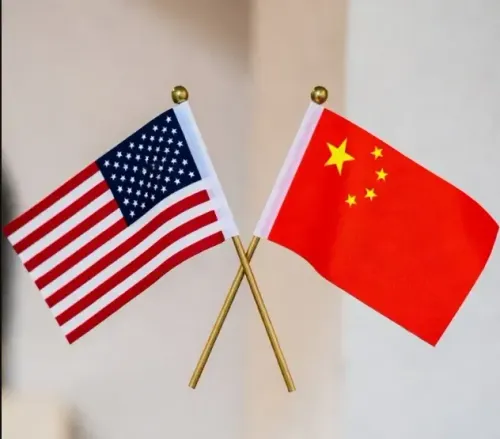
China processes or refines approximately 70 per cent of the world's critical minerals; the US is entirely import-dependent for 16 critical minerals.
The proposed council would be led jointly by the Secretary of the Interior , the National Security Adviser , and the Director of the National Economic Council .
The bill has bipartisan backing from Senators Rosen, Hickenlooper, Tillis, Sheehy , and Cramer .
The legislation has implications for allied nations including India , though no specific bilateral agreement is announced.
The bill has not yet become law and still requires full congressional approval .
A bipartisan group of United States lawmakers has pressed for a coordinated national strategy to secure critical minerals, warning that China's dominance over global supply chains poses direct risks to American national security, technological competitiveness, and economic stability. The push, renewed on Tuesday, 14 October 2026, centres on the proposed National Critical Minerals Council Act, which would create a dedicated federal body to streamline US policy on essential industrial resources.
What the Legislation Proposes
Senator Jacky Rosen led the renewed call for the bill, which has drawn backing from both Republican and Democratic lawmakers — including Senators John Hickenlooper, Thom Tillis, Tim Sheehy, and Kevin Cramer. The legislation was introduced in Congress earlier this month and seeks to unify federal agencies that are currently working in silos on critical minerals policy.
The proposed council would be jointly led by the Secretary of the Interior, the National Security Adviser, and the Director of the National Economic Council. A dedicated Chief Minerals Adviser would oversee day-to-day operations, coordinating with government agencies, universities, industry representatives, national laboratories, and other stakeholders.
The China Supply-Chain Threat
According to the lawmakers, China processes or refines approximately 70 per cent of the world's critical minerals, while the United States depends entirely on imports for 16 critical minerals. These materials are essential inputs for semiconductors, batteries, electric vehicles, smartphones, artificial intelligence systems, aerospace components, and military equipment.
Senator Hickenlooper framed the threat in stark terms. China doesn't need to fire a shot. It just needs to stop a shipment,
he said. We need a national strategy on critical minerals now. Otherwise, Beijing decides who gets the supply — and who doesn't.
Senator Tillis argued that the fragmented status quo is unsustainable: The United States can no longer afford to take a piecemeal approach to address our critical minerals needs.
Council Mandate and Scope
If enacted, the council would operate within the Executive Office of the President and would be responsible for developing a national strategy to reduce dependence on foreign adversaries. Its mandate includes coordinating research and investment, monitoring foreign investments in mineral projects, promoting workforce development, and — crucially — partnering with allied nations and private companies to build secure international supply chains.
Senator Rosen said the bill would give the US the infrastructure it needs to secure critical minerals and remain at the forefront of modern development.
Implications for India and Allied Nations
The legislation carries potential downstream implications for countries such as India, which has been seeking to diversify its own mineral supply chains and expand cooperation with the US in advanced manufacturing, energy technologies, and defence production. India and the US have previously identified critical minerals as a shared strategic priority.
However, the bill does not specifically identify India as a beneficiary, nor does it announce any new bilateral agreement. Any cooperation would be contingent on the council's eventual international partnership framework. Notably, the legislation has not yet become law — its establishment still requires full congressional approval.
Why This Matters Now
Critical minerals have rapidly moved to the centre of great-power competition. The race to control these resources underpins everything from the global electric-vehicle transition to next-generation semiconductor fabrication. This is not the first congressional attempt to address the issue, but the bipartisan character of the National Critical Minerals Council Act reflects a hardening consensus in Washington that the current approach — relying on fragmented agency efforts and import dependence — is strategically untenable.
The legislation's next step is advancing through congressional committees, and its progress will be closely watched by allied governments and industry bodies alike.
Point of View
And China's processing dominance has only deepened in that period. The real test is whether this council, if established, can translate coordination into actual domestic and allied production capacity — or whether it becomes another advisory body that maps the problem without solving it. For India, the bill's vague reference to 'allied nations' is an opening, not a commitment.
NationPress
14 Oct 2026
Frequently Asked Questions
What is the National Critical Minerals Council Act?
The National Critical Minerals Council Act is a bipartisan US bill introduced in Congress in October 2026 that proposes a dedicated federal council to coordinate national strategy on critical minerals. It aims to reduce US dependence on China, which processes roughly 70 per cent of global critical minerals, and to build secure international supply chains with allied nations and private companies.
Why are critical minerals a strategic concern for the US?
Critical minerals are essential inputs for semiconductors, batteries, electric vehicles, AI systems, aerospace components, and military equipment. The US is entirely import-dependent for 16 such minerals, while China controls roughly 70 per cent of global processing capacity — giving Beijing significant leverage over advanced technology and defence supply chains.
Who are the key senators backing this legislation?
The bill is supported by Democratic Senators Jacky Rosen and John Hickenlooper, and Republican Senators Thom Tillis, Tim Sheehy, and Kevin Cramer — reflecting bipartisan agreement on the urgency of the issue.
How would the proposed council be structured?
The council would operate within the Executive Office of the President and be jointly led by the Secretary of the Interior, the National Security Adviser, and the Director of the National Economic Council. A Chief Minerals Adviser would manage operations and coordinate with agencies, universities, national laboratories, and industry groups.
What are the implications of this bill for India?
The legislation could have indirect implications for India, which has been expanding cooperation with the US on critical minerals as part of shared interests in advanced manufacturing and defence production. However, the bill does not name India as a specific beneficiary or announce any new bilateral agreement; any cooperation would depend on the council's eventual international partnership framework.