Shekhawat Greets Nation on Navratri's Fourth Day, Maa Kushmanda
Synopsis
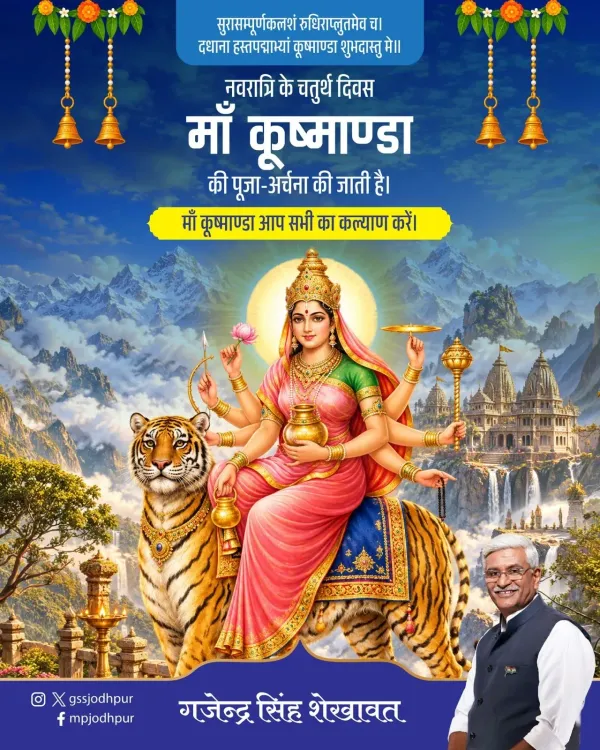
Union Culture and Tourism Minister Gajendra Singh Shekhawat marked the fourth day of Navratri by sharing a Sanskrit shloka dedicated to Maa Kushmanda and extending wishes for the well-being of all, on 14 October 2026.
Key Takeaways
Union Minister Gajendra Singh Shekhawat shared a Sanskrit shloka for Maa Kushmanda on the fourth day of Navratri , 14 October 2026 .
Maa Kushmanda is the fourth of nine divine forms of Goddess Durga worshipped across Navratri's nine nights.
The shloka posted invokes Maa Kushmanda as the bestower of auspiciousness and is among traditional Sanskrit stotras recited on the fourth day.
Shekhawat's benediction called on Maa Kushmanda to 'bestow well-being upon all' — a message directed at the broader public.
The Ministry of Culture holds a mandate to promote India's intangible heritage, including its festival traditions.
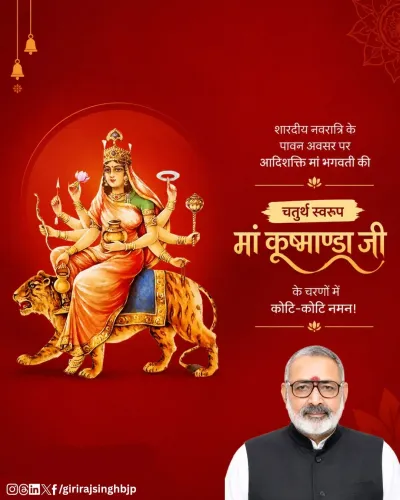
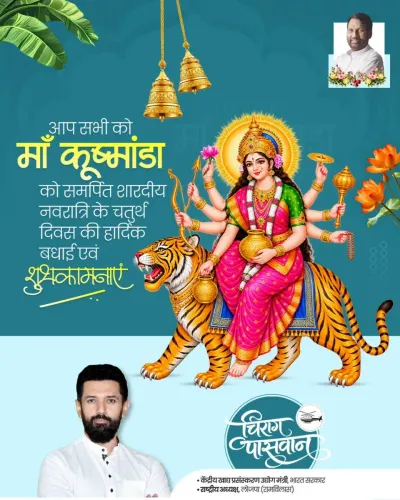
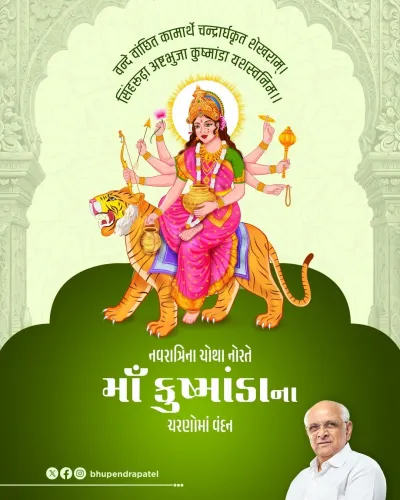
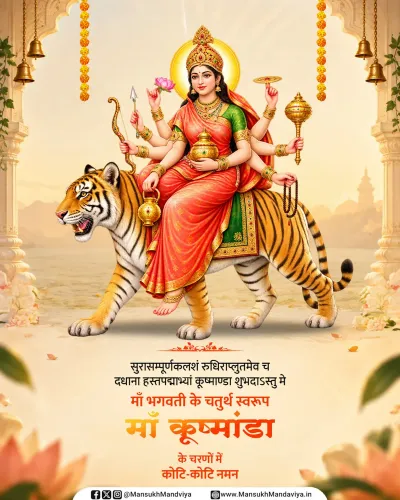
On the fourth day of Navratri, Union Culture and Tourism Minister Gajendra Singh Shekhawat invoked the blessings of Maa Kushmanda — the fourth of the nine divine forms of Goddess Durga — sharing a Sanskrit shloka and warm wishes for the well-being of all on Wednesday, 14 October 2026.
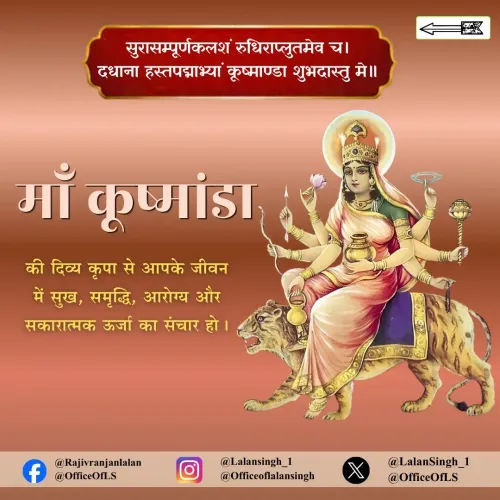
The shloka shared by Shekhawat reads: 'Surasampurnakalasham rudhiraplutameva cha, dadhana hastapadmabhyam Kushmanda shubhadastu me' — loosely rendered as: 'She who holds a pot brimming with wine and smeared with blood in her lotus hands, may Maa Kushmanda bestow auspiciousness upon me.' The verse is among the traditional Sanskrit stotras recited by devotees on the fourth day of the nine-night festival.
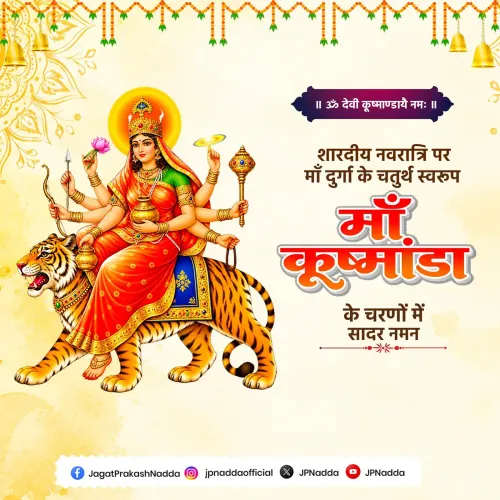
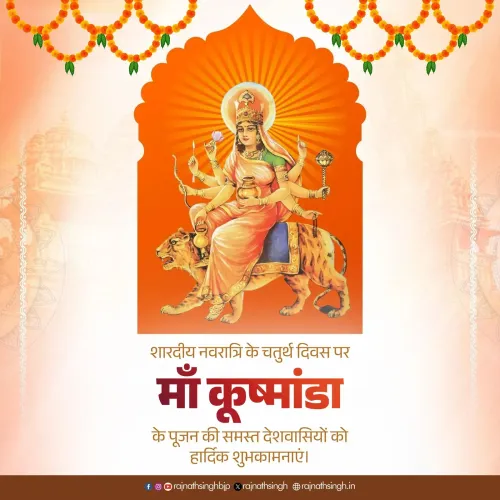
Maa Kushmanda — the fourth face of Navratri
Navratri, one of India's most widely observed Hindu festivals, honours the nine forms of Goddess Durga across nine nights. Each day carries its own presiding deity, specific rituals, and associated iconography. Maa Kushmanda is revered as the creator of the universe in her cosmic form — her name, derived from Sanskrit, is understood to mean 'the one who created the universe with her divine smile.' Devotees worship her on the fourth day with special prayers, flowers, and offerings.
Shekhawat's post, addressed broadly to the public, closes with a benediction: 'May Maa Kushmanda bestow well-being upon you all' — a familiar gesture of public outreach during a festival season that draws hundreds of millions of participants across India and the global Indian diaspora.
Culture Ministry's role in festival heritage
The Ministry of Culture, which Shekhawat leads, counts the promotion of India's intangible heritage — including its festival traditions — among its core mandates. Senior ministers sharing devotional content and traditional shlokas during Navratri has become a consistent feature of India's political and cultural calendar, reflecting both personal faith and the government's broader outreach on living heritage.
With five more nights of Navratri still to unfold, each carrying its own goddess and ritual significance, the festival season continues to anchor one of India's richest cycles of cultural and spiritual life.
Point of View
Amplifying festival traditions aligns directly with its mandate to preserve and promote intangible heritage. Shekhawat's choice to include the original Sanskrit shloka, rather than only a vernacular greeting, signals an appeal to both classical tradition and a digitally engaged, religiously literate audience. This kind of soft-cultural messaging during major Hindu festivals also feeds into the BJP's broader civilisational narrative around Indian identity and heritage.
NationPress
14 Oct 2026
Frequently Asked Questions
Which goddess is worshipped on the fourth day of Navratri?
Maa Kushmanda is worshipped on the fourth day of Navratri. She is the fourth of the nine forms of Goddess Durga and is traditionally associated with the creation of the universe.
What is the meaning of the Kushmanda shloka shared by Shekhawat?
The shloka — 'Surasampurnakalasham rudhiraplutameva cha, dadhana hastapadmabhyam Kushmanda shubhadastu me' — translates to a prayer asking Maa Kushmanda, who holds a wine-filled pot and a blood-smeared vessel in her lotus hands, to bestow auspiciousness upon the devotee.
Who is Gajendra Singh Shekhawat?
Gajendra Singh Shekhawat is India's Union Minister of Culture and Tourism , a senior BJP leader and Lok Sabha MP from Jodhpur, Rajasthan .
What is Navratri and how long does it last?
Navratri is a nine-night Hindu festival dedicated to the nine forms of Goddess Durga . It is one of India's most widely celebrated festivals, observed with prayers, fasting, and cultural performances.
What does the Ministry of Culture do during Navratri?
The Ministry of Culture promotes India's intangible heritage including its festival traditions. Ministers and officials typically engage in public outreach during Navratri, sharing devotional content and, at times, organising cultural events tied to the festival season.