US Lawmakers Urge Action Amid China's Control of Key Minerals
Synopsis
Amid growing concerns over national security, US lawmakers urge immediate action to strengthen domestic supply chains for critical minerals, highlighting the risks posed by reliance on China. The call to action comes as geopolitical tensions rise and the demand for these resources increases.
Key Takeaways
Critical minerals are vital for national security and economic growth.
The US is heavily dependent on imports from China .
Lawmakers are calling for urgent action to strengthen domestic supply chains .
Exploration and mineral processing are crucial for a secure supply.
Geopolitical tensions are increasing the urgency of the situation.
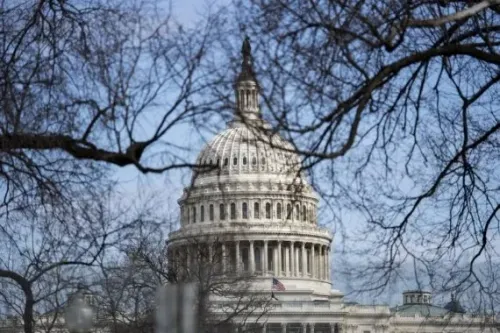
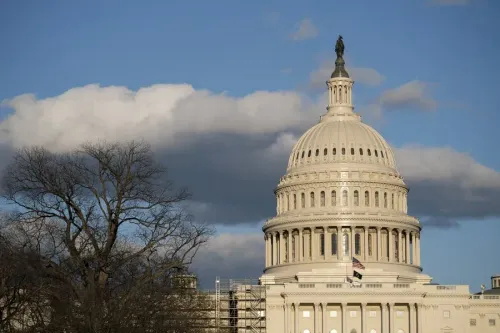
Washington, March 25 (NationPress) Prominent American legislators and specialists have issued warnings about the nation's substantial dependence on foreign critical minerals, particularly those sourced from China, which they claim presents a serious risk to national security. They have called for immediate actions to establish robust domestic supply chains.
During a House subcommittee meeting on Wednesday, Congressman Paul Gosar emphasized that the “very security of our nation relies heavily on a consistent supply” of minerals vital for defense systems, electronics, and advanced technologies. He highlighted copper, rare earth elements, and lithium as essential components for fighter jets, missiles, and batteries.
Gosar cautioned that the United States maintains a heavy reliance on imports, stating, “We import half of our supply of 20 out of 60 minerals… and we are completely dependent on imported sources for 13,” further noting China's dominance in global processing and refining capabilities.
Legislators from both parties concurred that the vulnerabilities in the supply chain carry significant strategic implications. Representative Jared Huffman remarked that the matter extends beyond resource management, alleging that billions in federal investments lack transparency and proper oversight.
Experts testifying before the panel conveyed that China has effectively “weaponized” mineral supply chains. Gracelin Baskaran posed the critical question of not whether China controls these minerals, but how swiftly the US can develop alternative supply channels.
“The question is what actions the United States will take,” she asserted, advocating for a coordinated industrial policy and strengthened alliances to secure supply.
Geologist Simon Jowitt noted that the US possesses “vast unrealized mineral potential,” yet remains underexplored due to insufficient geoscientific data and sluggish permitting processes. He emphasized that exploration is foundational to any supply chain and can yield significant economic benefits.
Jowitt also highlighted the necessity of a comprehensive domestic ecosystem. “Simply having mineral deposits is not enough without an entire supply chain,” he stated, advocating for processing and refining to accompany mining to ensure security.
National security expert Abigail Hunter pointed out structural difficulties, underlining that supply chains require years to establish, while disruptions can happen “overnight.” She noted that China's control over processing creates a “choke point,” enabling it to rapidly influence global markets.
“Capacity must be developed ahead of time,” Hunter cautioned, warning that dependence on imports during crises could leave US defense systems exposed.
Concurrently, watchdog organizations have expressed concerns regarding government investment strategies. Faith Williams indicated that federal equity stakes in mining companies might lead to conflicts of interest and diminish transparency.
“Corruption or even the perception of it is detrimental to business,” she stated, warning that ambiguous regulations could distort markets and inflate costs for taxpayers.
Despite political divisions, there was widespread consensus that critical minerals are fundamental to both economic growth and military strength. Lawmakers cited their significance in everything from semiconductors and smartphones to advanced weaponry.
The hearing also brought attention to the economic implications. Mining contributes billions to the US GDP and sustains nearly two million jobs, with wages considerably above the national average.
Experts indicated that solutions would necessitate a mix of domestic production, cooperation with allies, and demand-side policies. Baskaran called for the creation of a “market of 2.6 billion consumers” among US allies to counterbalance China’s influence.
This issue has become increasingly urgent amidst escalating geopolitical tensions and rising demand for minerals driven by clean energy initiatives, defense modernization, and digital infrastructure, positioning supply chain resilience at the forefront of US strategic planning.
Point of View
It is imperative to highlight the national interest at stake. The reliance on foreign critical minerals, particularly from China, endangers not only economic stability but also national security. A robust domestic supply chain is essential for safeguarding our technological and defense capabilities, and immediate action is required to address these vulnerabilities.
NationPress
24 Sept 2026
Frequently Asked Questions
Why is the US reliant on foreign critical minerals?
The US relies on foreign critical minerals due to insufficient domestic production and exploration, making it vulnerable to supply chain disruptions.
What are critical minerals used for?
Critical minerals are essential for various applications including defense systems, electronics, batteries, and advanced technologies.
How does China's control over minerals impact the US?
China's dominance in mineral processing creates strategic vulnerabilities for the US, potentially influencing global markets and national security.
What steps are being proposed to secure US supply chains?
Lawmakers are advocating for a coordinated industrial policy, investment in domestic production, and stronger alliances with allies.
What economic impact do critical minerals have?
Mining contributes significantly to the US economy, supporting nearly two million jobs and adding billions to the GDP.