Rajasthan Governor urges CEERI Jaipur to develop food toxin detection tech
Synopsis
Rajasthan Governor Haribhau Bagde used National Technology Day to issue a direct challenge to CEERI Jaipur: build instruments that can detect pesticides and toxins in everyday food. Framing it as both a public health imperative and a nod to India's ancient scientific legacy, Bagde's call puts food safety technology squarely on the agenda of one of India's premier electronics research institutes.
Key Takeaways
Rajasthan Governor Haribhau Bagde called on CEERI Jaipur to develop food toxin and pesticide detection instruments on 11 May 2025 .
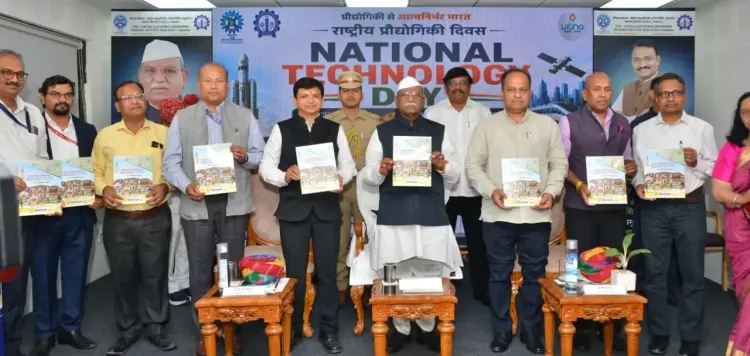
The appeal was made at a joint event by Vigyan Bharati and CEERI marking National Technology Day .
Governor Bagde stressed the need to combine modern science with India's ancient knowledge traditions , citing contributions in astronomy, metallurgy, and Ayurveda.
He unveiled the souvenir and poster for the Rajasthan Science Festival 2026 at the event.
Vijnana Bharati Secretary Meghendra Sharma highlighted the organisation's environmental conservation efforts, including sapling plantation in the RIICO industrial area.
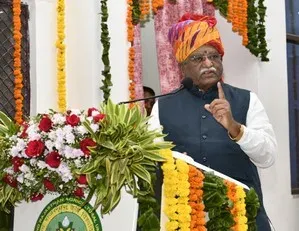
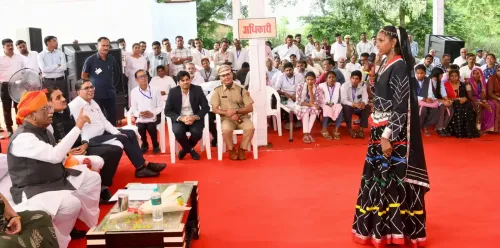
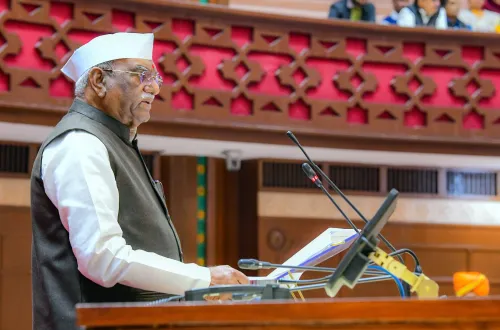
Rajasthan Governor Haribhau Bagde on Monday, 11 May 2025, called upon the Central Electronics Engineering Research Institute (CEERI) in Jaipur to take the lead in developing instruments capable of detecting pesticides, chemicals, and other harmful contaminants in food grains and vegetables. Speaking on the occasion of National Technology Day, the Governor stressed that there is an urgent need for equipment that can accurately measure toxicity levels in everyday food consumed by citizens.
Key Appeal to CEERI
Governor Bagde said that advancements in modern science and technology must be paired with a reconnection to India's ancient knowledge traditions. He specifically highlighted the importance of technological innovations for detecting food and beverage adulteration, as well as supporting efforts to curb substance abuse. The Governor inspected equipment developed at the CEERI laboratory during the event.
India's Scientific Heritage
Bagde underscored that India has possessed a deep scientific heritage since ancient times, contributing foundational discoveries in astronomy, mathematics, metallurgy, Ayurveda, and architecture. He referenced India's discovery of the concept of 'Zero' and the computational knowledge that emerged from it. He also pointed to the enduring pigments used in the Ajanta cave paintings as evidence of India's advanced understanding of ancient colour technology.
The Governor mentioned the traditional 'Hansa Test' — used to identify water adulteration in milk — as an example of indigenous scientific observation rooted in ornithology. He further noted that India had developed expertise in metallurgy during a period when many other nations had little or no knowledge of the field, referencing the tradition of gold engraving on ancient idols.
Moral Values Alongside Scientific Progress
Quoting Maharishi Aurobindo, the Governor emphasised the need to enhance the intellectual capabilities of the younger generation. He stated that scientific progress alone is insufficient unless accompanied by moral values and commitment. Alongside technological development, he said, equal attention must be given to character building.
Event Highlights and Other Speakers
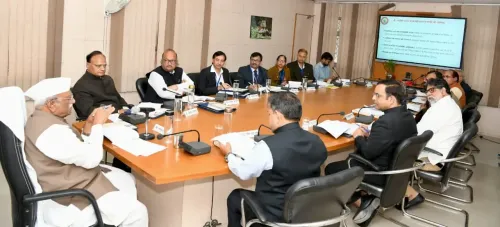
The programme was organised jointly by Vigyan Bharati and the Jaipur office of CEERI to mark National Technology Day. Governor Bagde unveiled the souvenir for the Rajasthan Science Festival 2026 and released its official poster at the event.
Vijnana Bharati Secretary Meghendra Sharma spoke about several scientific achievements and highlighted the organisation's efforts towards environmental conservation, including sapling plantation in the Rajasthan State Industrial Development and Investment Corporation (RIICO) industrial area. CEERI Director P.C. Panchariya also addressed the gathering and highlighted the significance of National Technology Day. The event signals a growing push to align India's premier research institutions with grassroots public health challenges.
Point of View
With regulatory enforcement often lagging. The real question is whether this call translates into funded R&D mandates or remains a ceremonial nudge on National Technology Day. CEERI has the technical capability; what it needs is a clear policy brief and procurement pipeline. Without that, the instruments may be developed in a lab but never reach the mandis and kitchens where they are actually needed.
NationPress
24 Sept 2026
Frequently Asked Questions
What did Rajasthan Governor Haribhau Bagde say about food safety technology?
Governor Haribhau Bagde urged the Central Electronics Engineering Research Institute (CEERI) in Jaipur to develop instruments capable of detecting pesticides, chemicals, and harmful contaminants in food grains and vegetables. He said there is an urgent need for equipment that can accurately measure toxicity levels in everyday food.
What is the Central Electronics Engineering Research Institute (CEERI)?
CEERI is a premier research institute under the Council of Scientific and Industrial Research (CSIR), based in Jaipur, Rajasthan. It specialises in electronics engineering research and the development of scientific instruments and technologies.
What is National Technology Day and why was this event held?
National Technology Day is observed on 11 May every year in India to commemorate the successful Pokhran nuclear tests of 1998 and celebrate the country's scientific achievements. The event in Jaipur was jointly organised by Vigyan Bharati and CEERI to mark the occasion.
What is the Rajasthan Science Festival 2026?
The Rajasthan Science Festival 2026 is an upcoming science event whose souvenir and official poster were unveiled by Governor Bagde at the National Technology Day programme in Jaipur on 11 May 2025.
What did Governor Bagde say about India's ancient scientific heritage?
Governor Bagde highlighted India's contributions to astronomy, mathematics, metallurgy, Ayurveda, and architecture, and referenced the concept of Zero, the Ajanta cave paintings' pigments, and the traditional Hansa Test for milk adulteration as examples of India's deep scientific legacy.