US Faces Urgent Decision on Deep-Sea Mining Amid China's Mineral Dominance
Synopsis
As the U.S. grapples with China's increasing control over essential minerals, a renewed focus on deep-sea mining emerges. However, experts caution lawmakers about potential ecological risks. This article dives into the complexities of securing mineral supply chains while balancing environmental concerns.
Key Takeaways
China's dominance in critical minerals is prompting U.S. interest in deep-sea mining.
Minerals like cobalt and nickel are essential for national security.
Experts warn of potential ecological risks associated with mining.
Only 54% of the U.S.
EEZ has been mapped.
Geopolitical competition is intensifying the urgency of this debate.
Washington, March 31 (NationPress) The increasing concern regarding China’s control over essential minerals is catalyzing a fresh wave of interest in deep-sea mining from the United States. However, experts have cautioned legislators about the ecological risks associated with such activities, which are still not fully understood.
During a Congressional hearing, lawmakers and industry representatives emphasized the critical need to secure supply chains for minerals like cobalt, nickel, and copper, which are crucial for defense systems, clean energy, and advanced technology.
Congressman Scott Franklin highlighted that these resources are “essential for various industries across our nation,” warning that adversarial nations such as China “will inevitably look to undermine the United States.”
Industry leaders asserted that the US possesses both the necessary technology and regulatory framework to proceed with mining. Gerard Barron, CEO of The Metals Company, informed lawmakers that “we understand enough to manage risks,” citing decades of research and recent innovations that minimize environmental disruption.
Barron noted that deep-sea nodules could dramatically decrease the US's reliance on imports, as they contain metals vital to sectors like defense, artificial intelligence, and energy. He also stated that modern mining techniques result in “almost invisible ripples on the sea floor” and restrict environmental impact to relatively small regions.
Nevertheless, scientists cautioned that the drive to hasten mining efforts may be premature.
Dr. Astrid Leitner, a deep-sea ecologist, remarked that “the best available data is inadequate for the responsible advancement of deep-sea mining,” pointing out significant gaps in our understanding of biodiversity, ecosystem functions, and long-term effects.
She warned that mining activities could result in “biodiversity loss” and potential “extinctions,” with consequences that may be long-lasting or irreversible.
Lawmakers from both sides of the aisle recognized the extent of uncertainty. Ranking member Gabe Amo noted that the ocean remains “one of the least understood ecosystems on the planet,” emphasizing that the repercussions of errors could be “long-lasting and in some cases irreversible.”
The hearing also highlighted the limited mapping and exploration of ocean territories.
Brian Connon from Saildrone stated that only “54 percent of the US EEZ has been mapped,” leaving vast regions of American waters uncharted.
Veteran explorer Robert Ballard informed lawmakers that humans have observed merely “0.001 percent of the deep ocean,” underlining the necessity of exploration prior to any large-scale commercial endeavors.
Despite the uncertainties, geopolitical rivalry is intensifying the discussion.
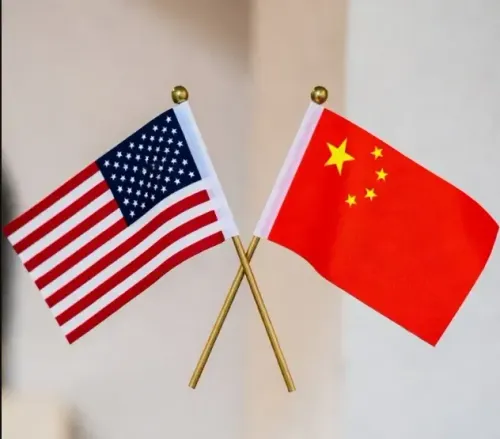
Lawmakers consistently referenced China’s dominance in mineral processing and oceanic research. Testimonies reveal that China accounts for nearly 70 percent of global rare earth element production and has heavily invested in exploration and mapping capabilities.
Proponents of deep-sea mining argue that inaction could result in the US becoming dependent on foreign supply chains.
Conversely, critics warn that hasty action could jeopardize ecosystems that are vital for climate regulation, supporting fisheries, and ensuring overall ocean health.
Point of View
It is imperative to prioritize thorough scientific research and responsible practices.
NationPress
29 Sept 2026
Frequently Asked Questions
What is the current state of deep-sea mining discussions in the U.S.?
The U.S. is experiencing a renewed interest in deep-sea mining due to concerns over China's dominance in critical minerals, though experts warn of ecological risks.
What minerals are considered essential for U.S. industries?
Key minerals include cobalt, nickel, and copper, which are vital for defense systems, clean energy, and advanced technologies.
What are the main ecological concerns regarding deep-sea mining?
Experts highlight potential biodiversity loss, ecosystem disruption, and long-lasting or irreversible effects on marine environments.
How much of the U.S. Exclusive Economic Zone (EEZ) has been mapped?
Currently, only about 54% of the U.S. EEZ has been mapped, leaving substantial areas unexplored.
Why is geopolitical competition influencing deep-sea mining discussions?
The race to secure mineral resources is intensifying as countries like China lead in mineral processing and exploration capabilities.