CM Pema Khandu Hails VKV Pasighat Students' Vande Mataram
Synopsis
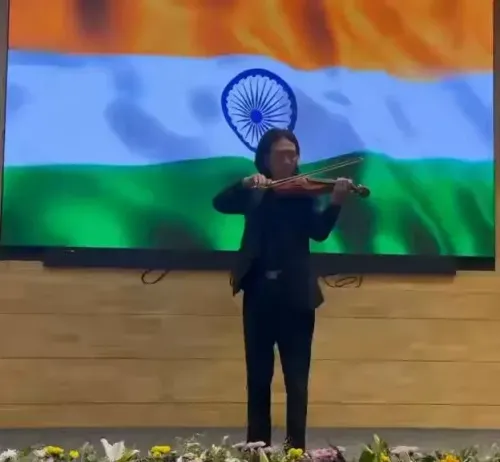
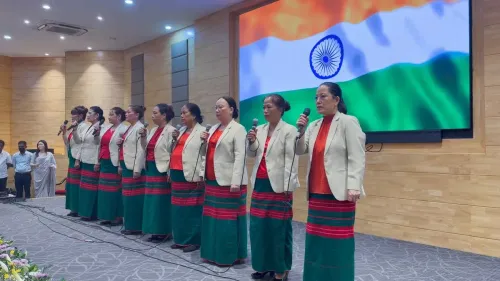
On Independence Day 2026, Arunachal Pradesh CM Pema Khandu shared a video of VKV Pasighat students singing 'Vande Mataram', calling it an embodiment of national spirit and closing with 'Jai Hind! Jai Arunachal!'
Key Takeaways
CM Pema Khandu shared the video on 15 August 2026 , India's Independence Day.
Students of Vivekananda Kendra Vidyalaya (VKV) Pasighat in East Siang district performed the rendition.
VKV schools across Arunachal Pradesh and the Northeast combine formal education with Indian cultural values.
Khandu described the performance as an 'embodiment' of the spirit of 'Vande Mataram', not merely a song.
The post closed with 'Jai Hind!
Jai Arunachal!' , framing state and national pride as one.
On Independence Day, 15 August 2026, a school in the hills of Arunachal Pradesh sent a message that travelled far beyond its walls — students of Vivekananda Kendra Vidyalaya (VKV) Pasighat rendered 'Vande Mataram', and Chief Minister Pema Khandu made sure the country heard it.
Sharing the video on X, CM Khandu wrote: 'When the young voices of Arunachal sing Vande Mataram, they don't merely sing a song, they embody its spirit.' It was a precise, deliberate choice of words — not performance, but embodiment. That distinction matters in a border state where cultural identity and national belonging are lived, not assumed.
VKV Pasighat: Decades of value-based education on the frontier
Vivekananda Kendra Vidyalaya schools have operated across Arunachal Pradesh and the wider Northeast for decades, built on a model that weaves formal academics with Indian cultural traditions. Pasighat, the headquarters of East Siang district and one of the oldest towns in the state, has long been a centre of educational activity in the region. VKVs are not ordinary schools — their founding philosophy ties classroom learning to a sense of civilisational continuity, which makes a student choir singing the national song on Independence Day something more than a routine assembly item.Why Arunachal's Independence Day moments carry extra weight
Arunachal Pradesh shares a long and sensitive border with China, and national integration in the state carries strategic as well as cultural significance. When a Chief Minister amplifies a school's 'Vande Mataram' rendition, it is a soft but deliberate signal — that the next generation in India's northeastern frontier is rooted, proud, and vocal. CM Khandu closed his post with 'Jai Hind! Jai Arunachal!' — a pairing that frames state pride and national identity as inseparable. That pairing is the whole point. Arunachal's youth are not just citizens of a border state; they are, in Khandu's framing, custodians of its spirit.Point of View
An institution with a decades-long footprint in value-based education, also signals alignment between the state government and organisations rooted in cultural nationalism. It is soft power, deployed at the grassroots.
NationPress
30 Sept 2026
Frequently Asked Questions
What is Vivekananda Kendra Vidyalaya Pasighat?
Vivekananda Kendra Vidyalaya (VKV) Pasighat is a school in East Siang district, Arunachal Pradesh , run by Vivekananda Kendra. It focuses on value-based education rooted in Indian cultural traditions.
Why did CM Pema Khandu share the Vande Mataram video?
CM Khandu shared the video on Independence Day, 15 August 2026 , to highlight the students' rendition as an embodiment of national spirit, describing it as a reflection of a generation that carries pride for the nation.
Where is Pasighat located?
Pasighat is the headquarters of East Siang district in Arunachal Pradesh and is one of the oldest towns in the state.
What is the significance of Vande Mataram on Independence Day in Arunachal Pradesh?
'Vande Mataram' is India's national song, and its performance on Independence Day in a border state like Arunachal Pradesh carries cultural and national integration significance, particularly given the state's sensitive frontier location.