US Lawmakers Urge Action Against China's Control of Critical Minerals Impacting Defense
Synopsis
In a recent hearing, US lawmakers alerted that China's hold on critical minerals poses a significant threat to American defense manufacturing. As the Pentagon defends its investments aimed at revamping domestic supply chains, the urgency for action grows.
Key Takeaways
China's dominance over critical minerals poses a national security threat.
Lawmakers demand clarity on Pentagon's investment strategies .
The Pentagon is implementing a multiyear strategy to rebuild supply chains.
Environmental concerns are a point of contention in mining discussions.
Reducing dependence on China is a priority for US allies .
Washington, February 25 (NationPress) - US lawmakers have issued a stark warning regarding China's control over essential minerals, highlighting that such dominance could severely weaken the American defense manufacturing sector during a crisis. This statement comes as the Pentagon stands by its contentious equity investments and price guarantees intended to restore domestic supply chains.
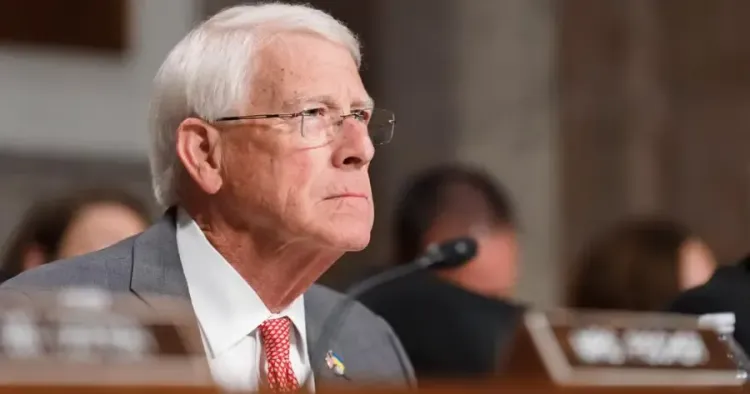
Senate Armed Services Committee Chairman Roger Wicker emphasized at a Congressional hearing focused on rebuilding supply chains, stating, "It is no exaggeration to assert that the United States' reliance on China's critical minerals is one of our most significant strategic weaknesses." He cautioned that any threats to halt exports of rare earth materials "could have left American defense manufacturing in a precarious situation, deeply harming the US economy."
Michael Cadenazzi, Jr., the Pentagon's industrial policy chief, expressed that the risks are immediate. "This is not merely a hypothetical threat; it poses a direct and urgent risk to our national security," he asserted, indicating that Beijing could "manipulate these supply chains, jeopardizing our defense industrial base and military preparedness in a crisis."
Cadenazzi disclosed that the department has committed $975 million towards mineral investments through Title Three of the Defense Production Act and the Industrial Base Fund, while implementing a "comprehensive multiyear strategy" centered around four key pillars: reshoring production, collaborating with allies, investing in research and recycling, and modernizing the National Defense Stockpile.
He referenced the "MP materials agreement" aimed at securing rare earth production, as well as a "Korea Zinc initiative" to establish a US smelter that would produce "13 different nonferrous metals, including germanium, gallium, and antimony." Additionally, he highlighted recycling initiatives, such as investments to recover gallium and scandium from the waste material of aluminum refining.
However, lawmakers on both sides of the aisle questioned the Pentagon's choice to take a "15 percent equity stake in MP materials, a rare earth mining firm in California, at a cost of $400 million." Ranking member Jack Reed challenged the legal justification for such investments, noting that the Defense Production Act "does not mention equity investments." He sought clarification regarding the "legal basis, financial terms, and strategic rationale" behind the agreement.
Cadenazzi defended the equity stake as a "catalyst for private investment" following what he termed a "failed market-based approach." He explained that price floors had been established through "a set of open market analyses" to counter the "manipulated Chinese price floor."
Jeffrey Frankston, acting deputy assistant secretary for industrial base resilience, stated that the initiative has been "accelerated" by "complete and unified interagency cooperation," with officials collaborating on a daily basis to map supply chains from "raw materials to finished products."
The hearing also revealed friction surrounding permitting and environmental protections. Senator Dan Sullivan remarked that environmental regulations have been "a significant hurdle for mining development," while Senator Mazie K. Hirono underscored the importance of environmental requirements, asserting that "we cannot simply disregard these issues in our pursuit of critical minerals."
For countries like India and other US allies, this discussion highlights the increasing urgency in Washington to lessen reliance on Chinese-controlled supply chains in sectors vital to defense, advanced electronics, and emerging technologies. Both the Biden and Trump administrations have framed critical minerals as pivotal to economic security and strategic competition with China.
Point of View
It is clear that the dependence on Chinese-controlled minerals necessitates immediate attention. US lawmakers are rightly concerned about national security implications, and the Pentagon's strategy must be scrutinized to ensure a resilient defense industrial base.
NationPress
20 Sept 2026
Frequently Asked Questions
What critical minerals is China controlling?
China controls several rare earth elements critical for defense and technology, including lithium, germanium, and gallium.
Why are US lawmakers concerned about China's grip on minerals?
They believe it poses a significant risk to national security and could compromise defense manufacturing capabilities during crises.
What is the Pentagon's strategy to counter this issue?
The Pentagon's strategy includes reshoring production, collaborating with allies, investing in research and recycling, and modernizing the National Defense Stockpile.
What was the response from lawmakers regarding Pentagon investments?
Lawmakers questioned the legal and strategic basis for the Pentagon's equity stake in a rare earth mining company, seeking clarity on financial terms.
How does this issue affect US economic security?
The control of critical minerals is framed as central to both economic security and strategic competition with China.