US Challenges China's Dominance in Critical Minerals: Insights
Synopsis
The US government is increasingly viewing China's dominance in rare earth minerals as a significant threat. This article explores the implications of this reliance and the actions needed to regain control over critical mineral resources.
Key Takeaways
The US views China's dominance over rare earth minerals as a major challenge.
China produces about 70% of the world's rare earths.
The US is actively seeking to reduce its dependence on Chinese minerals.
Collaboration with Australia represents a strategic move for the US.
Other nations are also ramping up production capabilities.
New Delhi, March 18 (NationPress) The United States perceives China's control over rare earth minerals—essential components for electronic devices, defense systems, and electric vehicles—as a significant obstacle. Interestingly, high-ranking officials acknowledge that the US itself contributed to the transfer of technology and production capabilities to China.
A report featured on the US news site Defense One reveals that Washington willingly passed on this technology to China to mitigate the severe pollution associated with the extraction of these minerals.
According to Mike Cadenazzi, the US assistant defense secretary for industrial base policy, “Following the Cold War, we transferred our hard-earned scientific advancements and leading technologies to China with the intention of avoiding pollution. While that was a reasonable decision, it led to the loss of two generations of scientists, engineers, and business professionals who could have enhanced our capabilities.”
“Instead of innovating cleaner production methods, we inadvertently became 95 percent reliant on China for rare earths. As a result, I now have a periodic table of elements displayed next to my desk that I reference daily,” Cadenazzi noted.
He emphasized that the US now faces a strategic competitor in China, which presents a new level of challenge, necessitating urgent actions to bridge manufacturing gaps and secure access to these critical minerals.
Cadenazzi further indicated that China represents 30 percent of global manufacturing, while the US accounts for only 17 percent. He highlighted that China's overall manufacturing capacity vastly exceeds that of the US.
The dominance of critical minerals by China is a crucial factor contributing to this disparity.
China is responsible for approximately 70 percent of the world's rare earth production and processes about 90 percent of these minerals. However, the United States has made substantial investments in refining and processing minerals and recently announced a “framework for mining and processing critical minerals and rare earths” in collaboration with Australia, according to Jennifer Hlad, managing editor at Defense One.
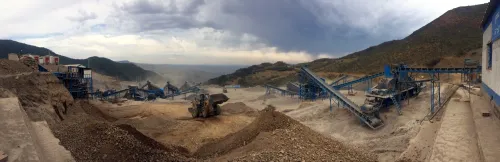
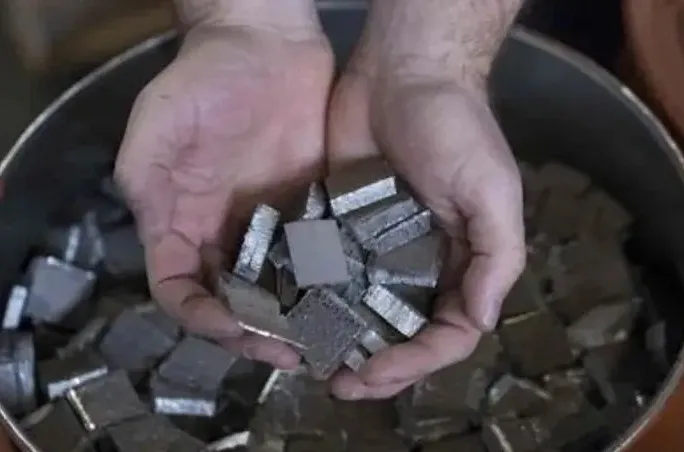
Other nations are also striving to boost the production and refinement of critical minerals. Almonty Industries, a Canadian firm, is set to inaugurate a new processing facility at a tungsten mine in South Korea next week, which it claims will meet about 40 percent of the global tungsten demand outside of China, thereby challenging the Asian giant's dominance in the market, as the report indicates.
Point of View
It is crucial to recognize the implications of China's monopoly over essential minerals. The US must strategize to enhance its manufacturing capabilities and reduce dependence on foreign sources to ensure national security and technological advancement.
NationPress
27 Sept 2026
Frequently Asked Questions
Why are rare earth minerals important?
Rare earth minerals are essential for manufacturing electronic devices, defense systems, and electric vehicles, making them critical for national security and technological advancement.
How much of the world's rare earth minerals does China produce?
China produces approximately 70 percent of the world's rare earth minerals, which gives it significant leverage in the global market.
What steps is the US taking to counter China's dominance?
The US has announced a framework for mining and processing critical minerals in collaboration with Australia and is investing in refining capabilities to reduce dependence on China.
Why did the US transfer technology to China?
The US transferred technology to China to mitigate pollution associated with rare earth mineral production, inadvertently leading to a significant dependency.
What is Almonty Industries doing to challenge China's market hold?
Almonty Industries is set to open a new processing plant in South Korea, which aims to fulfill about 40 percent of the global tungsten demand outside of China.