US Accelerates Infrastructure Investments in Africa to Deter Chinese Dominance in Critical Minerals
Synopsis
As the competition for essential minerals heats up, the US is significantly increasing its infrastructure investments in Africa. This strategic move aims to counter China's expanding influence in the region's mining sector, especially in the wake of ongoing trade tensions.
Key Takeaways
US Investments: Focus on infrastructure in Africa to counter China.
Critical Minerals: Essential resources include copper, cobalt, lithium, and rare earth elements.
Lobito Corridor: Key project for improving mineral export logistics.
Chinese Dominance: China controls a significant share of global mineral processing.
Economic Dependencies: African countries risk increased dependency on Chinese value chains.
New Delhi, April 20 (NationPress) The United States is intensifying its investment in infrastructure initiatives across Africa to mitigate China's influence as the competition for vital minerals like copper, cobalt, lithium, and rare earth elements accelerates in the wake of the trade tensions between the two nations.
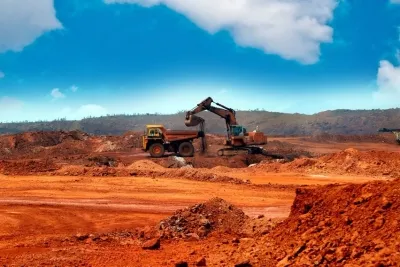
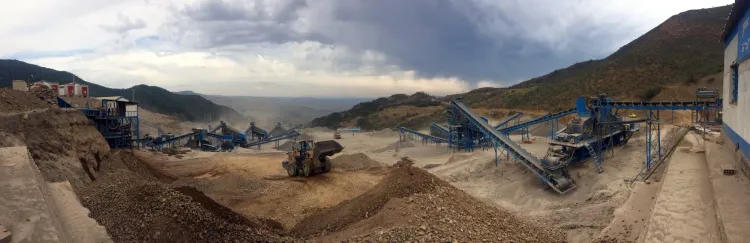
China's involvement in African mining has transformed into a holistic value chain integration, encompassing exploration, production, transportation, and processing. Prominent Chinese corporations have established a formidable operational presence in critical mineral-producing regions, creating intricate systems that extend beyond singular mining endeavors.
The breadth of Chinese participation transcends mere operational oversight to include transportation networks, processing facilities, and export logistics. This vertical integration fosters comprehensive frameworks where African mineral production is entrenched within Chinese-controlled value chains, amplifying both technical and economic dependencies for the host nations.
The US approach prioritizes infrastructure development as a means to secure market access and operational leverage. By developing transportation corridors, the US aims to provide alternative routes for African mineral exports, thereby diminishing reliance on Chinese-controlled logistics while offering competitive pathways for mineral producers.
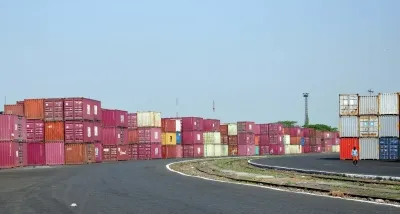
Efforts toward port modernization and logistics optimization are focused on enhancing throughput capacity and lowering transportation costs. The Lobito Corridor exemplifies this strategy, with a goal of reaching 4.6 million tonnes of annual capacity through railway upgrades and port terminal enhancements. These modifications aim to cut transit times by 29 days and reduce transportation expenses by 30% compared to existing routes.
Funding strategies leverage development finance institutions to offer competitive alternatives to Chinese infrastructure financing. The US International Development Finance Corporation provides loan guarantees and direct funding for infrastructure projects that align with US strategic goals for mineral export pathways. Furthermore, the US mineral production order has reinforced national security considerations in mineral development.
China's dominance in critical minerals is particularly evident in downstream processing operations where substantial value is generated. Industry assessments indicate that China is responsible for 80% of global cobalt refining, 40% of global copper smelting, and 60% of global lithium processing.
The integrated structure of Chinese operations fosters substantial dependency relationships. Raw ore extracted from African mines typically necessitates processing in Chinese facilities to meet battery-grade specifications. This processing phase captures 40-60% of total value creation, while raw ore extraction generally accounts for only 5-10% of the final product's value.
Dependencies in transportation routes further reinforce value chain control. Chinese enterprises have invested in railway infrastructure, port facilities, and logistics networks that direct African mineral exports toward Chinese processing centers. These infrastructure investments create enduring routing dependencies that persist beyond the lifecycles of individual mining projects.
Point of View
The US's intensified focus on African infrastructure illustrates a strategic pivot aimed at safeguarding national interests against foreign dominance in critical mineral resources. This move not only seeks to empower African economies but also to establish a more balanced global mineral supply chain.
NationPress
8 Oct 2026
Frequently Asked Questions
Why is the US investing in Africa's infrastructure?
The US is investing in Africa's infrastructure to counter China's growing influence and secure access to critical minerals essential for technological and industrial applications.
What minerals are considered critical?
Critical minerals include copper, cobalt, lithium, and rare earth elements, which are vital for various industries, including electronics and renewable energy.
How does China's involvement affect African countries?
China's involvement creates economic dependencies for African countries, embedding their mineral production within Chinese-controlled value chains, which may limit their autonomy.
What is the Lobito Corridor?
The Lobito Corridor is a transportation project aimed at enhancing mineral export routes from Africa, increasing capacity and reducing costs associated with logistics.
How much of the world's cobalt does China process?
China processes approximately 80% of the world's cobalt refining, showcasing its dominance in downstream mineral processing operations.