India clears 58 firms for ₹1,500 crore critical mineral recycling scheme

Synopsis
India has approved 58 companies under a ₹1,500 crore recycling scheme — but the real headline is the private sector's response: ₹5,000 crore in pledged investments and 850 KTPA of committed capacity. As India races to halve its critical mineral import dependence before 2030, this scheme may be the most consequential industrial policy move of the year.
Key Takeaways
58 companies approved under the Incentive Scheme for Promotion of Critical Mineral Recycling as of 30 April 2026 .
Scheme carries a government outlay of ₹1,500 crore under the National Critical Mineral Mission .
Approved firms have pledged combined investments of ₹5,000 crore and recycling capacity of 850 KTPA .
Approvals came in two tranches: 20 entities on 30 March 2026 and 38 entities on 29 April 2026 .
India's rare earth permanent magnet demand is projected to rise from 4,000 tonnes to 8,000 tonnes by 2030 , per Union Minister Dr Jitendra Singh .
The scheme now enters the project execution phase , with financial support linked to actual capacity development and production commencement.
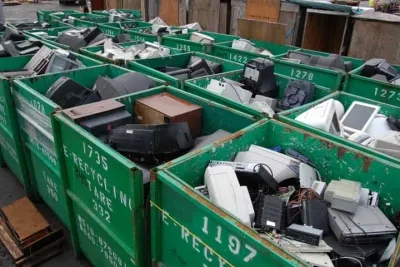
The Indian government on Thursday, 30 April 2026, approved 58 companies as eligible participants under the Incentive Scheme for Promotion of Critical Mineral Recycling, a ₹1,500 crore initiative aimed at strengthening India's critical mineral security and building a domestic circular economy. The scheme, anchored under the National Critical Mineral Mission, targets recycling of critical minerals from lithium-ion batteries, e-waste, and industrial scrap to reduce the country's dependence on imports.
Key Developments in Approvals
The scheme was notified on 2 October 2025, with detailed operational guidelines issued simultaneously. The application window ran from 2 October 2025 to 1 April 2026, drawing robust interest from industry stakeholders across battery recycling, e-waste processing, and industrial waste recovery segments.
Proposals were evaluated by the Project Management Agency, Jawaharlal Nehru Aluminium Research Development and Design Centre (JNARDDC), in accordance with the scheme's guidelines. Based on these evaluations, the Executive Committee approved 20 entities on 30 March 2026 and a further 38 entities on 29 April 2026, bringing the cumulative total to 58 eligible participants.
Scale of Pledged Investment and Capacity
The 58 selected companies have collectively pledged a recycling capacity of approximately 850 KTPA (kilo tonnes per annum) and committed investments of around ₹5,000 crore. These participants represent critical segments including battery recycling, e-waste processing, and recovery from other waste streams, reflecting strong industry momentum in building India's critical mineral recycling ecosystem.
Notably, the pledged private investment of ₹5,000 crore is more than three times the government's own outlay of ₹1,500 crore, signalling significant private sector confidence in the scheme's commercial viability.
What Happens Next
The scheme now moves into its project execution phase, where capacity development and commencement of production by eligible entities will be assessed for financial support. The government has not specified a timeline for the first disbursement tranche, but the evaluation framework suggests milestone-linked payouts tied to actual production commencement.
Broader Critical Mineral Push
This approval comes amid India's wider acceleration in domestic critical mineral capabilities. According to a government statement issued in March 2026, India is targeting a domestic production capacity of 5,000 tonnes of rare earth permanent magnets by 2030. Union Minister Dr Jitendra Singh noted that India's current requirement of rare earth permanent magnets stands at approximately 4,000 tonnes, a figure projected to nearly double to 8,000 tonnes by 2030 — underscoring the urgency of scaling domestic recycling and production capabilities.
With clean energy targets, electric vehicle adoption, and advanced manufacturing all dependent on a stable supply of critical minerals, the recycling scheme represents a structural policy shift — from import reliance to domestic resource recovery. Whether the 58 approved firms can collectively deliver on their pledged capacities within schedule will be the defining test of this initiative.
Point of View
000 crore in private pledges against a ₹1,500 crore government outlay looks encouraging, but pledges and disbursed investments are very different things — India's industrial policy history is littered with committed-but-undelivered capacity. The deeper structural question is whether recycling alone can close the critical mineral gap when domestic mining and processing remain underdeveloped. Recycling is a second-life solution; it cannot substitute for primary supply chains. The 2030 rare earth demand doubling is a hard deadline, and the project execution phase — not the approval count — is where this scheme will be won or lost.
NationPress
23 Sept 2026
Frequently Asked Questions
What is the Incentive Scheme for Promotion of Critical Mineral Recycling?
It is a ₹1,500 crore government initiative under the National Critical Mineral Mission, notified on 2 October 2025, designed to develop domestic recycling capacity for critical minerals from lithium-ion batteries, e-waste, and industrial scrap. The scheme aims to reduce India's import dependence and support clean energy and advanced manufacturing sectors.
How many companies have been approved under the scheme and when?
A total of 58 companies have been approved in two tranches — 20 entities on 30 March 2026 and 38 entities on 29 April 2026. Proposals were evaluated by the Jawaharlal Nehru Aluminium Research Development and Design Centre (JNARDDC).
What is the total investment and capacity pledged by the approved firms?
The 58 selected companies have collectively pledged investments of approximately ₹5,000 crore and a recycling capacity of about 850 KTPA, covering battery recycling, e-waste processing, and recovery from other waste streams.
What is the next step under the scheme?
The scheme now enters the project execution phase, where capacity development and commencement of production by eligible entities will be assessed for financial support. Disbursements are expected to be milestone-linked, tied to actual production commencement.
Why is critical mineral recycling important for India?
India's demand for rare earth permanent magnets alone is projected to nearly double from 4,000 tonnes currently to 8,000 tonnes by 2030, according to Union Minister Dr Jitendra Singh. Domestic recycling reduces dependence on imports and supports India's clean energy, EV, and advanced manufacturing targets.