China's grip on critical minerals alarms US Congress in July 2025 hearing
Synopsis
A House Foreign Affairs subcommittee heard on 15 July 2025 that the US cannot build a fighter jet, data centre, or EV battery without materials passing through China — and that Beijing's 2025 rare-earth embargo already shut a Ford plant in Chicago for a week. The twist: experts warned that Washington's own tariffs may be handing Beijing the very diplomatic advantage the US is trying to deny it.
Key Takeaways
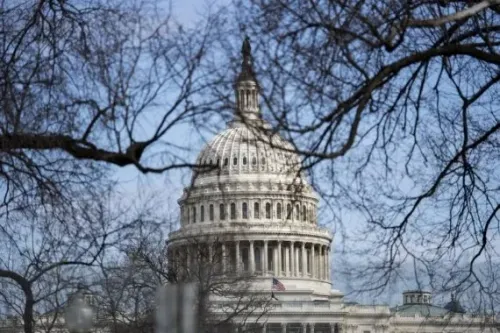
A House Foreign Affairs subcommittee held a hearing on 15 July 2025 examining China's grip on critical minerals and economic security.
The US is completely dependent on imports for 13 critical minerals and more than 50% dependent for another 20 , according to testimony.
China controls approximately 80% of the global tungsten supply chain and processes the majority of cobalt mined in the Democratic Republic of Congo .
Beijing's 2025 rare-earth embargo on seven elements disrupted US defence and semiconductor supply chains, shutting a Ford plant in Chicago for one week.
Experts warned that broad US tariffs risk alienating allies and handing Beijing a reputational advantage as a 'reliable trading partner.' The Pax Silica initiative aims to build trusted mineral supply chains with US allies as an alternative to China-dependent networks.
US lawmakers and independent experts warned on 15 July 2025 that China's dominance over critical minerals, advanced manufacturing, and global infrastructure represents a deepening economic security threat to the United States — while also cautioning that Washington's sweeping tariff strategy risks fracturing the very alliances needed to counter Beijing. The warnings came during a House Foreign Affairs subcommittee hearing focused on economic security zones and American investment abroad.
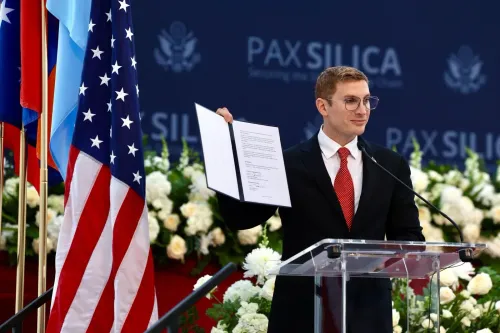
The Pax Silica Initiative and What Was Examined
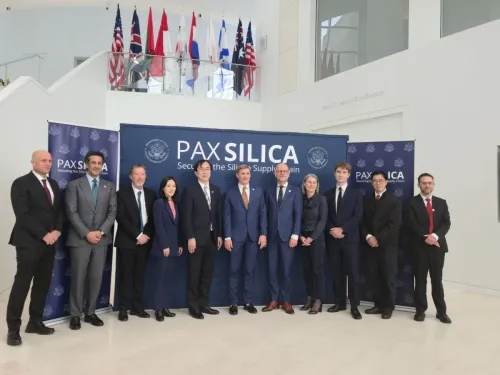
The subcommittee, chaired by Representative Cory Mills, examined the Pax Silica initiative, a framework aimed at building trusted supply chains with US allies and partners. Mills opened by framing the stakes plainly: the nation that controls advanced manufacturing, critical minerals, semiconductors, and artificial intelligence will shape the global economy and balance of power for decades to come.
How Deep Is US Dependency on China
Michael Holloman, chief commercial officer of US Strategic Metals, delivered some of the sharpest testimony. He argued that Washington had effectively ceded control of essential mineral supply chains to Beijing through inaction rather than inability.
'I've watched this cold minerals war simmer without our participation,' Holloman said. 'I've watched the Chinese beat us everywhere we've been, not because we couldn't do anything about it, because we didn't participate in the war that was ongoing.'
Holloman stated that the US cannot produce a fighter jet, data centre, electric-vehicle battery, or smartphone without materials moving — directly or indirectly — through China. 'This is not a matter of preference,' he said. 'It is a matter of dependency, one that has hardened into a strategic vulnerability that grows worse every year we fail to act.'
He noted that approximately 75 per cent of global cobalt is mined in the Democratic Republic of Congo, with a significantly higher share processed in China. The US is completely dependent on imports for 13 critical minerals and more than 50 per cent dependent for an additional 20.
China's Rare-Earth Embargo and Real-World Disruption
Clark Packard, a research fellow at the Cato Institute, corroborated the dependency concern, pointing to tungsten — used in missiles, semiconductors, aerospace components, and armour-piercing munitions — where China controls approximately 80 per cent of the global supply chain.
Packard cited Beijing's near-total embargo in 2025 on exports of seven rare-earth elements and magnets as a concrete demonstration of that leverage. The embargo, he said, disrupted US semiconductor and defence supply chains, and forced a Ford assembly plant in Chicago to shut down for a week due to a shortage of rare-earth magnets.
The Tariff Dilemma: Shielding or Isolating the US
However, Packard also sounded a cautionary note on Washington's tariff approach. He argued that broad US tariffs strain relations with trusted partners and raise costs for American manufacturers — ultimately benefiting Beijing. 'That is a gift to Beijing, which is happy to present itself as a more reliable economic trading partner,' he said. 'We need to open doors to friends and allies, not hide behind tariff walls.'
Paul Sullivan, president of international business at Acrow Bridge, added that Chinese companies routinely enter overseas markets with subsidised financing, bundled infrastructure projects, and direct diplomatic backing — advantages that private American firms cannot replicate on their own.
What Comes Next
Western governments have increasingly sought to develop alternative mineral suppliers and processing facilities in allied nations. The Pax Silica framework represents one such effort to formalise that shift. Whether Congress will translate the hearing's warnings into legislative action — particularly on the tension between tariffs and alliance-building — remains to be seen. Analysts note that the window for supply chain diversification is narrowing as China consolidates its processing dominance year on year.
Point of View
But it competes with a tariff regime that signals the opposite instinct. Congress appears to understand the threat intellectually; whether it can reconcile that understanding with domestic trade politics is the real test.
NationPress
13 Oct 2026
Frequently Asked Questions
What did the US Congress hear about China's control over critical minerals?
At a House Foreign Affairs subcommittee hearing on 15 July 2025, experts testified that China dominates the processing of minerals essential to US defence, electronics, and clean energy. The US is fully import-dependent for 13 critical minerals and more than 50% dependent for 20 more.
What is the Pax Silica initiative?
Pax Silica is a US-led framework designed to build trusted mineral and technology supply chains with American allies and partners, reducing dependence on Chinese-controlled networks. It was a central subject of the 15 July 2025 House Foreign Affairs subcommittee hearing.
How did China's 2025 rare-earth embargo affect the United States?
Beijing's near-total embargo in 2025 on exports of seven rare-earth elements and magnets disrupted US semiconductor and defence supply chains. A Ford assembly plant in Chicago was forced to halt production for one week due to a shortage of rare-earth magnets.
Why are US tariffs seen as a problem in the competition with China?
Cato Institute research fellow Clark Packard argued that broad US tariffs strain relations with allied partners and raise costs for American manufacturers, effectively giving Beijing an opening to position itself as a more stable trading partner. He called this 'a gift to Beijing.'
Which minerals is the US most dependent on China for?
The US is completely dependent on imports for 13 critical minerals and more than 50% dependent for another 20, according to testimony from Michael Holloman of US Strategic Metals. China also controls roughly 80% of the global tungsten supply chain and processes the bulk of the world's cobalt.