Indian seafarers in Gulf: Every crew member to be tracked vessel by vessel
Synopsis
With at least one Indian seafarer dead and others injured in Gulf attacks, New Delhi has launched a 'Seafarer-First' response — ordering a real-time, vessel-by-vessel dashboard covering every Indian crew member in the Persian Gulf, Strait of Hormuz, and Gulf of Oman, regardless of the ship's flag. It is among the most sweeping maritime welfare mobilisations India has undertaken in a conflict zone.
Key Takeaways
The Indian government on 15 July ordered individual tracking of every Indian seafarer in the Persian Gulf , Strait of Hormuz , and Gulf of Oman .
Union Minister Sarbananda Sonowal directed the DGS to build a real-time vessel-by-vessel operational dashboard covering position, crew welfare, and threat assessment.
At least one Indian seafarer has been killed and others injured in two separate attacks on civilian merchant vessels.
Indian missions in Iran , Oman , and the UAE have been directed to coordinate on evacuation, repatriation, and medical support.
Shipowners , vessel managers, and RPSL agencies must immediately file compliance reports confirming no seafarer is being coerced to sail without adequate protection.
The Indian government on 15 July announced that every Indian seafarer operating in the Persian Gulf, Strait of Hormuz, and Gulf of Oman will be individually accounted for, regardless of the vessel's flag, as the West Asia conflict situation continues to escalate. The move marks an unprecedented whole-of-government response under what officials have termed a 'Seafarer-First' policy framework.
Vessel-by-Vessel Dashboard
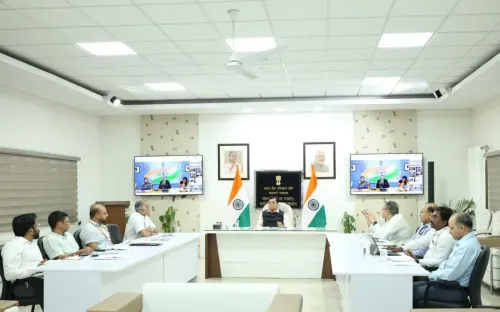
Union Minister Sarbananda Sonowal directed the Director General of Shipping (DGS) to establish a comprehensive operational dashboard tracking every Indian national aboard every vessel in the conflict-affected waters. The dashboard will provide real-time data on vessel position, ownership, cargo, crew strength, crew welfare, threat assessment, intended voyage, next port of call, and availability of onboard facilities.
What the Government Said
Sonowal stated that India has expressed its 'strong resentment and objection to the manner of attacks on defenceless civilian merchant vessels.' In his address to officials, the minister said: 'I am profoundly hurt and aggrieved by the unfortunate and tragic loss of one more of our brave and innocent seafarer along with the injuries suffered by others in two attacks.' He described the strikes as 'irresponsible, unwarranted and uncalled-for attacks' on key workers who underpin global supply chains.
Coordination With Indian Missions and MEA
The minister directed officials to work in close coordination with Indian Missions in Iran, Oman, and the United Arab Emirates, alongside the Ministry of External Affairs (MEA). The scope of coordination covers navigational safety advisories, coastal-state guidance, route status, port-of-refuge arrangements, hospital access, medical evacuation, repatriation procedures, management of mortal remains, and the status of ongoing investigations into the attacks.
Compliance Mandate for Shipowners and Agencies
Sonowal also directed that shipowners, vessel managers, and Recruitment and Placement Service Licence (RPSL) agencies employing Indian seafarers in the region must immediately submit compliance reports. These reports must confirm that no Indian seafarer is being compelled to sail without adequate information, protection, and support — a safeguard aimed at preventing coerced deployment in high-risk waters.
What Comes Next
With at least one Indian seafarer already reported dead and others injured across two separate attacks, the government's escalating response signals that New Delhi views the threat to maritime workers as a live crisis, not a contingency. The real-time dashboard, once operational, will serve as the nerve centre for evacuation and welfare decisions. How swiftly Indian missions on the ground can feed verified data into the system will determine whether the 'Seafarer-First' pledge translates into timely protection.
Point of View
But the hard test is execution speed. A real-time dashboard is only as good as the data flowing into it — and Indian missions in Iran, Oman, and the UAE operate under their own diplomatic constraints in a fast-moving conflict zone. The compliance-report mandate for RPSL agencies is also overdue: regulatory oversight of agencies deploying seafarers into high-risk waters has historically been reactive rather than preventive. One Indian seafarer is already dead. The government's credibility on maritime worker protection now rests on how quickly the dashboard goes live and whether it actually triggers timely evacuations rather than becoming another monitoring exercise that lags events on the water.
NationPress
15 Jul 2026
Frequently Asked Questions
What is India's 'Seafarer-First' response to the Gulf conflict?
It is a whole-of-government initiative announced on 15 July, directing the Director General of Shipping to build a vessel-by-vessel real-time dashboard tracking every Indian seafarer in the Persian Gulf, Strait of Hormuz, and Gulf of Oman, regardless of the vessel's flag. The response also mandates coordination with Indian missions in Iran, Oman, and the UAE on evacuation, medical support, and repatriation.
Who ordered the vessel-tracking dashboard for Indian seafarers?
Union Minister Sarbananda Sonowal directed the Director General of Shipping (DGS) to establish the dashboard. It will capture vessel position, crew strength, welfare status, threat assessment, and next port of call in real time.
How many Indian seafarers have been affected in Gulf attacks?
According to the minister's statement, at least one Indian seafarer has been killed and others have been injured across two separate attacks on civilian merchant vessels in the region. Investigations into the attacks are reportedly ongoing.
What must shipowners and RPSL agencies do under the new directive?
Shipowners, vessel managers, and Recruitment and Placement Service Licence (RPSL) agencies employing Indian seafarers in the Gulf region must immediately submit compliance reports confirming that no Indian seafarer is being compelled to sail without adequate information, protection, and support.
Which Indian government bodies are involved in the seafarer safety response?
The Ministry of Ports, Shipping and Waterways leads the response through the DGS, in coordination with the Ministry of External Affairs (MEA) and Indian Missions in Iran, Oman, and the United Arab Emirates. Their combined remit covers navigational safety, medical evacuation, repatriation, and investigation updates.