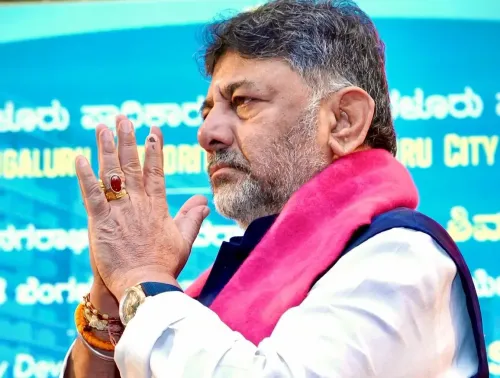
CM Shivakumar to Meet Bengaluru Apartment Owners on Rights

Synopsis
Chief Minister D K Shivakumar engaged Bengaluru apartment residents and owners' associations on 15 July 2026, pledging a fair, transparent legal framework to protect the rights of middle-class flat owners and improve their access to civic services in Karnataka's capital.
Key Takeaways
CM D K Shivakumar held a direct interaction with Bengaluru apartment owners and residents' associations on 15 July 2026 .
The Chief Minister's Office described the engagement as a step toward building a 'fair, transparent and responsive' legal framework for apartment owners.
The initiative specifically targets the concerns of middle class and lower middle class families for whom home ownership represents years of savings and sacrifice.
Post-handover issues — including maintenance, association registration, and civic service access — remain inadequately covered under the existing central RERA, 2016 framework.
Any resulting legislation or executive orders could affect hundreds of thousands of flat owners across Bengaluru and potentially set a template for other Karnataka cities.
Possible follow-up actions include a draft apartment management law, updated BBMP grievance mechanisms, or enhanced Karnataka RERA jurisdiction over post-handover disputes.
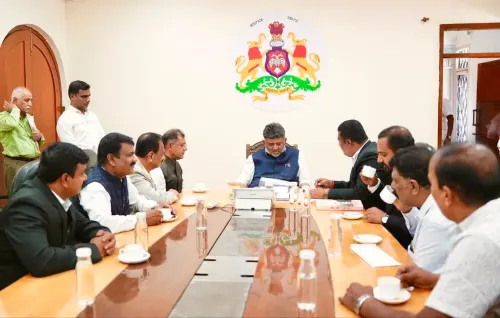
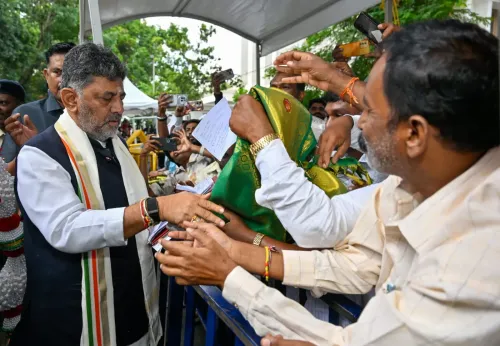
The Chief Minister's Office of Karnataka announced on Wednesday, 15 July 2026, that Chief Minister D K Shivakumar would hold a direct interaction with Bengaluru's apartment residents, apartment owners' associations, and civil society organisations working to protect the rights of flat owners. The engagement is aimed at building a legal framework that is, in the Chief Minister's words, 'fair, transparent and responsive' to the needs of apartment dwellers.
Context
In a statement shared by the Chief Minister's Office of Karnataka, Shivakumar described the interaction as 'an important step towards addressing those concerns through meaningful dialogue.' He acknowledged that apartment owners face challenges in their everyday lives and framed the consultation as a foundation for legislative or policy action. The post specifically highlighted that for 'millions of middle class and lower middle class families, owning an apartment in Bengaluru is the fulfilment of a lifelong dream built through years of hard work and sacrifice.'
The Chief Minister's direct engagement with residents' associations signals that the Karnataka government is treating apartment governance as a priority political and administrative issue, not merely a technical housing matter.
Policy Backdrop
India's central Real Estate (Regulation and Development) Act, 2016 — commonly known as RERA — established state-level regulatory authorities to protect homebuyers, enforce project timelines, and adjudicate disputes between buyers and developers. Karnataka has its own Karnataka RERA authority operating under this framework.
However, RERA's mandate primarily covers the pre-handover phase of a project. Post-handover concerns — including association registration, maintenance fund management, builder handover obligations, water supply, and access to civic services from the Bruhat Bengaluru Mahanagara Palike (BBMP) — have remained in a regulatory grey zone. State governments across India have periodically engaged residents' welfare associations to address precisely these gaps, and Bengaluru's rapid vertical housing growth has made such gaps especially acute.
Repeated calls from apartment residents' bodies in Bengaluru for clearer state-level rules on sinking funds, common-area maintenance, and dispute resolution have gone largely unaddressed through existing mechanisms, creating pressure on the state government to act.
Stakeholders and Impact
The interaction is expected to bring together a cross-section of stakeholders: individual apartment owners, registered apartment owners' associations, and advocacy organisations that have campaigned for stronger legal protections. The Chief Minister's framing — centred on 'middle class and lower middle class families' — positions the initiative as a welfare measure rather than a purely regulatory one.
Bengaluru, as India's largest information technology hub, has seen an explosive rise in high-rise and gated-community housing over the past two decades. Disputes over maintenance charges, builder defaults, illegal construction, and inadequate civic infrastructure have affected hundreds of thousands of flat owners across the city. Any new legal framework emerging from this dialogue could set a precedent for other Karnataka cities and influence how other state governments approach apartment governance.
What's Next
The immediate outcome to watch is whether the 15 July 2026 interaction produces a formal policy commitment — such as a draft Karnataka Apartment Ownership and Management Bill, executive orders to BBMP, or enhanced grievance mechanisms within the state housing department. The Chief Minister's explicit mention of a 'legal framework' suggests that legislative action, rather than administrative circulars alone, is on the table.
Observers will also track whether the state moves to strengthen Karnataka RERA's post-handover jurisdiction or creates a separate regulatory body for residents' associations. The outcome of this consultation could directly shape the housing rights of millions of families in one of India's fastest-growing cities.
Point of View
The Karnataka government is signalling that housing rights — long subordinated to builder and developer interests — will be treated as a governance priority. This fits a broader national pattern where state governments are increasingly stepping into the post-handover regulatory vacuum left by RERA, recognising that urban homeowners are an organised and vocal constituency. The real test will be whether the dialogue translates into enforceable law or remains a consultative exercise without binding outcomes.
NationPress
15 Jul 2026
Frequently Asked Questions
Why is CM Shivakumar meeting Bengaluru apartment owners?
Chief Minister D K Shivakumar is meeting apartment residents and owners' associations to understand the challenges flat owners face and to work towards a legal framework that is fair, transparent and responsive to their needs, as stated by the Chief Minister's Office on 15 July 2026.
What legal protections do apartment owners in Bengaluru currently have?
Apartment owners in Bengaluru are primarily protected under the central Real Estate (Regulation and Development) Act, 2016, which governs disputes with developers before and during project completion. Post-handover issues such as maintenance, association registration and civic services remain in a regulatory grey zone at the state level.
What is RERA and does it cover apartment owners' associations?
RERA, or the Real Estate (Regulation and Development) Act, 2016, is a central law that established state-level regulatory authorities to protect homebuyers and enforce project timelines. Its coverage of post-handover association management and maintenance disputes is limited, which is one reason Karnataka is exploring additional state-level rules.
How many apartment owners could be affected by new Karnataka rules?
Bengaluru, as India's largest IT hub with decades of rapid high-rise construction, has hundreds of thousands of apartment owners. Any new state-level legal framework on apartment management could directly affect a significant share of the city's urban population, particularly middle-class and lower-middle-class families.
What could come out of the Bengaluru apartment owners' interaction with CM Shivakumar?
Possible outcomes include a draft Karnataka apartment ownership and management law, executive orders updating BBMP grievance mechanisms, or enhanced jurisdiction for Karnataka RERA over post-handover disputes. The Chief Minister's explicit reference to a 'legal framework' suggests legislative action is being considered.