Tharoor Pens Open Letter to Jantar Mantar Protesters
Synopsis
Congress MP Dr. Shashi Tharoor addressed an open letter to young protesters at Jantar Mantar on 15 July 2026, invoking his middle-class background and expressing deep concern for India's youth — stepping outside his political role to speak directly to demonstrators.
Key Takeaways
Shashi Tharoor published an open letter on 15 July 2026 addressed to protesters at Jantar Mantar , New Delhi.
Tharoor framed the letter as a personal rather than political intervention, explicitly stating he was not writing 'as a politician or an MP.' He cited his own middle-class family background to establish solidarity with demonstrators.
Jantar Mantar has been India's foremost protest venue since at least the landmark 2011 anti-corruption agitation.
Youth unemployment and economic mobility remain recurring concerns in a country where more than half the population is under 35 .
The letter may preview the Indian National Congress opposition's messaging strategy ahead of the next parliamentary session.
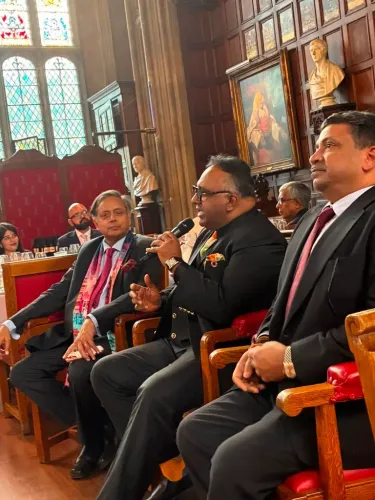
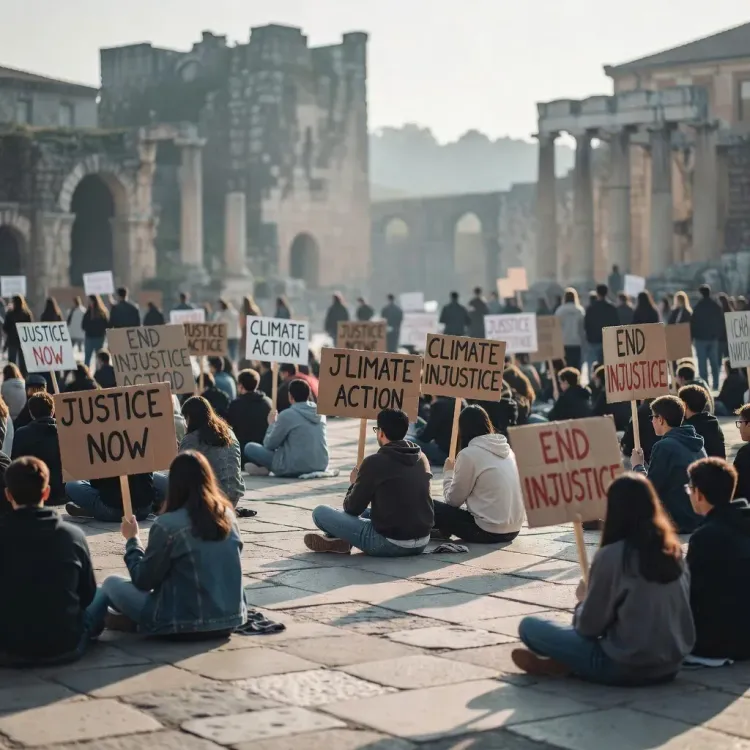
Congress MP Dr. Shashi Tharoor addressed an open letter on Wednesday, 15 July 2026 to young protesters gathered at Jantar Mantar in New Delhi, speaking not in his capacity as a parliamentarian but as someone who described himself as 'deeply troubled by what is happening to your generation of young Indians.'
Context
Jantar Mantar, the 18th-century observatory in central Delhi, has long served as India's most recognised venue for public sit-ins and demonstrations. The Thiruvananthapuram MP opened his letter with a personal note, writing that he was 'born to a middle-class family,' signalling an intent to establish common ground with demonstrators whose concerns are widely understood to centre on economic mobility and opportunity.
Tharoor explicitly stepped outside his political role, framing the letter as a personal intervention rather than a partisan statement — a rhetorical approach that opposition figures have periodically used to position themselves as sympathetic interlocutors with youth-led movements.
Policy Backdrop
Jantar Mantar entered the national consciousness as a protest landmark during the 2011 anti-corruption agitation led by Anna Hazare, which drew large numbers of urban middle-class and young participants. Since then, the site has repeatedly hosted demonstrations tied to questions of education quality, job creation, and economic aspiration in a country where more than half the population is under 35.
Successive governments have launched flagship programmes — from Skill India to Make in India — presented as structural responses to youth unemployment and under-employment. Critics and opposition voices have consistently argued that these schemes have not kept pace with the scale of demographic pressure or the expectations of a growing, educated middle class.
The Indian National Congress, currently in opposition at the national level, has a long history of engaging youth concerns through public messaging. Tharoor, a former UN Under-Secretary-General and former Union Minister, brings an additional layer of international and policy credibility to such outreach.
Stakeholders and Impact
The immediate audience for the letter is the cohort of young protesters at Jantar Mantar, but the broader readership is India's vast middle class — families who have invested heavily in education and expect commensurate economic returns. Tharoor's decision to invoke his own middle-class origins is a deliberate signal of solidarity with that constituency.
Youth protests of this nature tend to draw attention from government ministries overseeing education and labour, as well as from civil society organisations that track employment data and skilling outcomes. Whether this letter prompts any formal government response or parliamentary debate remains to be seen.
What's Next
Political observers will watch whether the open letter galvanises wider support for the protesters or draws a counter-response from ruling-party spokespersons. With a parliamentary session on the horizon, questions of youth employment and middle-class economic anxiety are likely to resurface in both committee rooms and floor debates. Tharoor's intervention may serve as an early marker of the opposition's messaging strategy on these issues heading into that session.
Point of View
He attempts to bridge the credibility gap that often separates established politicians from street-level demonstrators. The intervention fits a broader pattern in which opposition figures use open letters and direct public addresses to signal responsiveness on youth and economic issues that the government is perceived as under-addressing. How the ruling dispensation and the protesters themselves receive this letter will be a useful early indicator of the political temperature around youth discontent heading into the next parliamentary session.
NationPress
15 Jul 2026
Frequently Asked Questions
Why did Shashi Tharoor write an open letter to Jantar Mantar protesters?
Tharoor wrote to express personal concern for young Indians, framing the letter not as a political statement but as a message from someone who shares a middle-class background with the demonstrators.
What is Jantar Mantar and why do protests happen there?
Jantar Mantar is an 18th-century observatory in central Delhi that has become India's most prominent venue for public sit-ins and demonstrations, particularly on governance, employment, and social justice issues.
What issues do Jantar Mantar protests typically focus on?
Protests at Jantar Mantar have historically centred on anti-corruption demands, education quality, job creation, and economic mobility, drawing heavily from student and middle-class participants.
Who is Shashi Tharoor?
Dr. Shashi Tharoor is a Congress MP from Thiruvananthapuram, a former Union Minister, and a former UN Under-Secretary-General, widely known for his writings and public commentary on Indian politics and society.
What could happen after Tharoor's open letter to protesters?
Political observers expect the letter to draw either a government response or heightened parliamentary debate on youth unemployment and middle-class economic concerns during the upcoming session.