Karnataka CM Holds Public Grievance Session, Pledges Priority Redressal
Synopsis
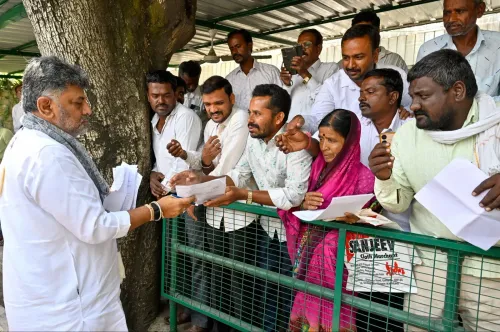
Karnataka Chief Minister DK Shivakumar personally received public grievances on 13 June 2026, assuring citizens their complaints would be addressed on a priority basis. The session reflects the state government's direct-engagement approach to citizen redressal.
Key Takeaways
CM DK Shivakumar personally received public grievances on 13 June 2026 in Karnataka .
He assured citizens that complaints would be resolved on a priority basis .
The session continues a tradition of Janata Darshana -style direct public engagement by Karnataka Chief Ministers.
Such sessions complement formal digital channels like CPGRAMS by offering in-person access to senior leadership.
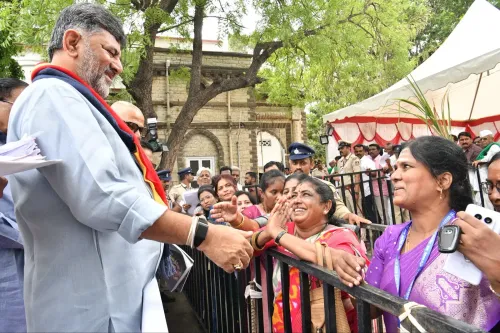
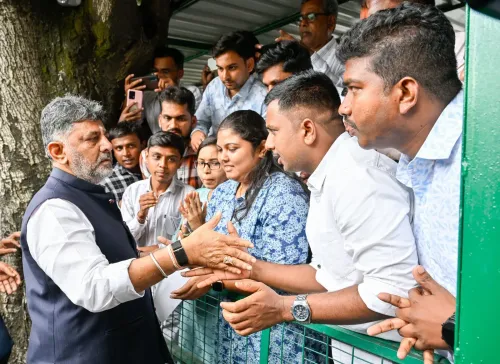
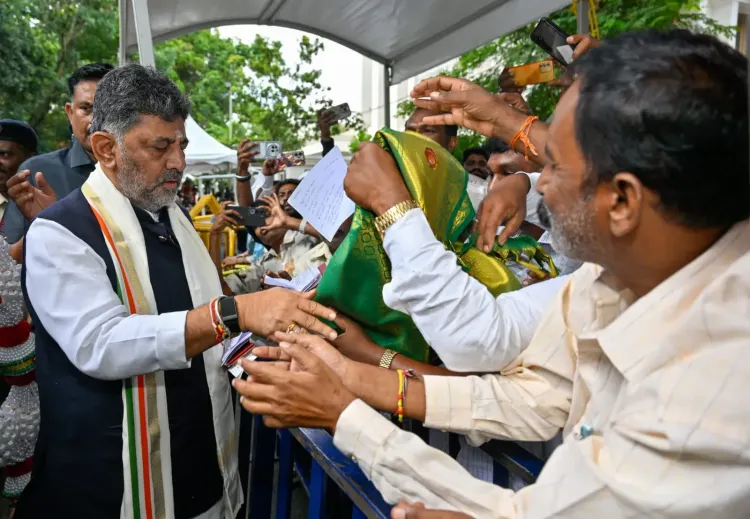
The Chief Minister's Office shared 2 images from the session on the official X account.
Subsequent departmental follow-up and complaint resolution rates will indicate the session's administrative impact.
The Chief Minister's Office of Karnataka announced on Saturday, 13 June 2026 that Chief Minister DK Shivakumar received public grievances directly from citizens and assured them of priority resolution. The session underscores the state government's commitment to direct citizen engagement as a governance tool.
Context
The post, shared in Kannada, states: 'ಮುಖ್ಯಮಂತ್ರಿ ಶ್ರೀ DK Shivakumar ಅವರು ಇಂದು ಸಾರ್ವಜನಿಕರ ಅಹವಾಲು ಸ್ವೀಕರಿಸಿ, ಆದ್ಯತೆ ಮೇರೆಗೆ ಅವುಗಳನ್ನು ಪರಿಹರಿಸಿಕೊಡುವುದಾಗಿ ತಿಳಿಸಿದರು' — translated: 'Chief Minister Sri DK Shivakumar today received public grievances and informed that they will be resolved on a priority basis.' Two images were shared alongside the post, depicting the session.
Shivakumar, a senior Indian National Congress leader, has been a central figure in Karnataka's administration and has maintained an active public-outreach profile. Direct grievance reception by a Chief Minister carries significant symbolic and administrative weight, signalling personal accountability at the highest level of state governance.
Policy Backdrop
Public grievance sessions have a well-established lineage in Karnataka's administrative tradition. Previous administrations conducted periodic Janata Darshana programmes — open-door sessions where citizens could approach the Chief Minister or senior ministers with complaints spanning land disputes, public services, welfare entitlements, and local infrastructure concerns.
At the national level, formal grievance mechanisms such as CPGRAMS (Centralised Public Grievance Redress and Monitoring System) provide a digital channel, but direct in-person sessions are widely regarded as more accessible to citizens who lack digital literacy or face barriers to online filing. State governments across India maintain these direct interfaces as a complementary layer of redressal.
Stakeholders and Impact
The primary beneficiaries of such sessions are Karnataka's ordinary citizens — farmers, daily-wage workers, small traders, and residents navigating bureaucratic delays in accessing government schemes or resolving civic disputes. Direct access to the Chief Minister can accelerate resolution of cases that may have stalled at the departmental level.
For the state administration, these sessions also serve as real-time feedback loops, alerting senior leadership to systemic bottlenecks in service delivery. Officials present during such interactions are typically directed to act on flagged cases within a defined timeframe, creating accountability downstream.
What's Next
The effectiveness of today's session will be measured by the rate and speed at which the grievances received are formally resolved and communicated back to petitioners. Observers will watch for any departmental directives or follow-up orders issued by the Chief Minister's Office in the coming days.
If such sessions are institutionalised into a regular calendar, they could strengthen Karnataka's citizen-government interface and provide the administration with ground-level intelligence ahead of key policy and budgetary decisions.
Point of View
Signalling responsiveness at a time when state governments are under pressure to demonstrate welfare delivery. Direct grievance reception by a Chief Minister — rather than delegation to a minister of state or a bureaucrat — carries a message that the top leadership is accessible and accountable. This approach fits a broader pattern seen across Congress-governed states of positioning the party as a 'government that listens,' particularly in contrast to criticism of top-down governance. Whether the session translates into measurable redressal outcomes, or remains primarily symbolic, will determine its long-term political dividend.
NationPress
14 Sept 2026
Frequently Asked Questions
What is a public grievance session by the Karnataka Chief Minister?
A public grievance session is a direct-access event where citizens can personally present complaints and requests to the Chief Minister, who then assures priority resolution and directs officials to act. Karnataka has a tradition of such sessions, historically known as Janata Darshana programmes.
What did CM DK Shivakumar do on 13 June 2026?
On 13 June 2026, CM DK Shivakumar received grievances from members of the public and assured them that their complaints would be resolved on a priority basis, as announced by the official Chief Minister's Office of Karnataka on X.
How can Karnataka citizens submit grievances to the government?
Karnataka citizens can approach grievance sessions organised by the Chief Minister's Office, use state-level online portals, or access the national CPGRAMS platform. In-person sessions provide an additional channel for those facing barriers to digital filing.
What types of complaints are typically raised at a Chief Minister's grievance session?
Citizens typically raise issues related to land disputes, delays in welfare scheme benefits, local infrastructure problems, public service failures, and cases stalled at the departmental level that require senior-level intervention.
What happens after grievances are received by the Chief Minister?
After grievances are received, officials present at the session are typically directed to follow up within a defined timeframe. The Chief Minister's Office may issue departmental directives, and petitioners are informed of the outcome once their cases are processed.